

4A 4×8 Blue Indicating Molecular Sieve Desiccant
4A 4×8 Blue Indicating Molecular Sieve Desiccant - 25kg (55.11 lbs) Drum is backordered and will ship as soon as it is back in stock.
Couldn't load pickup availability
Buy 5+ 25kg drums to save 15%, or 21+ 25kg drums to save 32% — auto-applied at checkout.
| Qty | Discount |
|---|---|
| Buy 5 | 15.92% off each |
| Buy 21 | 32.72% off each |
4A 4×8 Blue Indicating Molecular Sieve Desiccant from Delta Adsorbents combines the moisture-adsorption performance of a 4A synthetic zeolite with a built-in visual saturation indicator.
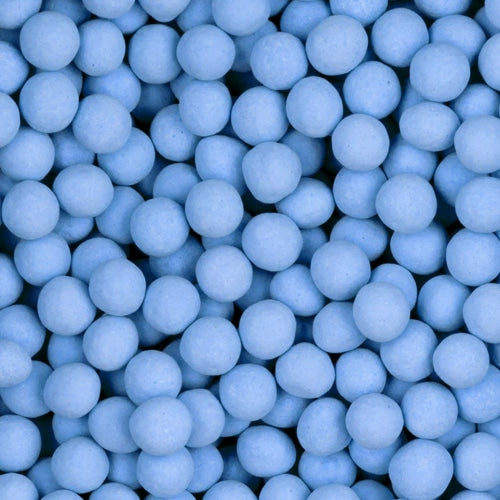
The spherical beads are blue when active and gradually change to beige as they approach equilibrium moisture capacity. This provides an easy visual reference in compatible desiccant housings, observation chambers, air and gas dryers, laboratory systems, and other applications where the media can be inspected during service.
Molecular sieve type: 4A blue indicating synthetic zeolite
Particle size: 4×8 mesh spherical beads
Nominal pore opening: Approximately 4 Å
Indicator: Blue when active; beige near saturation
Minimum order: 25kg (approximately 55lb)
Where it fits
- Visual moisture monitoring: Installations where operators benefit from seeing the media change color as it approaches saturation.
- Compressed-air drying: Moisture control in compatible pneumatic, laboratory, and instrument-air systems.
- Industrial gas drying: Water-vapor removal from compatible gas streams where the desiccant bed remains visible or accessible for inspection.
- Desiccant canisters: Replaceable cartridges, breathers, housings, and fixed containers requiring a visible moisture indicator.
- Laboratory drying systems: Drying columns and small process systems where visual media condition is useful.
- Refrigeration and closed-loop systems: Moisture control in compatible applications where 4A adsorption behavior is appropriate.
- Static moisture protection: Equipment, instruments, electronics, and packaged materials requiring visible desiccant condition.
- Dryer guard or indicator layers: Used as a visible portion of a larger non-indicating molecular-sieve bed when the equipment design permits.
Why choose blue indicating 4A molecular sieve?
- Visible condition monitoring: The blue-to-beige color change gives operators a simple indication of increasing moisture loading.
- No separate humidity card required: The indicator is incorporated directly into the molecular-sieve beads.
- General-purpose 4A adsorption: Removes water and may adsorb other sufficiently small molecules from compatible streams.
- Coarse 4×8 beads: Supports relatively open bed packing and lower pressure drop than finer bead sizes under comparable conditions.
- High mechanical strength: The published specification lists crush strength above 58 N for the 4×8 grade.
- Low-dust spherical form: Designed for practical filling, inspection, and replacement in compatible housings.
- Industrial packaging: Available for production, maintenance, and recurring moisture-control requirements.
How the color indicator works
| Observed color | General interpretation |
|---|---|
| Blue | The media is active and comparatively dry. |
| Partially faded or mixed color | The visible portion of the bed has accumulated moisture and should be monitored more closely. |
| Beige | The media has approached equilibrium moisture capacity and should be evaluated for replacement or qualified regeneration. |
The color change is a visual operating reference rather than a calibrated dew-point or moisture measurement. Use appropriate instrumentation when a verified outlet specification is required.
Typical specifications
| Product type | Blue indicating 4A molecular sieve desiccant |
|---|---|
| Structure | Sodium aluminosilicate synthetic zeolite with inorganic metal-salt moisture indicator |
| Form | Spherical beads |
| Particle size | 4×8 mesh |
| Nominal pore opening | Approximately 4 Å |
| Active color | Blue |
| Saturated color | Beige |
| Adsorption capacity at 25°C and 10% RH | >15 wt.% |
| Adsorption capacity at 25°C and 20% RH | >16 wt.% |
| Adsorption capacity at 25°C and 40% RH | >17 wt.% |
| Adsorption capacity at 25°C and 60% RH | >18 wt.% |
| Bulk density | >47 lb/ft³ |
| Crush strength | >58 N |
| Size qualification | >97% |
| Supplier | Delta Adsorbents |
| Published manufacturer packaging | 55 lb (25 kg) drums |
Values shown are typical manufacturer specifications for the 4A 4×8 blue indicating grade. Final acceptance requirements should be confirmed using the current specification and applicable lot documentation.
Blue indicating vs. standard 4A molecular sieve
| Selection factor | Blue indicating 4A | Standard non-indicating 4A |
|---|---|---|
| Visual moisture indication | Yes; changes from blue to beige | No visible saturation indicator |
| Primary advantage | Easy visual condition monitoring | General drying and purification without indicator chemistry |
| Typical installation | Visible canisters, sight glasses, laboratory dryers, breathers, and indicator layers | Enclosed fixed beds, regenerative dryers, and larger process vessels |
| Best choice when | Operators need a visual cue showing moisture loading | Visual indication is unnecessary or external instruments monitor breakthrough |
| Regeneration considerations | Indicator appearance may lose clarity after repeated or aggressive cycles | Generally preferred for repeated industrial regeneration cycles |
4×8 vs. 8×12 bead size
| Selection factor | 4×8 beads | 8×12 beads |
|---|---|---|
| Relative bead size | Coarser | Finer |
| Pressure drop | Generally lower under comparable bed and flow conditions | Generally higher under comparable conditions |
| Adsorption kinetics | Longer internal diffusion path | Shorter diffusion path and potentially faster mass transfer |
| Mechanical strength | Published crush strength above 58 N for this indicating grade | Published crush strength above 25 N for the corresponding indicating grade |
| Typical preference | Larger beds, open flow, visible canisters, and lower pressure-drop priorities | Smaller vessels and applications emphasizing faster adsorption response |
Final bead-size selection should account for vessel dimensions, screen retention, airflow, pressure drop, contact time, and moisture-loading rate.
Packaging & availability
| Format | Availability and use |
|---|---|
| 55lb (25kg) minimum order | Standard Sorbents Direct commercial minimum for production, maintenance, and recurring industrial requirements. |
| 55lb (25kg) drum | Published manufacturer package. |
| Alternative quantities | Smaller packages may exist through the manufacturer, but Sorbents Direct availability and minimums are confirmed at quotation. |
- Minimum order: 25kg (approximately 55lb).
- Lead time: Typically 1-2 weeks, subject to inventory, quantity, packaging, and destination.
- Freight: Parcel, pallet, or LTL service based on final package configuration.
- Recurring requirements: Contact Sorbents Direct for pallet, scheduled-release, or volume pricing.
Application and system considerations
- Install indicating media where operators can safely inspect the color without opening a pressurized or active system.
- Do not rely on bead color alone when a specific outlet dew point or moisture concentration must be maintained.
- Account for inlet humidity, gas or air flow, pressure, temperature, bed dimensions, and required service life.
- Protect the bed from oils, aerosols, particulates, heavy hydrocarbons, and other contaminants that may coat or foul the beads.
- Use suitable support screens that retain the 4×8 beads without creating excessive flow restriction.
- For layered beds, confirm that the indicating and non-indicating media are chemically and mechanically compatible.
- Monitor pressure drop and downstream moisture performance in addition to visual color.
Regeneration guidance
Blue indicating molecular sieve may potentially be regenerated through controlled heating and dry purge, but repeated cycling or excessive regeneration temperatures can reduce the clarity or reliability of the indicator color.
- Follow current manufacturer and equipment guidance before attempting regeneration.
- Heat gradually to reduce thermal stress and bead damage.
- Use sufficiently dry purge gas to remove released moisture.
- Cool regenerated media under dry conditions before returning it to service.
- Avoid exposing hot media directly to humid ambient air.
- Confirm both adsorption performance and indicator response before reusing regenerated media in a critical application.
Regeneration note: For systems designed around frequent regeneration cycles, standard non-indicating 4A molecular sieve may be preferable, with dew-point or moisture instrumentation used to monitor breakthrough.
Handling & storage
- Store unopened media in a clean, dry, well-ventilated location.
- Keep containers tightly closed until use.
- Reseal partially used containers immediately to limit unintended moisture adsorption.
- Minimize exposure to humid ambient air during transfer and equipment loading.
- Prevent contact with liquid water, oils, dust, solvents, and incompatible contaminants.
- Avoid breathing dust and use suitable local exhaust ventilation where airborne material may be generated.
- Use safety glasses and appropriate respiratory protection as directed by the current SDS and site risk assessment.
- Rotate inventory so the oldest sealed material is used first.
- Handle used media according to the hazards of the substances it has adsorbed.
Important: Active molecular sieve releases heat when exposed to water. Avoid direct contact with wetted active media and review the current SDS before unloading, handling, spill cleanup, regeneration, removal, or disposal.
Why buy from Sorbents Direct?
Sorbents Direct helps industrial buyers compare molecular-sieve type, indicator format, bead size, packaging, freight, and system requirements before ordering.
- Industrial package quantities for equipment fills, maintenance programs, and recurring requirements.
- Manufacturer documentation including SDS, technical specifications, and lot documentation when available.
- Grade-selection assistance when comparing indicating and non-indicating molecular sieves.
- Bead-size guidance based on vessel design, pressure drop, flow rate, and retention screens.
- Application support based on moisture targets, inspection needs, and replacement practices.
- Transparent pricing and freight support for industrial buyers.
Documentation & technical support
The manufacturer technical specification and molecular-sieve Safety Data Sheet are available for this product. A lot-specific Certificate of Analysis may be requested where available.
Visit our Documentation Center or contact Sorbents Direct to discuss your moisture-control application, flow rate, vessel or canister dimensions, visibility requirements, quantity, and documentation needs.
Questions & answers
How does blue indicating molecular sieve work?
The beads contain an inorganic metal-salt moisture indicator. They are blue while active and gradually turn beige as they approach equilibrium moisture capacity.
Does the color change measure an exact humidity level?
No. The color is a visual indication of moisture loading, not a calibrated dew-point or relative-humidity measurement. Use appropriate instrumentation when an exact outlet specification is required.
What is the pore size?
The nominal pore opening is approximately 4 angstroms.
Does 4A molecular sieve adsorb only water?
No. It readily adsorbs water but can also adsorb other molecules small enough to enter its approximately 4 Å pore structure. Review the complete process stream before selecting it.
Can it be used to dry ethanol or methanol?
Delta identifies highly polar compound dehydration among its potential uses, but 4A may adsorb alcohol molecules as well as water. Where selective ethanol or methanol dehydration is required, 3A molecular sieve is generally the better starting grade.
What is the difference between blue indicating 4A and standard 4A?
Both use a nominal 4 Å pore structure, but the indicating grade contains a color-changing moisture indicator. Standard 4A does not visibly change color and is generally preferred for enclosed or repeatedly regenerated industrial beds.
Why choose 4×8 beads?
The coarser 4×8 bead size generally provides lower pressure drop and high mechanical strength. It is often selected for larger housings, visible canisters, and systems where open airflow is important.
Can blue indicating molecular sieve be regenerated?
It may be regenerated under controlled conditions, but repeated or aggressive heating can weaken the visibility or reliability of the color response. Confirm the regeneration procedure and validate performance before reuse.
When should the media be replaced?
Evaluate replacement when the visible media has changed substantially from blue to beige, when the required outlet moisture level is no longer maintained, or when the established service interval has been reached.
Can it be mixed with standard molecular sieve?
It may be used as a visible indicator layer with compatible non-indicating media, provided the system design, bead retention, flow distribution, and regeneration method are suitable.
What is the published package size?
Delta lists 55lb (25kg) drums for this technical grade. Final package configuration confirmed at quotation.
What is the typical lead time?
Typical lead time is approximately 1–2 weeks, subject to inventory, quantity, package configuration, and shipping destination.
What documentation is available?
The manufacturer technical specification and molecular-sieve SDS are available. Lot-specific documentation may also be requested where available.
Related products & resources
4A 4×8 Blue Indicating Molecular Sieve Desiccant


