-
 Request a Custom Quote
Don’t see what you need? We can source it. -

Tixosil® 68B FCC Precipitated Silica for Food & Powder Flow
27.55 lb
$15625Unit price /Unavailable

Industrial Carrier & Substrate Materials
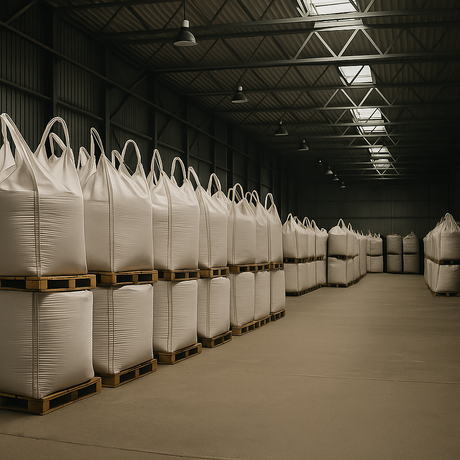
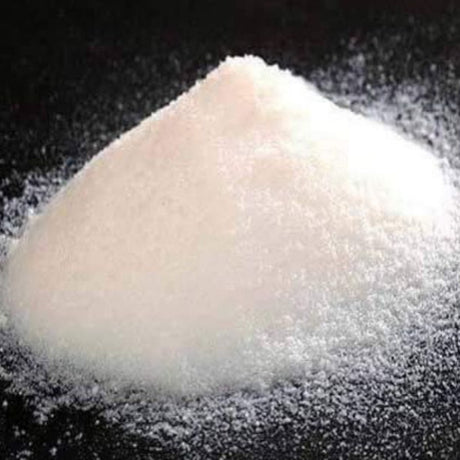
Carrier and substrate materials provide a solid surface or porous structure for liquids, additives, catalysts, active materials, and formulation components. Depending on the grade and application, these materials may support liquid uptake, dispersion, powder handling, immobilization, surface distribution, or downstream processing.
Common carrier materials include precipitated silica, selected clay minerals, activated alumina, and other porous inorganic substrates. The appropriate material depends on what is being carried or supported, required loading, surface chemistry, particle size, porosity, compatibility, and the specifications of the individual grade.
Common Carrier & Substrate Applications
Liquid-to-Powder Conversion
High-surface-area porous materials can take up liquids and help convert liquid ingredients or additives into more manageable free-flowing powders where the individual grade is suitable for the formulation.
Active & Additive Distribution
Carrier materials can help distribute relatively small quantities of another component throughout a larger dry blend, improving handling and dispersion where formulation compatibility is appropriate.
Catalyst & Process Supports
Alumina, silica, and other porous inorganic materials may function as support structures for catalysts or reactive components when their thermal, chemical, and pore characteristics match the process.
Powder Handling
Selected carrier materials can improve the physical handling of formulations by reducing tackiness, moderating free liquid, or supporting more uniform dispersion through the bulk powder.
Surface Loading
Porous substrates provide internal and external surface area onto which liquids or other materials can be distributed, adsorbed, deposited, or supported.
Formulation Support
Grade-specific mineral carriers may be selected according to absorption capacity, bulk density, particle morphology, surface chemistry, purity, and compatibility with the finished formulation.
Carrier Material Selection at a Glance
| If You Need To... | Start By Evaluating... | Key Considerations |
|---|---|---|
| Convert a liquid into a more manageable powder | High-absorption precipitated silica or other suitable porous carrier | Liquid loading, absorption capacity, flow, bulk density and formulation compatibility |
| Distribute a low-dose component through a dry blend | Fine silica or application-specific mineral carrier | Particle size, dispersion, loading level, segregation and process requirements |
| Support a catalyst or reactive component | Activated alumina, silica or other engineered substrate | Surface area, pore structure, thermal stability and chemical compatibility |
| Reduce tackiness or improve handling | Appropriate porous silica or mineral carrier | Liquid uptake, dosage, particle morphology and finished-product behavior |
| Meet regulated formulation requirements | Grade-specific qualified material | Manufacturer specification, applicable regulatory status, purity and documentation |
Precipitated Silica as a Carrier Material
Precipitated silica is widely used as a porous inorganic carrier because its high surface area and internal pore structure can provide substantial liquid uptake while maintaining a dry particulate form under appropriate loading conditions.
Performance varies significantly among silica grades. Oil absorption or liquid absorption, BET surface area, pore volume, particle size, bulk density, moisture, and surface treatment can all influence how much material can be loaded and how the resulting powder behaves.
Some silica grades are designed primarily for chromatography, adsorption, reinforcement, or other functions and should not automatically be treated as interchangeable carrier materials.
Browse our Silica & Silica Gel collection for additional silica grades.
Carrier Capacity Is Not the Same as Adsorption Capacity
A material can have high surface area without necessarily being the best carrier for a formulation. Carrier performance depends on how much of the target liquid or component can be loaded while maintaining the required flow, handling, stability, and downstream behavior.
Surface area, pore volume, liquid absorption, particle morphology, bulk density, chemistry, and loading method should therefore be evaluated together rather than relying on a single specification.
Carrier vs. Adsorbent vs. Filter Media
| Material Role | Primary Objective | Typical Selection Factors |
|---|---|---|
| Carrier | Hold, distribute, or transport another component | Loading capacity, dispersion, particle form, compatibility and handling |
| Adsorbent | Remove or retain selected molecules from a process | Selectivity, pore structure, capacity, surface chemistry and contact conditions |
| Filter Media | Support separation of suspended solids from a fluid | Permeability, retention, particle size, pressure drop and filtration rate |
| Catalyst Support | Provide a surface or porous structure for an active catalytic phase | Surface area, pore architecture, strength, stability and chemistry |
How to Select a Carrier or Substrate Material
1. Define What Is Being Carried or Supported
Start with the liquid, additive, catalyst, active material, or formulation component that must be distributed or supported.
2. Determine the Required Loading
Establish how much of the target material needs to be carried relative to the substrate. High loading can change powder flow, density, stability, and downstream processing behavior.
3. Compare Surface Area & Pore Structure
Surface area and pore volume influence how material distributes through and onto the carrier, but the most suitable pore structure depends on the chemistry and physical properties of the substance being loaded.
4. Evaluate Particle Size & Bulk Density
Particle characteristics affect blending, dusting, conveying, segregation, filling, dispersion, and the volume required to carry a given amount of material.
5. Check Chemical Compatibility
Carrier surface chemistry can interact with acids, bases, solvents, oils, water, catalysts, or active ingredients. Compatibility should be evaluated under the actual formulation and process conditions.
6. Verify Grade-Specific Requirements
Food, pharmaceutical, agricultural, catalyst, and other specialty applications may require particular specifications or documentation. These requirements should be confirmed for the individual grade rather than assumed from the material family.
7. Test the Finished Formulation
Small-scale testing can establish practical loading capacity, flow behavior, segregation, stability, release characteristics, and downstream processing performance before full production.
Frequently Asked Questions About Carrier Materials
What is a carrier material?
A carrier is a solid material used to hold, distribute, support, or transport another component. Porous mineral carriers can be used with liquids, additives, catalysts, and other formulation ingredients depending on the individual grade.
Why is silica used as a carrier?
Certain precipitated silica grades combine high surface area and porous structure with useful liquid-absorption and powder-handling characteristics, making them suitable for carrying liquids or dispersing other materials.
Is silica gel the same as precipitated silica?
No. Both are silicon dioxide materials, but they can differ substantially in manufacturing method, pore structure, particle characteristics, physical form, and intended use. Individual grades should be selected according to their actual specifications.
Can clay be used as a carrier?
Some clay minerals are used as carriers in agricultural, chemical, and other formulations, but suitability depends on mineralogy, particle characteristics, surface properties, purity, and the specifications of the particular grade.
Can activated alumina be used as a substrate?
Activated alumina can function as an adsorbent or support material in suitable chemical and catalyst applications. The required surface area, pore structure, strength, and chemistry depend on the process.
Is the highest-surface-area material always the best carrier?
No. Practical carrier performance also depends on pore volume, absorption capacity, particle form, chemistry, bulk density, flow, required loading, and compatibility with the material being carried.
Are all carrier materials suitable for food or pharmaceutical use?
No. Regulatory and purity requirements are grade-specific. Manufacturer specifications and applicable regulatory or compendial status should be verified for the intended application.
Bulk Carrier & Substrate Materials
Sorbents Direct supplies silica and specialty mineral materials for carrier, substrate, adsorption, formulation, and process applications in practical commercial and bulk quantities.
When requesting a material recommendation, provide the substance being carried or supported, desired loading, process or formulation conditions, particle-size requirements, required quantity, and any purity or regulatory specifications.
Need Help Selecting a Carrier Material?
Tell us what you're trying to load, disperse, or support, the desired loading level, your current carrier if applicable, and the required quantity. We'll help identify relevant material families and available grades.


