-
 Request a Custom Quote
Don’t see what you need? We can source it. 

DYNOCEL® 600 Activated Alumina for Water & Process Purification
1800.0 lb
$7,20000Unit price /Unavailable-

3A 8x12 Molecular Sieve Desiccant High-Performance Zeolite for Industrial Drying
From $46200Unit price /Unavailable -
Dicalite 4200 DE Filter Aid for General Liquid Clarification
From $99500Unit price /Unavailable -
Dicalite Speedplus A Fine DE Filter Aid for Liquid Clarification
From $99500Unit price /Unavailable -
-
Pure-Flo® Supreme 55 Bleaching Earth for Edible Oil Refining
1000.0 lb
$1,71900Unit price /Unavailable -
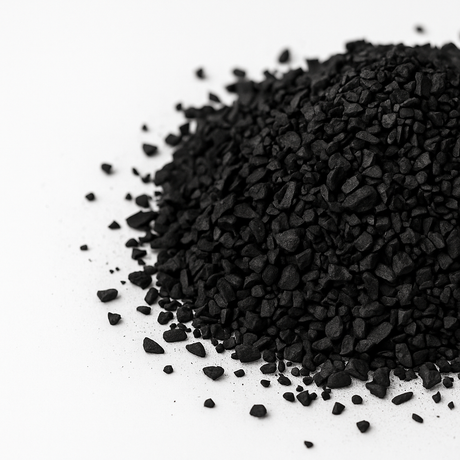
Coconut Shell Granular Activated Carbon (GAC) - 8x30 & 12x40 Mesh
From $21298Unit price /Unavailable 

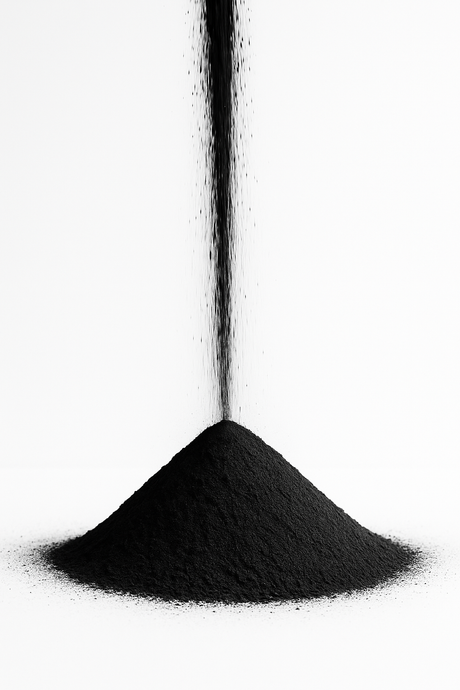
Food-Grade Coconut Shell Powdered Activated Carbon (PAC) - 80x325 Mesh, Acid-Washed
From $28098Unit price /Unavailable
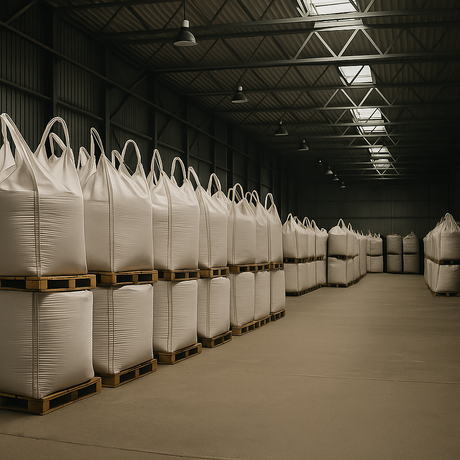


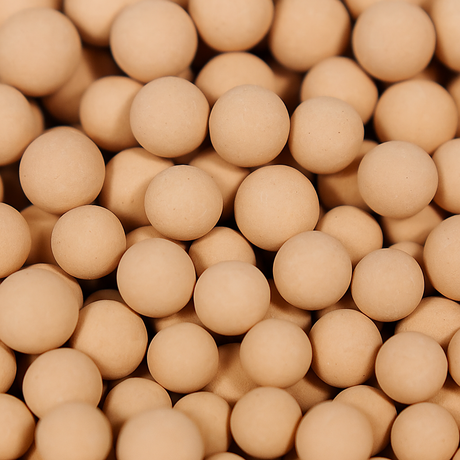


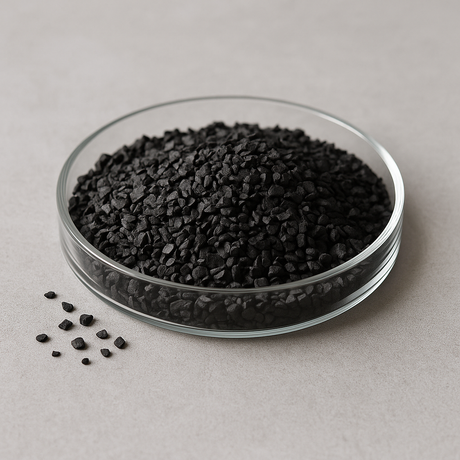

Process Media for Brewing, Distilling & Ethanol Production
Brewing, distilling, and ethanol-processing operations use different types of process media for clarification, filtration, purification, polishing, and dehydration. Activated carbon, filtration aids, and molecular sieves each perform different functions and should be selected according to the actual process objective.
The right material depends on the feed composition, target impurity, filtration equipment, flow rate, desired clarity or purity, operating conditions, and applicable product or regulatory requirements.
Common Brewing & Distilling Applications
Beverage Clarification
Filter aids such as suitable diatomaceous earth grades can improve solids retention and cake permeability during clarification of compatible beverage and fermentation streams.
Spirit & Liquid Purification
Activated carbon may be used to adsorb selected color bodies, odors, and organic compounds from compatible liquid streams where the individual carbon grade supports the application.
Ethanol Dehydration
3A molecular sieve is widely used for selective water adsorption from ethanol because its pore structure admits water while excluding larger ethanol molecules under suitable operating conditions.
Process Polishing
Adsorbent treatment may be used after upstream processing when selected trace compounds, color, or other impurities need additional reduction before final handling or packaging.
Brewing & Distilling Media Selection at a Glance
| If You Need To... | Start By Evaluating... | Key Considerations |
|---|---|---|
| Clarify a beverage or fermentation stream | Suitable filter aid such as diatomaceous earth | Particle retention, permeability, filtration rate, clarity target and filter design |
| Remove selected color or organic compounds | Activated carbon | Carbon grade, pore structure, dosage, contact time and downstream filtration |
| Dehydrate ethanol | 3A molecular sieve | Feed water content, target residual moisture, temperature, regeneration and cycle design |
| Polish a liquid process stream | Grade-specific carbon or other approved process media | Target compound, product compatibility, purity requirements and validation |
Activated Carbon in Distilling & Beverage Processing
Activated carbon is a porous adsorbent used in many liquid-purification processes. Depending on the carbon grade and process conditions, it can adsorb selected organic compounds, color bodies, odors, and other trace constituents.
Powdered activated carbon is useful where the media can be mixed directly into a liquid and removed by downstream filtration. Granular activated carbon is better suited to packed-bed or continuous-flow configurations.
Carbon source, pore structure, particle size, purity, dosage, contact time, temperature, and feed composition can all influence performance.
Browse our Activated Carbon collection for additional carbon grades and particle forms.
Diatomaceous Earth for Beverage Filtration
Diatomaceous earth is commonly used as a filtration aid because its porous structure can form a permeable filter cake that supports solids capture while maintaining liquid flow.
Depending on the filtration system, DE may be applied as a precoat, as body feed, or as a combination of both.
Finer filter-aid grades generally provide greater retention of smaller particles but can reduce permeability. Coarser grades typically provide higher flow with different clarification performance.
Filter Aid Grade Controls the Clarity vs. Flow Tradeoff
The finest filtration media is not automatically the best choice. Beverage filtration requires balancing solids retention with permeability and throughput.
Feed solids, desired clarity, filter area, pressure differential, precoat thickness, body-feed rate, and filtration cycle length should all be considered when comparing filter-aid grades.
3A Molecular Sieve for Ethanol Dehydration
Molecular sieve provides a fundamentally different function from carbon or filter aid. Rather than removing suspended solids or broadly adsorbing organics, molecular sieve can selectively adsorb molecules according to pore dimensions and polarity.
3A molecular sieve is commonly selected for ethanol dehydration because its approximately 3 Å pore opening is large enough to admit water molecules while generally excluding ethanol molecules.
This selective adsorption makes 3A molecular sieve useful for drying ethanol beyond the concentration achievable by ordinary distillation alone in appropriately designed dehydration systems.
System performance depends on inlet water content, flow rate, temperature, bed dimensions, adsorption cycle, regeneration conditions, and media condition.
Browse our Molecular Sieves & Zeolites collection for available 3A grades and other pore sizes.
Clarification, Purification & Dehydration Are Different Processes
| Process | Primary Objective | Typical Media |
|---|---|---|
| Clarification | Remove suspended solids and improve visual clarity | Filter aids such as suitable diatomaceous earth grades |
| Adsorptive Purification | Remove selected dissolved compounds, color, odor or organics | Activated carbon or other application-specific adsorbents |
| Dehydration | Remove dissolved or vapor-phase water | Molecular sieve or other appropriate desiccant media |
Some production systems use more than one of these operations, but the media should be selected independently for each treatment objective.
How to Select Process Media for Brewing & Distilling
1. Define the Treatment Objective
Determine whether you need to remove suspended solids, reduce selected dissolved compounds, polish color or odor, or remove water. These are different problems that require different media.
2. Identify the Process Stream
Beer, fermented liquids, distilled spirits, neutral ethanol, process water, and other streams have different compositions and treatment requirements.
3. Review Product & Regulatory Requirements
Confirm that the individual media grade is suitable for the intended process and meets any applicable purity, food-contact, regulatory, or customer-specific requirements.
4. Match Particle Size to the Equipment
Filter aids, granular carbon, powdered carbon, and molecular sieve beads have very different flow and handling characteristics. Media selection should account for the actual filter, vessel, column, or drying system.
5. Test Before Full-Scale Conversion
Small-scale or pilot testing can help establish filtration behavior, dosage, adsorption performance, yield impact, product quality, and operating economics before a production change.
Frequently Asked Questions About Brewing & Distilling Process Media
What filter media is used for beverage clarification?
Diatomaceous earth and other filter aids may be used to support clarification where the grade and filtration process are appropriate for the beverage being processed.
Why is activated carbon used in distilling?
Activated carbon can adsorb selected dissolved organic compounds, color bodies, and odors from compatible liquid streams. Performance depends strongly on carbon grade and process conditions.
What molecular sieve is used for ethanol dehydration?
3A molecular sieve is commonly selected because its pore opening allows water molecules to enter while generally excluding larger ethanol molecules.
Can activated carbon remove every off-flavor or odor?
No. Carbon adsorption is compound-specific and depends on pore structure, surface chemistry, dosage, contact time, feed composition, and operating conditions.
What is the difference between powdered and granular activated carbon?
Powdered activated carbon is commonly dosed into batch-treatment processes and then filtered out. Granular activated carbon is typically used in fixed beds or continuous-flow vessels.
What is diatomaceous earth used for in filtration?
Diatomaceous earth acts as a porous filter aid that supports formation of a permeable filter cake, improving solids capture while maintaining liquid flow.
Does every DE or activated carbon grade qualify for beverage processing?
No. Suitability depends on the individual product grade, manufacturer specifications, regulatory status, purity requirements, and intended application.
Bulk Process Media for Breweries, Distilleries & Ethanol Producers
Sorbents Direct supplies filtration aids, activated carbon, molecular sieves, and related process media for clarification, purification, polishing, and dehydration applications.
When requesting a product recommendation, provide the process stream, current media if applicable, treatment objective, filtration or vessel configuration, target specification, required quantity, and any relevant regulatory or documentation requirements.
Need Help Selecting Brewing or Distilling Media?
Tell us what you're processing, what you need to remove or control, your existing media or equipment if applicable, and the quantity required. We'll help narrow suitable material families and available grades.


