-
 Request a Custom Quote
Don’t see what you need? We can source it. 

DYNOCEL® 600 Activated Alumina for Water & Process Purification
1800.0 lb
$7,20000Unit price /Unavailable-




What Is Activated Alumina?
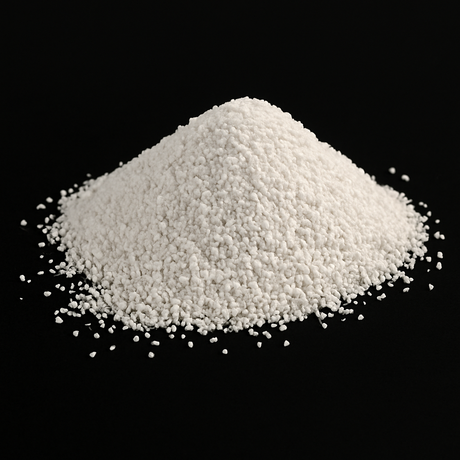
Activated alumina is a highly porous form of aluminum oxide (Al₂O₃) used as an industrial adsorbent. Its internal pore structure provides substantial surface area for adsorbing water and selected contaminants from gas and liquid streams.
Activated alumina is commonly supplied as beads, granules, or other engineered particle forms for use in fixed beds, drying vessels, purification systems, and process-treatment equipment. Performance varies by grade, particle size, pore structure, surface chemistry, operating temperature, and the substance being removed.
Common Activated Alumina Applications
Compressed Air & Gas Drying
Activated alumina is widely used as a regenerable desiccant for removing water vapor from compressed air, process gases, and other gas streams.
Liquid Purification
Selected activated alumina grades can be used to adsorb moisture or targeted contaminants from compatible liquid streams where the media chemistry and operating conditions are suitable.
Water Treatment
Specialized activated alumina grades are used in water-treatment systems for adsorption of fluoride and other selected dissolved contaminants. Performance is strongly influenced by water chemistry and pH.
Process Purification
Alumina media may be used for polishing, purification, guard-bed service, chromatography, or related process applications depending on the specific grade and required surface characteristics.
Activated Alumina vs. Silica Gel vs. Molecular Sieves
Activated alumina is one of several commonly used industrial desiccant and adsorption media. The best choice depends on the required moisture level, operating conditions, regeneration strategy, and process chemistry.
| Adsorbent | Typical Strength | Common Applications | Selection Considerations |
|---|---|---|---|
| Activated Alumina | Durable, regenerable moisture adsorption | Compressed-air drying, gas drying, water treatment and purification | Particle size, inlet moisture, temperature, regeneration conditions and target contaminant |
| Silica Gel | General moisture and humidity adsorption | Packaging, equipment protection, drying and specialty purification | Relative humidity, temperature, pore structure and required capacity |
| Molecular Sieves | Selective adsorption and very low residual moisture | Gas drying, solvent dehydration and molecular separation | Pore type, target molecule, required dew point and regeneration conditions |
See our silica adsorbents and molecular sieves when comparing alternative drying and purification media.
How to Select an Activated Alumina Grade
1. Define the Target
Start with what needs to be removed: water vapor, residual moisture, fluoride, or another specific contaminant. A grade selected for gas drying may not be appropriate for a liquid purification or water-treatment application.
2. Review Particle Size
Bead or granule size affects pressure drop, mass-transfer behavior, flow distribution, handling, and usable surface area. Smaller particles can improve mass transfer but generally create greater resistance to flow.
3. Consider Operating Conditions
Temperature, pressure, flow rate, inlet concentration, humidity, pH, contact time, and regeneration conditions can materially affect adsorption performance.
4. Evaluate Mechanical Properties
Crush strength, attrition resistance, dust generation, and particle uniformity are important in packed beds where repeated adsorption and regeneration cycles can mechanically stress the media.
5. Verify the Product Specification
Surface area, pore volume, bulk density, particle-size distribution, chemical composition, moisture content, and application-specific analytical limits should be reviewed at the individual grade level.
Activated Alumina for Industrial Drying
In fixed-bed drying systems, activated alumina adsorbs water as the process stream passes through the media. Once adsorption capacity is reached, properly designed systems may regenerate the bed using heat, dry purge gas, pressure changes, or a combination appropriate to the system.
Actual outlet moisture and cycle duration depend on inlet conditions, bed dimensions, flow rate, temperature, regeneration effectiveness, and the specific activated alumina grade.
Key Activated Alumina Properties to Compare
| Property | Why It Matters |
|---|---|
| Particle Size | Influences pressure drop, flow behavior, mass transfer and vessel compatibility. |
| Surface Area | Provides an indication of available internal adsorption surface, but should not be evaluated alone. |
| Pore Structure | Influences accessibility and interaction between the adsorbent surface and target molecules. |
| Bulk Density | Helps determine media weight, vessel loading and bed-volume requirements. |
| Crush Strength | Important for maintaining particle integrity during loading, operation and regeneration. |
| Adsorption Capacity | Should be evaluated under conditions relevant to the actual process rather than as an isolated specification. |
Frequently Asked Questions About Activated Alumina
What is activated alumina used for?
Activated alumina is used as an adsorbent for industrial drying, moisture removal, gas and liquid purification, water treatment, and other process applications. The appropriate use depends on the specific alumina grade.
Is activated alumina a desiccant?
Yes. Activated alumina is widely used as a regenerable industrial desiccant, particularly in compressed-air and gas-drying systems.
Does activated alumina absorb or adsorb water?
Activated alumina primarily adsorbs water onto its extensive internal surface rather than absorbing water throughout its bulk volume. Learn more in our adsorption vs. absorption guide .
Can activated alumina be regenerated?
Many activated alumina desiccant grades can be regenerated and reused when operated within an appropriately designed adsorption system. Regeneration temperature, purge conditions, cycle design, and practical service life depend on the specific media and process.
What is the difference between activated alumina and molecular sieve?
Both are porous adsorbents used for drying, but molecular sieves have uniform crystalline pore structures that provide greater molecular selectivity. Activated alumina offers robust moisture adsorption and mechanical durability across many industrial drying applications. The preferred material depends on the required outlet moisture, process conditions, target molecules, and regeneration strategy.
What is the difference between activated alumina and silica gel?
Both are porous desiccants, but their pore structures, surface chemistries, adsorption behavior, and operating characteristics differ. Silica gel is common in general humidity and moisture-control applications, while activated alumina is frequently used in industrial gas and compressed-air drying systems.
Activated Alumina Supply & Technical Support
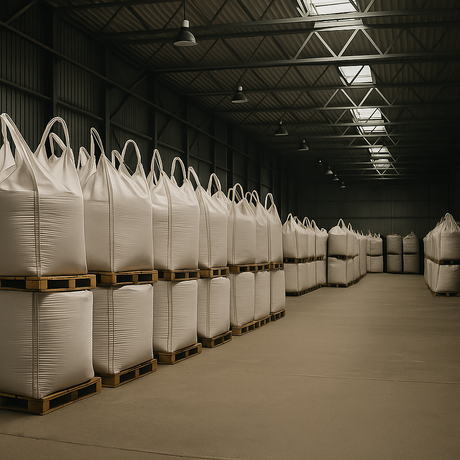
Sorbents Direct supplies activated alumina and complementary industrial adsorption media for drying, purification, filtration, and process treatment. Product specifications, SDS documentation, technical data, and COA availability vary by grade and can be provided where applicable.
If you're replacing an existing activated alumina, provide the current product or specification, particle size, application, operating conditions, and required quantity. For new applications, inlet conditions, target outlet specification, flow rate, and vessel information provide a useful starting point for evaluating suitable media.
Need Help Selecting Activated Alumina?
Send us your application, target contaminant or moisture requirement, operating conditions, current media if applicable, and required quantity. We'll help narrow the available options.


