-
 Request a Custom Quote
Don’t see what you need? We can source it. -

Coal-Based Granular Activated Carbon (GAC) – 8x30 & 12x40 Mesh
From $17098Unit price /Unavailable 
-
-
SILIPORITE® NK 30 AP 3A Molecular Sieve Powder
From $3,70000Unit price /Unavailable


Plastics & Polymer Process Sorbents
Molecular sieve powders and activated carbon can support plastics, polymer, adhesive, and reactive formulation processes where moisture or trace volatile contaminants interfere with manufacturing or finished-product quality. These adsorbents are selected according to pore size, target contaminant, formulation chemistry, and process conditions.
Common Process Functions
- Moisture scavenging: Activated molecular sieve powders can adsorb trace water in compatible polymer and reactive formulations.
- Reactive-system protection: Moisture control can help limit unwanted reactions in moisture-sensitive polyurethane, adhesive, sealant, and specialty polymer systems.
- VOC & odor adsorption: Activated carbon can capture selected organic vapors and odor-causing compounds in compatible process-gas or vent-treatment applications.
- Process purification: Sorbents may be used to remove selected moisture or volatile contaminants from supporting gas, solvent, or manufacturing streams.
Media Options
- 3A molecular sieve powder: Highly selective for water and useful where adsorption of larger molecules should be minimized.
- 4A molecular sieve powder: General-purpose activated powder for moisture adsorption in compatible formulation and process applications.
- 5A molecular sieve powder: Larger pore opening for applications requiring adsorption beyond water alone.
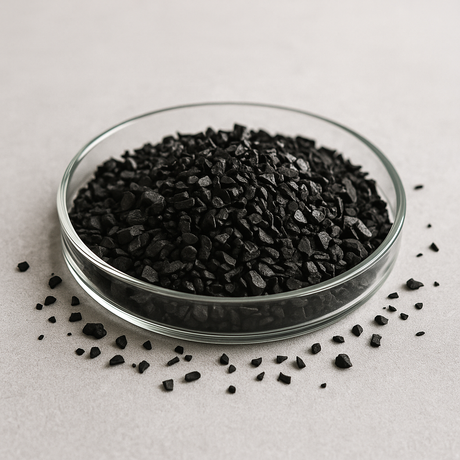
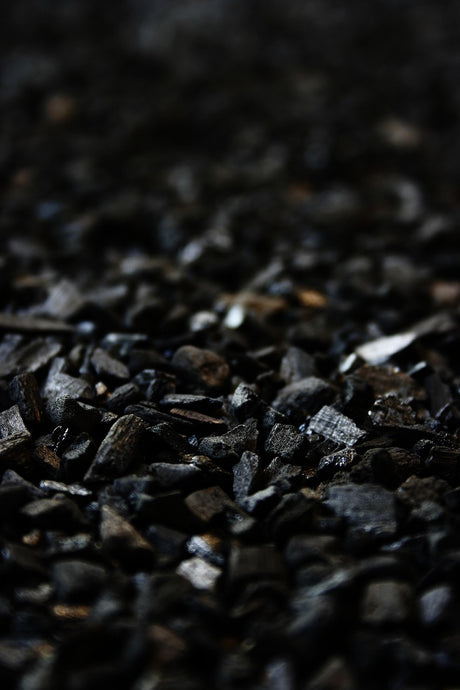
- Activated carbon: Granular carbon for selected vapor, odor, organic-contaminant, and process-purification applications.
Why Moisture Matters in Reactive Polymer Systems
Trace water can interfere with moisture-sensitive polymer chemistries and reactive formulations. In polyurethane systems, for example, water can react with isocyanates and contribute to gas formation, bubbles, or surface defects. Activated molecular sieve powders can be incorporated into compatible formulations to adsorb moisture before it interferes with the intended reaction.
Molecular Sieve Powders
- Controlled pore size: 3A, 4A, and 5A grades provide different adsorption selectivity based on molecular size.
- Direct formulation use: Activated powders can be dispersed into compatible systems where trace moisture must be controlled.
- Low-moisture performance: Molecular sieves maintain strong water affinity even at relatively low residual moisture levels.
- Grade-specific behavior: Adsorption capacity, selectivity, viscosity impact, and compatibility should be evaluated for the exact formulation.
Activated Carbon for Polymer Processes
- Organic vapor adsorption: Carbon can capture selected VOCs and hydrocarbons from compatible vent or process-gas streams.
- Odor control: Useful where volatile organic compounds contribute to nuisance odors in manufacturing environments.
- Process polishing: GAC may be used in fixed beds for compatible gas or liquid purification applications.
- Selection factors: Carbon feedstock, pore distribution, particle size, pressure drop, and target contaminant all influence performance.
Moisture Scavenger vs. Desiccant Dryer
A molecular sieve used directly inside a formulation performs a different role from molecular sieve or activated alumina used in an external drying bed. Formulation powders target moisture within the material itself, while fixed-bed desiccants treat air, gas, or liquid streams before they enter the process. The correct approach depends on where moisture is entering the system.
How to Select a Molecular Sieve Grade
- Identify the target: Determine whether the primary problem is water alone or whether other molecules also need to be adsorbed.
- Review formulation chemistry: Resin, solvent, catalyst, isocyanate, additive package, and other ingredients can affect compatibility.
- Compare pore size: Smaller pore openings provide greater molecular exclusion, while larger pores allow a broader range of species to enter.
- Evaluate dosage: Confirm moisture reduction and finished-product performance at realistic loading levels before production scale-up.
Process Variables to Consider
- Moisture source: Raw materials, fillers, solvents, ambient air, storage conditions, and packaging can all introduce water.
- Temperature & residence time: Adsorption behavior depends on process conditions and contact time.
- Particle dispersion: Formulation powders must be distributed consistently to provide reliable moisture control.
- Qualification: Use manufacturer documentation and application testing to confirm suitability of the exact grade.
3A, 4A & 5A Molecular Sieves
Molecular sieve nomenclature reflects approximate pore opening. A 3A grade is especially selective toward water, while 4A and 5A permit progressively larger molecules into the pore structure. This makes pore size an important consideration when balancing moisture removal with protection of other formulation components.
Need Help Selecting a Polymer Process Sorbent?
Tell us the polymer or formulation chemistry, moisture or contaminant issue, current material if applicable, operating conditions, and required quantity. We can help narrow molecular sieve or activated-carbon grades suited to the process.
Request a Material Recommendation or Bulk Quote


