-
 Request a Custom Quote
Don’t see what you need? We can source it. 
CHROMATOCEL® S-200 Silica Gel for Chromatography & Purification
1102.0 lb
$6,25000Unit price /Unavailable-
DYNOCEL® 900 Activated Alumina for Process Purification
From $5,84900Unit price /Unavailable 
CHROMATOCEL® S-060 Silica Gel for Chromatography & Purification
From $62500Unit price /Unavailable
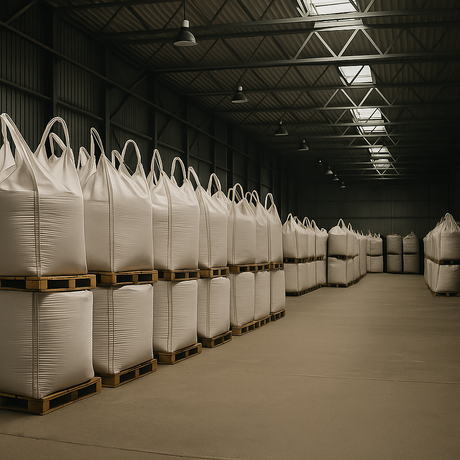


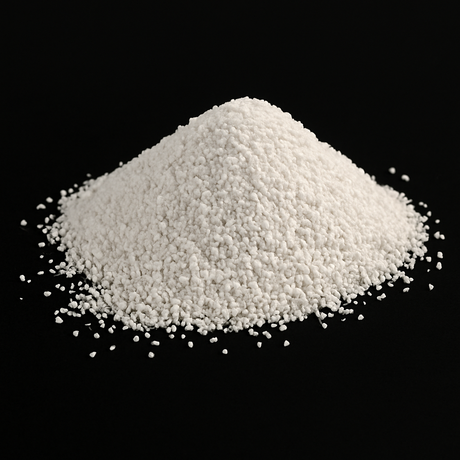

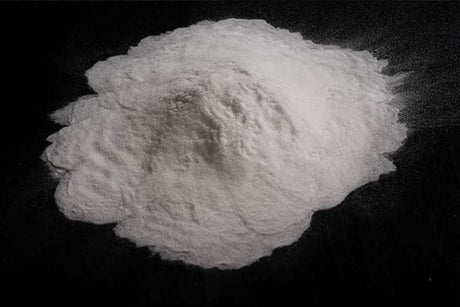

Chromatography Sorbents for Separation & Purification
Chromatography sorbents are porous solid media used to separate compounds according to differences in adsorption, polarity, molecular interactions, and movement through a stationary phase. Silica gel and activated alumina are among the most widely used inorganic adsorbents for flash, preparative, gravity-column, and process-scale chromatography.
Selecting the right chromatography media requires more than choosing a material family. Particle size, pore structure, surface chemistry, solvent system, column geometry, sample loading, pressure, and target separation can all affect resolution, flow rate, solvent consumption, and process consistency.
Common Chromatography Media
Silica Gel
Silica is a widely used polar stationary phase for normal-phase chromatography and purification. Grades are available in different particle-size ranges, pore structures, and surface areas for laboratory through process-scale use.
Activated Alumina
Alumina provides a different surface chemistry from silica and may be selected where adsorption strength, selectivity, stability, or compatibility with the target compounds favors aluminum oxide media.
Adsorbent Clays & Mineral Media
Certain clay and mineral adsorbents can support purification, clarification, or selective contaminant removal where a conventional chromatography stationary phase is not required.
Specialty Separation Media
Other porous adsorbents may be evaluated when the separation requires specific surface chemistry, molecular selectivity, contaminant affinity, or process compatibility.
Chromatography Applications
Flash Chromatography
Packed silica or alumina beds are used with applied pressure to accelerate solvent movement while maintaining separation between compounds with different affinities for the stationary phase.
Preparative Chromatography
Preparative processes use chromatography to isolate useful quantities of compounds rather than primarily generate analytical data, making media capacity, flow behavior, and scalability especially important.
Gravity Column Chromatography
Gravity-fed columns rely on controlled particle size, consistent packing, and suitable solvent flow to provide repeatable separation without applied pressure.
Process Purification
Adsorbent media may be incorporated into larger purification workflows for removal of color bodies, reaction by-products, residual impurities, and other unwanted compounds.
How to Choose a Chromatography Sorbent
1. Start With the Separation Chemistry
Consider the polarity, functional groups, molecular size, and adsorption behavior of the compounds being separated. Silica and alumina have different surface properties and can produce significantly different retention and selectivity.
2. Select the Appropriate Particle Size
Particle size influences surface contact, flow resistance, column efficiency, and pressure drop. Finer particles can improve separation efficiency but generally create greater resistance to solvent flow.
3. Evaluate Pore Structure
Pore diameter and accessible pore volume influence how molecules interact with the internal surface of the adsorbent. Larger molecules may require greater pore accessibility than smaller compounds.
4. Match the Media to the Operating Method
Gravity columns, flash systems, preparative columns, and larger process equipment place different demands on particle size distribution, pressure drop, packing consistency, and mechanical stability.
5. Consider the Solvent System
Solvent polarity and composition strongly influence adsorption and elution behavior. Media selection should therefore be evaluated alongside the mobile phase rather than independently.
6. Confirm Purity & Documentation Requirements
Applications with defined purity or quality requirements should be evaluated against the specifications of the individual grade. SDS, TDS, and COA documentation may be available depending on the product and manufacturer.
Particle Size, Mesh & Chromatography Performance
Particle size is one of the most important specifications when comparing chromatography media. Mesh size describes a particle-size range rather than the pore structure inside the adsorbent.
| Particle Characteristic | Typical Effect | Selection Consideration |
|---|---|---|
| Finer Particles | Greater contact efficiency and potentially improved separation | Higher pressure drop and slower gravity flow |
| Coarser Particles | Lower resistance and faster flow | May provide less separation efficiency in some systems |
| Narrow Size Distribution | More uniform bed packing and flow behavior | Useful where repeatability and pressure control are important |
| Broad Size Distribution | Can alter packing density and flow paths | Evaluate against the specific column and process requirements |
Mesh Size Is Not the Same as Pore Size
Mesh size describes the external particle size of the chromatography media, while pore size describes the microscopic pore structure inside the particles.
Both can affect performance, but in different ways. Mesh size strongly influences packing, solvent flow, pressure drop, and bed behavior. Pore structure affects accessible surface area and interaction between the adsorbent and molecules being separated.
Silica Gel vs. Activated Alumina for Chromatography
| Characteristic | Silica Gel | Activated Alumina |
|---|---|---|
| Material | Porous silicon dioxide | Porous aluminum oxide |
| General Surface Character | Polar | Polar with surface properties dependent on grade and treatment |
| Common Use | Normal-phase chromatography and broad preparative purification | Alternative stationary phase where different adsorption behavior is beneficial |
| Available Variables | Particle size, pore structure, surface area and grade | Particle size, activity, surface chemistry and grade |
| Selection Basis | Target compounds, solvent system, desired selectivity, column design and process conditions | |
Neither material is universally superior. Small-scale testing is often the most reliable way to compare selectivity and recovery before scaling a chromatography process.
Chromatography Media for Scale-Up
Moving from laboratory chromatography to larger preparative or process-scale systems introduces additional considerations beyond whether a media separates the target compounds successfully.
Bed depth, column diameter, packing method, particle-size distribution, solvent velocity, pressure drop, media loading, solvent volume, recovery, and downstream filtration or handling can all become increasingly important as throughput grows.
When evaluating a scale-up, providing the current media, particle-size range, column dimensions, solvent system, approximate loading, and desired production volume gives the best starting point for identifying comparable industrial grades.
Chromatography vs. General Adsorbent Purification
Not every purification process requires a chromatographic separation. Chromatography intentionally separates components according to differences in their interaction with a stationary phase, whereas adsorbent treatment may simply remove unwanted contaminants from a bulk stream.
For broader purification applications, browse our Purification Sorbents. For additional separation technologies and media, see Separation-Grade Sorbents & Media.
Frequently Asked Questions About Chromatography Sorbents
What is a chromatography sorbent?
A chromatography sorbent is a solid stationary-phase material that interacts with compounds passing through a chromatography system. Differences in adsorption and elution behavior allow components of a mixture to separate.
Why is silica gel used in chromatography?
Silica gel provides a porous, polar surface that interacts differently with compounds according to their chemistry, making it useful for many normal-phase chromatographic separations.
What is chromatography-grade silica?
Chromatography-grade silica is silica manufactured with particle-size, pore, surface, and purity characteristics suitable for chromatographic separation. Exact specifications vary by grade and manufacturer.
What does 60 Å silica mean?
A designation such as 60 Å refers to nominal pore diameter, expressed in angstroms. It describes pore structure rather than external particle or mesh size.
What mesh silica should I use for chromatography?
The appropriate mesh range depends on the chromatography method, desired flow rate, column dimensions, operating pressure, and required separation efficiency. Finer media typically increases flow resistance while potentially improving separation efficiency.
Is activated alumina used for chromatography?
Yes. Activated alumina can function as an adsorbent stationary phase and may provide different selectivity from silica because of its distinct surface chemistry.
What is the difference between mesh size and pore size?
Mesh size describes the physical size range of the particles. Pore size describes the internal pores within those particles. Both influence performance, but they control different aspects of chromatography behavior.
Can chromatography media be reused?
Reuse depends on the media, compounds processed, contamination, cleaning method, required purity, and validated process conditions. It should not be assumed that every chromatography adsorbent can be regenerated or reused without affecting performance.
Bulk Chromatography Sorbents & Technical Sourcing
Sorbents Direct supplies silica, activated alumina, and other adsorbent media for chromatography, purification, process development, and scale-up applications.
If you are replacing an existing chromatography media, provide the manufacturer or grade, material chemistry, mesh or particle-size range, pore specification if known, required quantity, and process conditions. This gives us the best starting point for identifying technically appropriate options.
You can also browse our Silica & Silica Gel and Activated Alumina collections by material type.
Need Help Selecting Chromatography Media?
Tell us your current material, chromatography method, particle-size or mesh requirement, pore specification, solvent system, and required quantity. We'll help narrow suitable media and available grades.


