
-
 Request a Custom Quote
Don’t see what you need? We can source it. -

Tixosil® 68B FCC Precipitated Silica for Food & Powder Flow
27.55 lb
$15625Unit price /Unavailable -
CHROMATOCEL® S-200 Silica Gel for Chromatography & Purification
1102.0 lb
$6,25000Unit price /Unavailable 
CHROMATOCEL® S-060 Silica Gel for Chromatography & Purification
From $62500Unit price /Unavailable
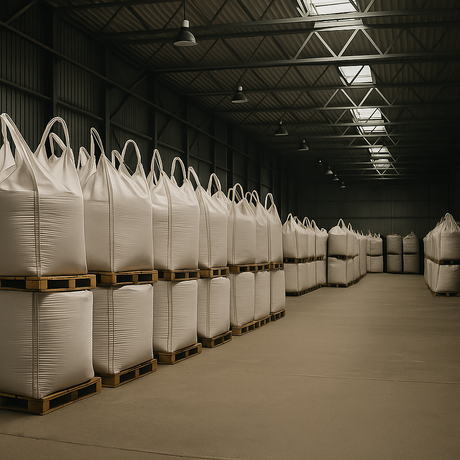
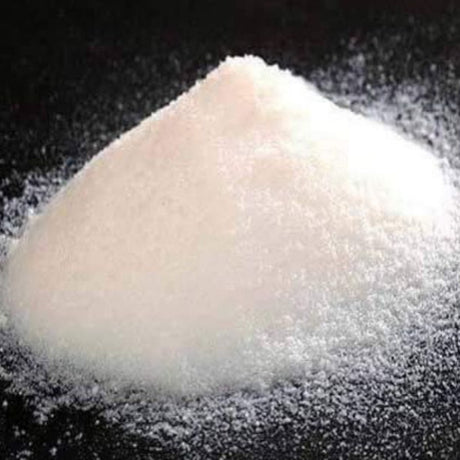


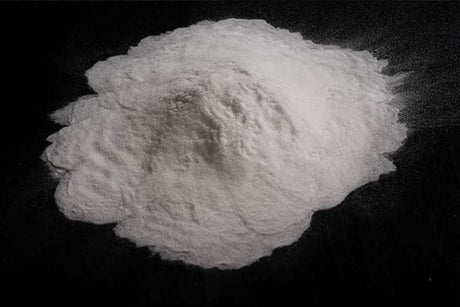

Industrial Silica Applications
Silica materials are used across drying, purification, chromatography, powder processing, and formulation applications. Performance depends heavily on the silica type, particle structure, surface area, pore characteristics, and physical form.
- Moisture control: Silica gel is widely used for humidity control, drying, packaging protection, and process moisture adsorption.
- Chromatography & purification: High-surface-area silica is used as a stationary phase and purification medium in laboratory and industrial separation processes.
- Anti-caking & flow improvement: Precipitated silica can improve powder flow, reduce clumping, and support more consistent handling of dry formulations.
- Liquid purification: Specialty silica grades may be used to adsorb polar impurities or support clarification and process treatment.
- Formulation: Silica may be used to modify rheology, absorb liquids, carry active ingredients, or improve stability depending on grade and application.
Choosing the Right Silica Grade
Silica is not a single material specification. Selection should begin with the intended function and then narrow according to physical and chemical properties.
- Silica type: Silica gel, precipitated silica, chromatographic silica, and other engineered forms behave differently.
- Particle size: Mesh range and particle distribution influence flow, filtration, pressure drop, and handling.
- Surface area: Higher surface area may improve adsorption or interaction with target compounds, but it should be evaluated alongside pore structure and process conditions.
- Pore characteristics: Pore volume and pore-size distribution influence access to internal surface area and adsorption behavior.
- Purity & documentation: Food, pharmaceutical, cosmetic, and other regulated applications may require specific grade standards and supporting documentation.
Silica Gel vs. Process Silica vs. Precipitated Silica
Different silica families are designed for very different jobs. Start with the required function before comparing individual grades.
Silica Gel
Drying & moisture adsorption
Porous silica gel is commonly selected for moisture control and drying applications where water vapor adsorption is the primary objective.
- Humidity and moisture control
- Packaging and equipment protection
- General desiccant applications
High-Surface-Area Process Silica
Purification & chromatography
Fine, high-surface-area silica grades are used where surface chemistry, particle size, and controlled pore structure are important to separation or purification performance.
- Chromatography
- Liquid purification
- Process filtration and separation
Precipitated Silica
Flow, anti-caking & formulation
Precipitated silica is widely used as a functional additive in powders, formulations, and industrial products where flow, liquid absorption, or physical stability must be controlled.
- Anti-caking and flow improvement
- Carrier and absorbent functions
- Formulation and texture control
Understanding Surface Area, Pore Structure & Particle Size
Silica performance is influenced by several related properties rather than one specification alone.
Surface area indicates how much internal and external surface is available for adsorption or interaction. Pore structure affects which molecules can access that surface, while particle size influences flow behavior, filtration, contact rate, and pressure drop.
For chromatography and purification, these parameters can strongly affect separation behavior and process efficiency. For formulation applications, bulk density, oil absorption, moisture, and particle morphology may be equally important.
Silica for Chromatography & Purification
Chromatography silica is selected based on factors such as particle-size distribution, pore structure, surface chemistry, and the intended separation process.
Fine-particle silica can provide increased surface interaction but may also affect flow rate and pressure. For industrial purification applications, the correct balance between adsorption performance, throughput, filtration behavior, and downstream separation is usually more important than maximizing any single specification.
For additional background, see our Silica 101: Properties, Applications & Industrial Uses guide.
Silica vs. Activated Alumina vs. Molecular Sieves
For moisture removal, silica gel is one of several possible adsorbents.
Activated alumina is commonly used in industrial drying and purification systems where durability and regeneration are important. Molecular sieves are often selected when very low residual moisture or highly selective adsorption is required.
Silica gel is often favored for general humidity control and moderate drying conditions, while the final choice should account for temperature, inlet moisture, required outlet specification, regeneration method, and process economics.
Questions to Ask Before Selecting Silica
- What is the primary function: drying, purification, chromatography, flow improvement, or formulation?
- What particle size or mesh range is compatible with the process?
- Is surface area or pore size critical to performance?
- Will the silica be retained in the final product or removed after processing?
- Are purity, food, pharmaceutical, cosmetic, or other documentation requirements involved?
- What quantity and packaging format are required?
Need Help Selecting a Silica Grade?
Tell us the application, target function, current grade if applicable, particle-size requirements, and expected quantity. Sorbents Direct can help narrow the available silica types and identify suitable grades for evaluation.
Request Technical Support or a Bulk Quote


