-
 Request a Custom Quote
Don’t see what you need? We can source it. -

Coal-Based Granular Activated Carbon (GAC) – 8x30 & 12x40 Mesh
From $17098Unit price /Unavailable 
4 mm Pelletized Activated Carbon - VOC & Industrial Air Treatment
From $21598Unit price /Unavailable-

Food-Grade Coconut Shell Powdered Activated Carbon (PAC) - 80x325 Mesh, Acid-Washed
From $28098Unit price /Unavailable -
Coconut Shell Granular Activated Carbon (GAC) - 8x30 & 12x40 Mesh
From $21298Unit price /Unavailable


Activated Carbon for Industrial Purification
Activated carbon is used in liquid- and vapor-phase treatment systems to adsorb compatible organic compounds, odors, color bodies, residual oxidants, volatile organic compounds and other process impurities.
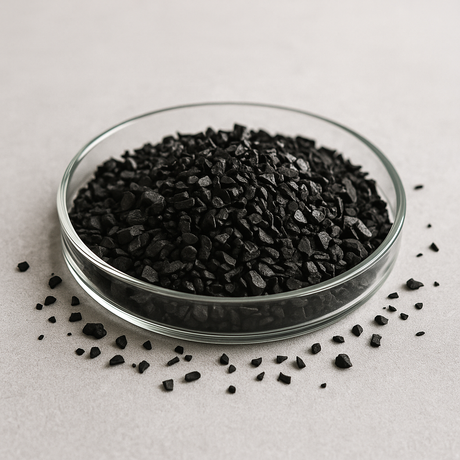
Sorbents Direct supplies granular activated carbon (GAC), powdered activated carbon (PAC) and pelletized carbon in coconut-shell, coal-based and other application-specific grades. Selection should begin with the contaminant, process phase and treatment configuration—not one headline specification.
For a deeper technical overview of pore structure, iodine number, contact time, EBCT and carbon selection, see our Activated Carbon: A Practical Guide for Industrial Purification .
GAC vs. PAC vs. Pelletized Activated Carbon
Physical form determines how activated carbon is introduced, retained and removed from the process. Choose the process configuration first, then narrow the base material, particle size and activity specification.
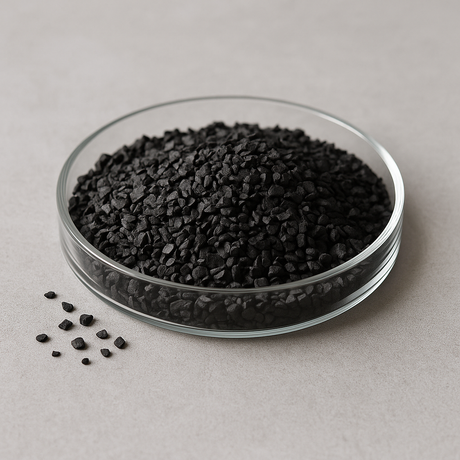
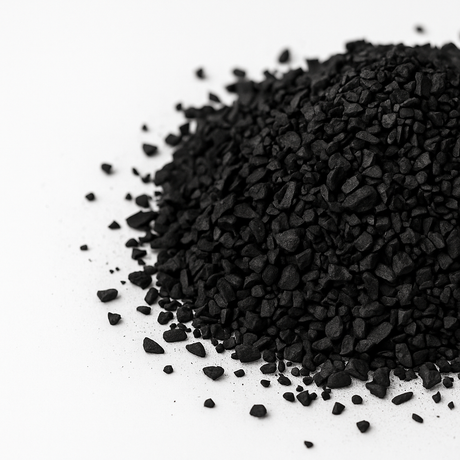
Granular Activated Carbon (GAC)
Continuous liquid & gas treatment
Granular activated carbon is retained in vessels, columns or filter beds while the process stream passes through the media.
- Water and process-liquid polishing
- Organic-contaminant adsorption
- Dechlorination
- Gas and vapor treatment
- Common sizes include 8×30 and 12×40 mesh
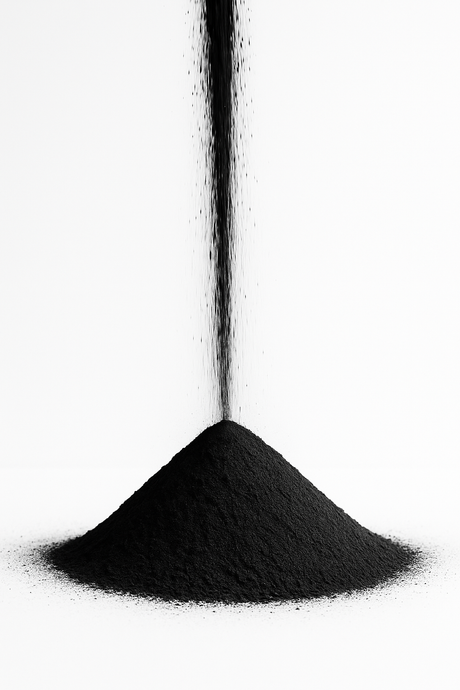
Powdered Activated Carbon (PAC)
Batch & dosed liquid treatment
PAC is dispersed into a compatible liquid or process stream, allowed to contact the target compounds and subsequently removed through filtration or another solids-separation step.
- Color and impurity reduction
- Batch purification
- Flexible treatment dosage
- High relative surface exposure
- Requires downstream solids removal
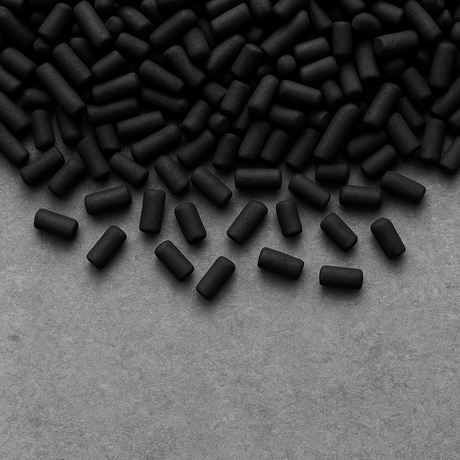
Pelletized Activated Carbon
Packed-bed air & gas purification
Extruded carbon pellets provide a controlled cylindrical geometry that can support predictable gas flow, mechanical strength and lower pressure drop in compatible packed-bed systems.
- VOC adsorption
- Odor control
- Process-gas purification
- Uniform packed-bed geometry
- Common industrial diameters around 3–4 mm
Activated Carbon Applications
Activated carbon is used throughout industrial purification processes where the target compounds have useful affinity for the selected carbon surface and pore structure.
- Water & wastewater treatment: Adsorption of compatible dissolved organics, taste and odor compounds, residual oxidants and selected process contaminants.
- Air & gas purification: VOC, hydrocarbon, solvent-vapor and odor adsorption from compatible process and ventilation streams.
- Food & beverage processing: Selected decolorization, deodorization and purification duties using appropriately qualified carbon grades.
- Chemical processing: Color reduction, organic-impurity polishing and purification of compatible process liquids.
- Solvent recovery: Adsorption and recovery of compatible organic vapors in properly designed treatment systems.
- Industrial purification: Polishing applications where carbon pore structure and surface chemistry fit the target compound.
Choosing an Activated Carbon
Carbon selection depends on the target compound, operating phase, equipment, contact time and required treated-stream specification. Important variables include:
- Carbon form: granular (GAC), powdered (PAC) or extruded/pelletized carbon.
- Base material: coconut shell, coal, wood or another application-specific feedstock.
- Particle size: mesh range or pellet diameter affects mass transfer, pressure drop, retention and handling.
- Pore distribution: micropores, mesopores and macropores influence which molecules can access useful adsorption sites.
- Activity: iodine number, CTC activity, butane activity, molasses number and related tests characterize different aspects of performance.
- Physical properties: hardness, ash, moisture, apparent density and particle distribution affect process fit and service life.
Coconut-Shell vs. Coal-Based Activated Carbon
Base material influences pore distribution and physical properties, but it should not be treated as a simple quality ranking.
Coconut-Shell Activated Carbon
Coconut-shell carbon generally develops a high proportion of microporosity and is known for high hardness. These characteristics can make it a useful starting point for smaller adsorbates and applications where mechanical durability is valuable.
- High hardness tendency
- Strong micropore development
- Common in water and purification systems
- Available in multiple GAC mesh ranges
Coal-Based Activated Carbon
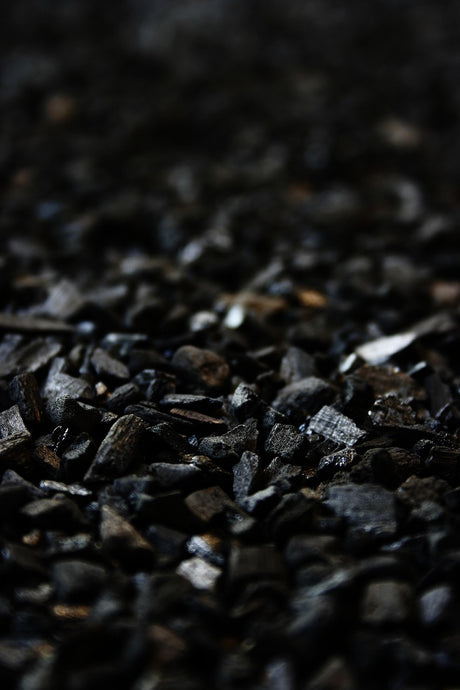
Coal-based carbon often provides a broader distribution of pore sizes and is widely used across industrial water, wastewater, liquid-phase, air and vapor purification systems.
- Broad industrial application range
- Balanced pore-size distribution tendency
- Liquid- and vapor-phase options
- Multiple mesh and physical-form choices
Coconut vs. coal is not a better-vs.-worse decision.
Target-molecule size, pore distribution, activity, particle size, hardness, ash, process phase and operating conditions should determine the grade. Two carbons made from different feedstocks can each outperform the other depending on the application.
Understanding Carbon Mesh Size
Mesh size describes the particle-size distribution of granular activated carbon and affects both adsorption kinetics and the physical behavior of the bed.
Smaller particles generally reduce diffusion distance and can improve mass-transfer rate, but they also tend to increase pressure drop. Coarser particles provide easier flow but may require additional bed depth or contact time depending on the process.
Common industrial GAC ranges include 8×30 and 12×40 mesh, while vapor-phase systems may use granular media or approximately 3–4 mm pellets.
Understanding Activated Carbon Specifications
Activated carbon should be evaluated as a complete media specification rather than selected from one performance number.
- Iodine number: indicator associated with micropore development
- CTC / butane activity: vapor-phase activity indicators
- Molasses number: useful for evaluating adsorption of larger color bodies
- BET surface area: total accessible surface-area measurement
- Hardness: resistance to attrition
- Ash: inorganic residue content
- Moisture: water present in the supplied carbon
- Apparent density: mass per unit bulk volume
Higher Iodine Number Does Not Automatically Mean Better Carbon
Iodine number is useful because it provides information associated with micropore development and adsorption of relatively small molecules, but it does not describe the complete pore distribution or predict performance against every contaminant.
A lower-iodine carbon with a more appropriate pore distribution may outperform a higher-iodine carbon for a larger molecule or different process. Particle size, hardness, ash, surface chemistry, contact time and operating conditions also matter.
For a deeper explanation, see our practical guide to activated-carbon specifications and selection .
How to Select an Activated Carbon
Narrow the options in this order rather than starting with iodine number or price alone.
Define the Target
Identify the compound or treatment objective, its concentration and the required outlet specification.
Identify the Phase
Determine whether the carbon will treat a liquid, air stream, process gas or another compatible phase.
Select the Form
Choose GAC for retained beds, PAC for contact-and-separate treatment or pellets for suitable vapor and gas systems.
Match Pore Structure
Compare coconut, coal, wood or specialty carbon based on target-molecule size and adsorption behavior.
Check Physical Specs
Review mesh size, hardness, ash, moisture, density and pressure-drop requirements.
Validate the Grade
Confirm performance with manufacturer data, process history, bench testing or pilot qualification when appropriate.
Fixed-Bed Carbon vs. Contact Treatment
Fixed-Bed GAC or Pellet Systems
The process stream flows through carbon retained inside a vessel, column or bed. Bed depth, particle size, contact time, pressure drop and breakthrough behavior become key design variables.
- Continuous treatment
- Replaceable or reactivatable media
- Defined bed hydraulics
- Requires breakthrough monitoring
PAC Contact Treatment
Powdered activated carbon is dosed directly into a compatible process liquid and later removed. Dose, mixing, contact time and downstream filtration determine process performance.
- Batch or variable treatment
- Flexible carbon dosage
- Fast relative contact
- Requires solids separation
Need More Than a Product Comparison?
Our cornerstone Activated Carbon guide covers pore structure, base materials, iodine number, CTC activity, EBCT, pressure drop, carbon forms, use-case playbooks and process qualification in greater depth.
Read the Activated Carbon Practical Guide →Activated Carbon for Commercial & Bulk Requirements
Sorbents Direct supports both existing-grade replacement and new activated-carbon requirements with technical documentation, commercial packaging and freight support.
Grade Matching
Provide the current manufacturer, carbon grade, base material, mesh or pellet size and application for comparison.
Technical Documentation
SDS, TDS and available lot documentation can support process and procurement qualification.
Production Quantities
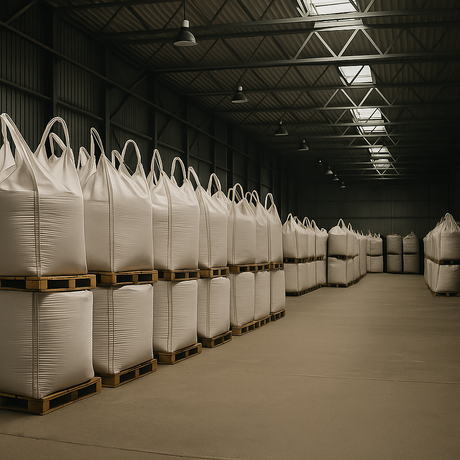
Product-specific bags, pallets, supersacks and recurring commercial quantities can be quoted according to grade and availability.
Freight Support
Pallet and LTL freight can be priced around the actual quantity and destination.
See our Bulk Industrial Adsorbents & Filtration Media Supplier page for broader commercial sourcing support.
Activated Carbon FAQ
What is activated carbon used for?
What is the difference between GAC and PAC?
What is pelletized activated carbon used for?
Is coconut-shell carbon better than coal-based carbon?
Does higher iodine number mean better activated carbon?
What is the difference between 8×30 and 12×40 activated carbon?
Can activated carbon be regenerated?
How do I replace an existing activated-carbon grade?
Can Sorbents Direct supply activated carbon in bulk quantities?
Need Help Selecting an Activated Carbon?
Tell us the material being treated, target contaminant, liquid or vapor phase, flow rate, current carbon specification if known, particle size, required quantity and destination. Sorbents Direct can help narrow practical GAC, PAC, pellet, coconut-shell and coal-based options for evaluation.


