-
 Request a Custom Quote
Don’t see what you need? We can source it. -

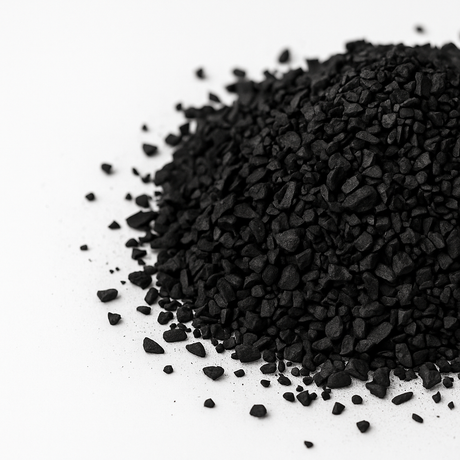
Coal-Based Granular Activated Carbon (GAC) – 8x30 & 12x40 Mesh
From $17098Unit price /Unavailable -
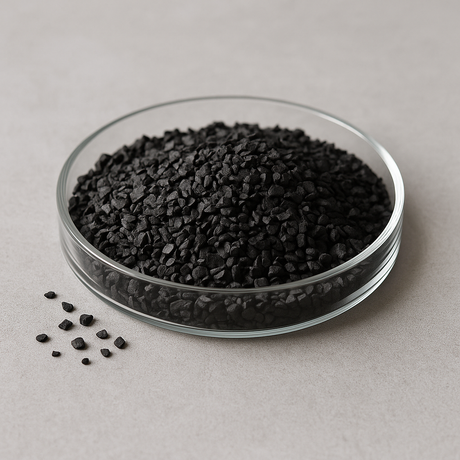
Coconut Shell Granular Activated Carbon (GAC) - 8x30 & 12x40 Mesh
From $21298Unit price /Unavailable 

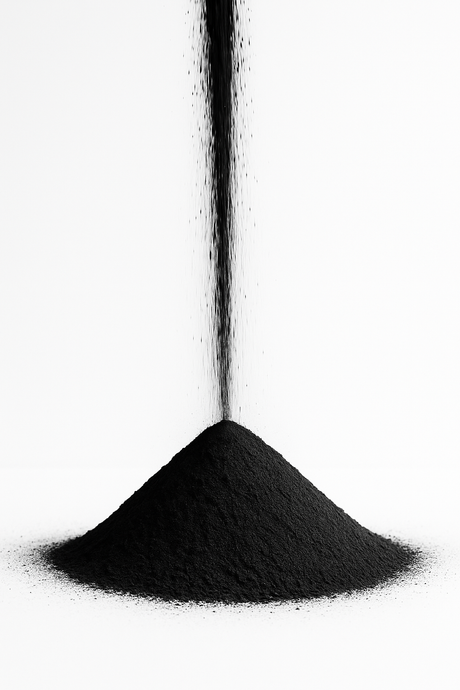
Food-Grade Coconut Shell Powdered Activated Carbon (PAC) - 80x325 Mesh, Acid-Washed
From $28098Unit price /Unavailable-



Industrial Sorbents for Water & Wastewater Treatment
Water-treatment sorbents are materials used to adsorb, capture, or reduce selected contaminants from water and wastewater streams. Depending on the media and process, treatment may target dissolved organic compounds, taste- and odor-causing compounds, residual oxidants, selected inorganic contaminants, moisture, or other impurities that affect water quality or downstream operations.
Common treatment media include activated carbon, activated alumina, zeolites, molecular sieves, and mineral adsorbents. The appropriate material depends on the contaminant being targeted, water chemistry, concentration, pH, competing ions, flow rate, contact time, required treatment endpoint, and system configuration.
Water Treatment Media Comparison
| Media Type | Common Treatment Role | Typical Applications | Key Selection Factors |
|---|---|---|---|
| Activated Carbon | Adsorption of many organic compounds, taste and odor compounds, and selected dissolved contaminants | Drinking-water treatment, wastewater polishing, process water and groundwater treatment | Carbon source, pore structure, particle size, contaminant identity, contact time and competing organics |
| Activated Alumina | Adsorption of selected inorganic and polar contaminants | Water polishing and contaminant-specific treatment systems | Target contaminant, pH, competing ions, media form, flow rate and operating conditions |
| Zeolites | Ion exchange and selective adsorption depending on zeolite structure and form | Ammonium reduction, water polishing and specialty treatment applications | Ion form, pore structure, water chemistry, competing ions and regeneration strategy |
| Molecular Sieves | Selective adsorption based on molecular size and polarity | Specialty liquid treatment, process purification and moisture-sensitive applications | Pore size, target molecule, water loading, temperature and regeneration conditions |
| Clay & Mineral Adsorbents | Adsorption, clarification support and contaminant capture depending on grade | Industrial wastewater, process treatment and polishing | Mineralogy, surface chemistry, particle size, dosage and downstream filtration |
| Filter Aids | Physical solids removal and cake-filtration support | Clarification, suspended-solids removal and downstream separation | Permeability, particle-size distribution, solids loading and filtration rate |
Common Water & Wastewater Applications
Municipal Water Treatment
Activated carbon and other adsorptive media may be used to reduce taste- and odor-causing compounds, selected organic contaminants, and other impurities as part of a larger municipal treatment process.
Industrial Wastewater
Adsorbents can provide polishing after upstream treatment where residual organics, odors, dissolved contaminants, or other process-specific impurities must be reduced before reuse, additional treatment, or discharge.
Groundwater Treatment
Activated carbon and specialty adsorbents may be incorporated into groundwater treatment systems where specific dissolved contaminants have been identified through analytical testing.
Process-Water Polishing
Sorbent media can help improve incoming or recirculated process water before it reaches sensitive equipment, manufacturing steps, purification systems, or final product-contact operations.
Wastewater Odor Control
Gas-phase activated carbon and specialty adsorbents may be used separately from liquid treatment to address hydrogen sulfide, VOCs, and other nuisance odors around wastewater infrastructure.
Final Treatment & Polishing
Adsorptive media are often used as a polishing step after primary treatment, solids separation, biological treatment, or chemical treatment when tighter contaminant targets are required.
Adsorption vs. Filtration in Water Treatment
Adsorption and filtration are different treatment mechanisms. Adsorption retains molecules on the surface and within the pore structure of a media, while filtration primarily removes suspended material through physical separation.
Many water-treatment systems use both. Activated carbon may adsorb dissolved contaminants while upstream or downstream filtration removes suspended solids and protects the adsorbent bed.
For filter aids, cake filtration, and physical solids separation, see our Industrial Filtration Media & Sorbents.
How to Select Water Treatment Sorbents
1. Identify the Target Contaminant
Begin with analytical data whenever possible. Treatment selection should be based on the actual contaminant or contaminant family rather than simply describing the water as dirty, discolored, or odorous.
2. Determine the Starting Concentration
Trace polishing and bulk contaminant removal require different media quantities and system designs. Starting concentration is essential for estimating capacity, service life, and treatment economics.
3. Define the Required Treatment Endpoint
The target may be a process specification, reuse requirement, internal quality standard, permit-related limit, or another defined endpoint. Media selection should begin with that requirement.
4. Evaluate Water Chemistry
pH, alkalinity, dissolved solids, competing ions, natural organic matter, temperature, and other components can influence adsorption and ion-exchange behavior.
5. Consider Flow Rate & Contact Time
Adsorption requires sufficient interaction between the water and media. Vessel size, bed depth, particle size, hydraulic loading, and flow distribution can therefore be just as important as the adsorbent itself.
6. Account for Pretreatment
Suspended solids, oils, biological growth, or high contaminant loading may foul adsorbent beds. Appropriate upstream filtration or treatment can improve media utilization and system reliability.
7. Plan for Spent-Media Handling
Once exhausted, treatment media must be replaced, regenerated, reactivated, or otherwise managed according to the media, captured contaminants, and applicable handling requirements.
Activated Carbon for Water Treatment
Activated carbon is among the most widely used adsorbents in water treatment because its extensive internal pore structure can adsorb many organic compounds and taste- and odor-causing substances.
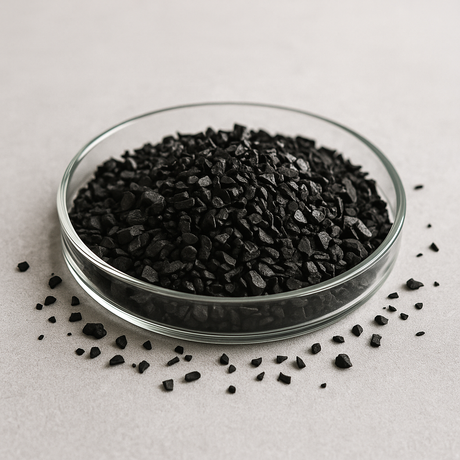
Granular activated carbon (GAC) is commonly used in fixed beds and treatment vessels, while powdered activated carbon (PAC) can be dosed into batch or continuous treatment processes and subsequently removed through filtration or settling.
Performance varies according to contaminant chemistry, carbon source, pore distribution, particle size, contact time, pH, temperature, competing organics, and other water-quality parameters.
Granular vs. Powdered Activated Carbon
Granular Activated Carbon (GAC)
GAC is commonly packed into vessels or filters for continuous treatment. Mesh size, bed depth, flow rate, contact time, hardness, and contaminant loading all influence system performance.
Powdered Activated Carbon (PAC)
PAC can be dispersed directly into water for rapid contact with contaminants and then separated downstream. Dosage and filtration requirements must be considered as part of the complete treatment process.
Activated Alumina for Water Treatment
Activated alumina is a porous aluminum-oxide adsorbent used in selected water-treatment and purification applications.
Performance can be strongly influenced by pH, competing ions, contaminant concentration, flow rate, media particle size, and the specific alumina grade. Application suitability should therefore be confirmed against product specifications and treatment conditions.
Zeolites for Water & Wastewater Treatment
Zeolites are crystalline aluminosilicate materials whose pore structures and ion-exchange properties can make them useful in selected water-treatment applications.
Natural and synthetic zeolites are not interchangeable. Performance depends on mineral structure, ion form, particle size, target contaminant, competing ions, water chemistry, and whether regeneration is part of the treatment strategy.
Water Treatment vs. Water Purification
Water treatment describes the overall process used to change water quality for a particular purpose. It may include filtration, adsorption, ion exchange, chemical treatment, biological treatment, membranes, disinfection, and other technologies.
Purification generally refers to contaminant removal or polishing within that larger treatment process.
For a broader comparison of adsorbents used across liquid and gas purification systems, see our Industrial Purification Sorbents & Media.
Water Treatment Media Selection at a Glance
| If You Need To... | Start By Evaluating... | Important Variables |
|---|---|---|
| Reduce many dissolved organic compounds | Activated carbon | Contaminant identity, concentration, carbon type and contact time |
| Improve taste or odor | Activated carbon or contaminant-specific media | Odor source, water chemistry, organic loading and required endpoint |
| Target selected inorganic contaminants | Activated alumina or other contaminant-specific adsorbents | pH, competing ions, concentration and media chemistry |
| Reduce ammonium in suitable systems | Appropriate zeolitic media | Zeolite type, ion form, competing ions, capacity and regeneration |
| Remove suspended solids | Filtration media or filter aids | Particle size, solids loading, permeability and filtration equipment |
| Polish treated wastewater | Contaminant-specific adsorbent media | Residual contaminant profile, flow, endpoint and media service life |
Frequently Asked Questions About Water Treatment Sorbents
What sorbents are used in water treatment?
Common adsorptive media include activated carbon, activated alumina, zeolites, and other specialty mineral or synthetic adsorbents. The correct material depends on the contaminant and treatment conditions.
What does activated carbon remove from water?
Activated carbon can adsorb many organic compounds, taste- and odor-causing compounds, and selected other contaminants. Performance varies by carbon grade, contaminant chemistry, water quality, concentration, and contact time.
What is GAC in water treatment?
GAC stands for granular activated carbon. It is activated carbon manufactured in granular form and commonly used in fixed beds, contactors, and filters for continuous adsorption treatment.
What is PAC in water treatment?
PAC stands for powdered activated carbon. It is finely divided activated carbon that can be dosed directly into a treatment stream and subsequently removed through settling, filtration, or another solids-separation step.
Can activated alumina be used in water treatment?
Yes. Activated alumina is used for selected water-treatment applications, but effectiveness depends strongly on the target contaminant, pH, competing ions, operating conditions, and specific media grade.
Are zeolites used in wastewater treatment?
Certain zeolites can be used for ion exchange and selective adsorption in wastewater and process-water treatment. Suitability depends on the zeolite structure, ion form, contaminant, competing ions, and water chemistry.
Does activated carbon remove PFAS?
Certain granular activated carbon systems are used for treatment of some PFAS compounds, but performance varies significantly with PFAS chemistry, carbon type, competing organics, contact time, water quality, and treatment design. Product and system suitability should be evaluated for the specific application rather than assumed for activated carbon generally.
How long does water-treatment media last?
Media service life depends on contaminant concentration, competing substances, flow rate, contact time, media capacity, water chemistry, treatment endpoint, and system design. There is no universal change-out interval.
What information is needed to choose water-treatment media?
Useful information includes analytical water data, target contaminants, starting concentrations, required final levels, pH, flow rate, temperature, existing treatment equipment, current media if applicable, and expected media quantity.
Bulk Water Treatment Media & Technical Support
Sorbents Direct supplies activated carbon, activated alumina, zeolites, molecular sieves, mineral adsorbents, and related process media for water treatment, wastewater polishing, purification, and contaminant-control applications.
For material selection, provide your water analysis or contaminant list if available, target concentrations, required treatment endpoint, flow rate, pH, existing equipment, current media, and expected volume. These details provide the best starting point for identifying appropriate media families and commercially available grades.
Need Help Selecting Water Treatment Media?
Send us your contaminant profile, water chemistry, flow rate, treatment target, existing media if applicable, and required quantity. We'll help narrow appropriate sorbent families and available grades.


