-
 Request a Custom Quote
Don’t see what you need? We can source it. -

Tixosil® 68B FCC Precipitated Silica for Food & Powder Flow
27.55 lb
$15625Unit price /Unavailable 
Pure-Flo® B80 Natural Bleaching Adsorbent High-Performance Clay for Edible Oil Refining
From $8800Unit price /Unavailable
CHROMATOCEL® S-060 Silica Gel for Chromatography & Purification
From $62500Unit price /Unavailable


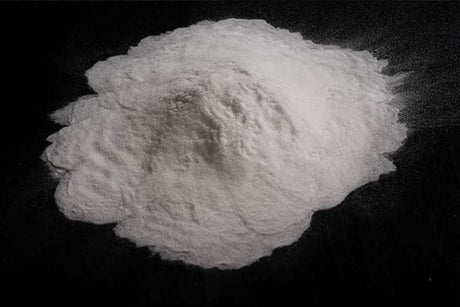

What Are Anti-Caking Agents?
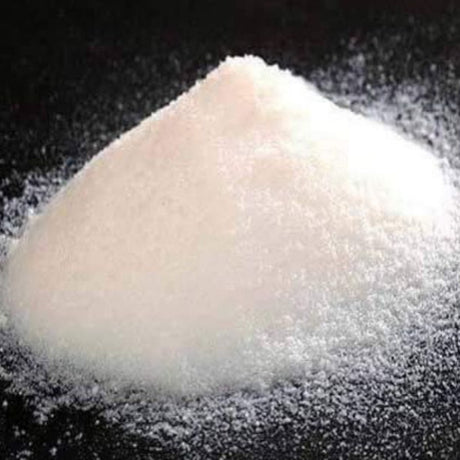
Anti-caking agents are materials used to reduce clumping, agglomeration, and loss of flowability in powders and granular products. They can help maintain consistent handling during blending, storage, conveying, filling, and discharge by modifying the conditions that cause particles to stick together.
Depending on the application, anti-caking materials may work by adsorbing surface moisture, separating particles, reducing particle-to-particle contact, modifying surface characteristics, or improving the overall handling behavior of a powder system.
Why Do Powders Cake?
Caking is rarely caused by a single factor. Powder behavior can change significantly during storage and transport as moisture, pressure, temperature, particle characteristics, and time interact.
Moisture & Humidity
Hygroscopic materials can absorb water from surrounding air. Moisture at particle surfaces can increase cohesion and promote liquid bridging, dissolution and recrystallization, or other mechanisms that bind particles together.
Compaction
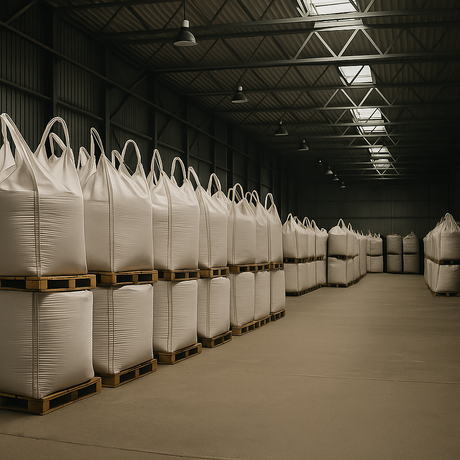
The weight of material in bags, totes, bins, or bulk storage can consolidate powders over time. Vibration during transport can increase packing and make discharge more difficult.
Particle Characteristics
Fine particles generally have greater surface interaction relative to their mass. Particle size distribution, shape, roughness, and surface chemistry can all influence cohesion and caking tendency.
Temperature Cycling
Changes in temperature can alter relative humidity, condensation behavior, and moisture migration inside packaging or storage vessels, potentially increasing agglomeration during storage.
Common Anti-Caking Materials
| Material Type | Potential Function | Selection Considerations |
|---|---|---|
| Precipitated Silica | Surface moisture management, particle separation, flow modification and carrier functionality | Surface area, particle size, oil absorption, moisture, dosage and grade requirements |
| Silicate Materials | Moisture management, anti-caking and powder-flow support depending on composition and grade | Composition, absorption characteristics, particle size and application-specific requirements |
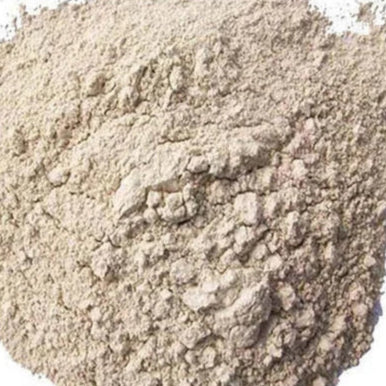
| Clay Minerals | Absorbency, carrier functionality and moisture moderation in industrial powder systems | Mineralogy, particle size, bulk density, moisture capacity and formulation compatibility |
| Zeolites | Selective adsorption and moisture-control functionality in suitable powder and process applications | Pore structure, particle form, adsorption target and compatibility with the finished system |
| Other Mineral Adsorbents | Carrier, absorbency, surface modification or moisture-control functions depending on material | Purity, particle characteristics, adsorption properties and intended end use |
Where Anti-Caking Materials Are Used
Bulk Powder Storage
Powders stored in bags, drums, totes, silos, and other bulk containers may consolidate or absorb moisture over time. Anti-caking materials can be evaluated where storage stability and reliable discharge are important.
Blending & Formulation
Cohesive powders can be difficult to distribute uniformly through a blend. Suitable processing additives may help maintain particle separation and improve handling, although compatibility with the finished formulation should always be verified.
Hoppers, Feeders & Conveying
Caked or agglomerated material can contribute to bridging, ratholing, inconsistent feeding, and interrupted transfer. Addressing the underlying caking mechanism can improve reliability throughout bulk-handling equipment.
Packaging & Transportation
Humidity changes, vibration, pressure, and long storage periods can alter powder behavior after packaging. Anti-caking strategies may help preserve handling characteristics between production and end use.
Agricultural & Industrial Powders
Fertilizer components, mineral blends, chemical powders, carriers, and other hygroscopic or cohesive materials may require moisture and caking control to maintain reliable processing and application.
Anti-Caking Agent vs. Flow Aid
The two functions overlap, but they solve different primary problems. An anti-caking agent is selected primarily to reduce clumping or agglomeration, especially during storage and transport. A flow aid is selected primarily to improve powder movement, feeding, or discharge.
Some materials can contribute to both functions. If your primary problem is bridging, ratholing, poor hopper discharge, or inconsistent feeding rather than storage-related caking, explore our Powder Flow Aids.
Anti-Caking Agent vs. Desiccant
Anti-caking agents and desiccants should not automatically be treated as interchangeable. Anti-caking materials are used to maintain powder handling characteristics, while a desiccant is primarily selected to remove or control moisture in a package, vessel, gas stream, liquid, or other environment.
Materials such as silica gel, activated alumina, and molecular sieves can provide strong moisture adsorption, but the appropriate material and method depend on whether the goal is direct powder modification, environmental moisture control, or process-stream dehydration.
How to Select an Anti-Caking Material
1. Identify Why the Material Is Caking
Determine whether the problem develops because of humidity, compaction, temperature cycling, fine particle size, static, storage time, pressure, or a combination of factors. The mechanism matters when selecting a solution.
2. Determine Where the Problem Occurs
Caking during warehouse storage may require a different approach from agglomeration inside a mixer, hopper, feeder, transport container, or finished package.
3. Evaluate Particle & Moisture Characteristics
Useful information includes particle size, bulk density, moisture content, hygroscopicity, storage conditions, temperature range, and the severity of the existing caking problem.
4. Consider Addition Method & Loading
When a material will be blended directly into a product, dosage and dispersion can strongly affect performance. More additive does not necessarily produce better results and may alter bulk density, texture, processing behavior, filtration, or other properties.
5. Verify Grade & End-Use Requirements
Food, pharmaceutical, feed, cosmetic, chemical, and other regulated applications may require specific certifications, purity limits, documentation, or permitted-use levels. Suitability should be confirmed for the individual product grade and intended application.
Evaluating Anti-Caking Performance
Anti-caking performance should ideally be tested under conditions representative of the actual process and storage environment. Useful comparisons can include flow after storage, tendency to form hard agglomerates, discharge behavior, bulk density, moisture uptake, sieve retention, and response to compression or vibration.
For direct-addition applications, testing several loading levels against an untreated control can help determine whether a candidate material improves storage and handling without negatively affecting downstream performance.
Frequently Asked Questions About Anti-Caking Agents
What does an anti-caking agent do?
An anti-caking agent helps reduce the tendency of powder or granular particles to stick together and form agglomerates. Depending on the material, it may help manage surface moisture, separate particles, modify surface interactions, or support better flowability.
What causes powder to cake during storage?
Common causes include moisture absorption, humidity changes, compaction, vibration, temperature cycling, fine particle size, particle shape, and chemical or physical interactions between particles.
Is silica used as an anti-caking agent?
Certain silica materials are used for anti-caking, flow-control, carrier, and moisture-management functions. Performance depends on the silica type, particle characteristics, surface properties, dosage, and application.
Are anti-caking agents the same as flow aids?
Not exactly. Anti-caking agents primarily address clumping and agglomeration, while flow aids primarily improve powder movement and handling. Some materials can perform both functions depending on the system.
Are anti-caking agents the same as desiccants?
No. A desiccant is primarily used to adsorb moisture from an environment or process, while an anti-caking agent is used primarily to maintain the handling characteristics of a powder or granular material. Moisture adsorption can contribute to anti-caking performance, but the functions are not identical.
How much anti-caking agent should be used?
There is no universal addition rate. Effective dosage depends on the base material, anti-caking grade, moisture conditions, processing method, storage environment, and end-use requirements. Comparative testing is generally the best way to establish an appropriate range.
Industrial Anti-Caking Materials & Technical Support
Sorbents Direct supplies silica, clay, zeolite, alumina, and specialty mineral materials for adsorption, moisture control, powder processing, filtration, formulation, and bulk-material handling.
For an existing caking problem, useful starting information includes the material being handled, particle size, current moisture level, storage conditions, packaging format, length of storage, existing additives, and approximate required quantity.
Need Help With a Caking or Clumping Problem?
Tell us what material you're handling, when the caking occurs, your storage or processing conditions, and the quantity you need. We'll help narrow suitable mineral and adsorbent options for evaluation.


