-
 Request a Custom Quote
Don’t see what you need? We can source it. 

Ultra-Clear® Attapulgite Clarification Media for Fuels & Oils
From $17500Unit price /Unavailable-

Coal-Based Granular Activated Carbon (GAC) – 8x30 & 12x40 Mesh
From $17098Unit price /Unavailable 
4 mm Pelletized Activated Carbon - VOC & Industrial Air Treatment
From $21598Unit price /Unavailable-
Attasorb® 16/30 LVM - Granular Attapulgite Sorbent & Filter Media
From $17900Unit price /Unavailable 
Dicalite 4200 DE Filter Aid for General Liquid Clarification
From $99500Unit price /Unavailable-
Dicalite Speedplus A Fine DE Filter Aid for Liquid Clarification
From $99500Unit price /Unavailable -
Select 450 Selective Silicate Adsorbent for Oils & Biodiesel
1000.0 lb
$3,82900Unit price /Unavailable -
-
Pure-Flo® Supreme 55 Bleaching Earth for Edible Oil Refining
1000.0 lb
$1,71900Unit price /Unavailable -
Select 350 Selective Silicate Adsorbent for Oils & Biodiesel
1000.0 lb
$3,74900Unit price /Unavailable -
Coconut Shell Granular Activated Carbon (GAC) - 8x30 & 12x40 Mesh
From $21298Unit price /Unavailable -

Food-Grade Coconut Shell Powdered Activated Carbon (PAC) - 80x325 Mesh, Acid-Washed
From $28098Unit price /Unavailable -
CHROMATOCEL® S-200 Silica Gel for Chromatography & Purification
1102.0 lb
$6,25000Unit price /Unavailable -

CHROMATOCEL® S-060 Silica Gel for Chromatography & Purification
From $62500Unit price /Unavailable
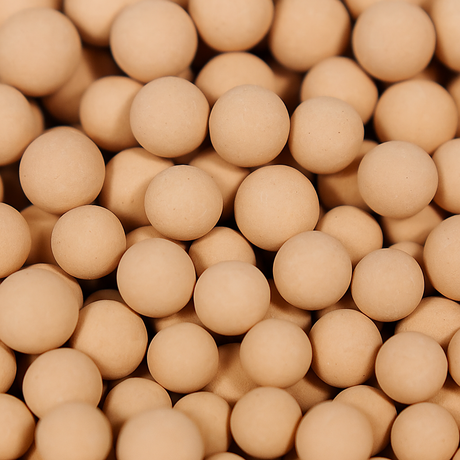
4A 8×12 Molecular Sieve Desiccant for Gas & Liquid Drying
From $45100Unit price /Unavailable-
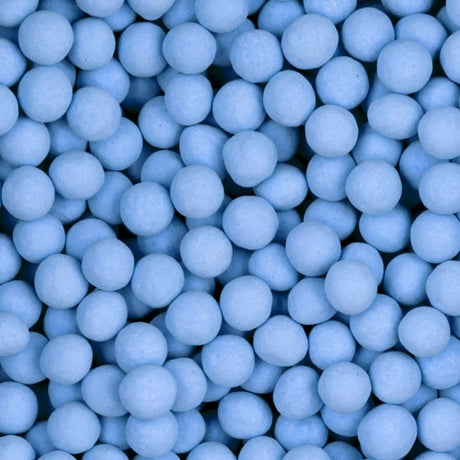
4A 4×8 Blue Indicating Molecular Sieve Desiccant
From $1,88700Unit price /Unavailable -
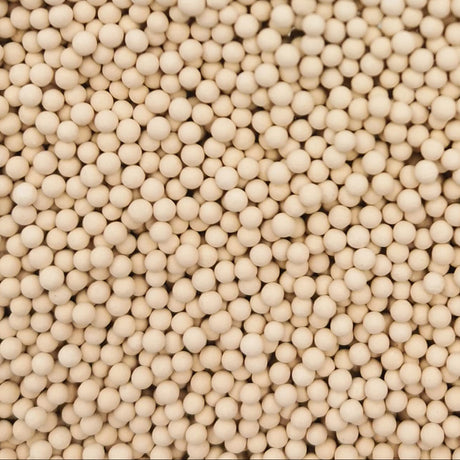
3A 8x12 Molecular Sieve Desiccant High-Performance Zeolite for Industrial Drying
From $46200Unit price /Unavailable -
13X 4×8 Molecular Sieve for CO₂ & Gas Purification
From $48200Unit price /Unavailable





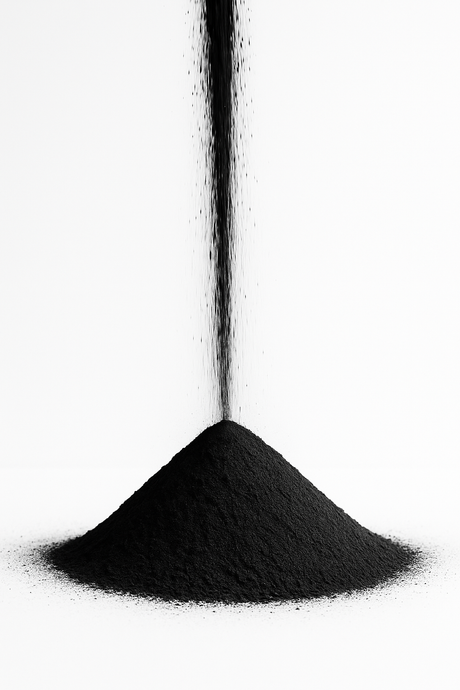


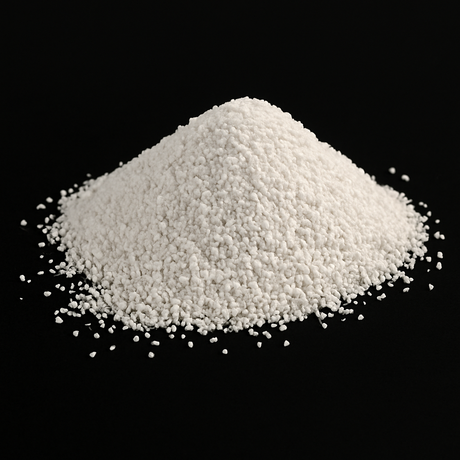

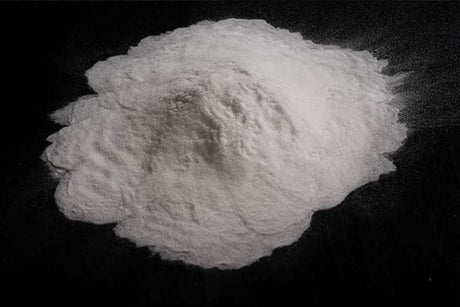

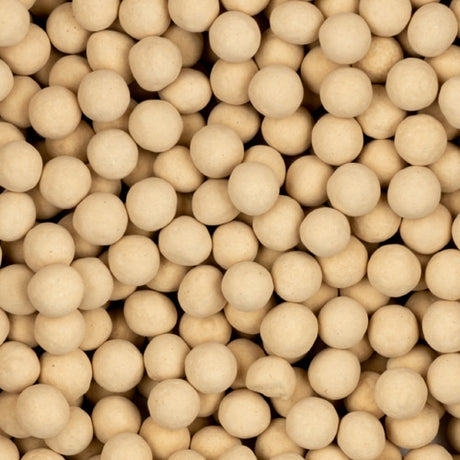




Industrial Media for Selective Separation & Adsorption
Separation media are materials selected to preferentially retain, exclude, or interact with components of a mixture. Depending on the process, separation may be controlled by molecular size, polarity, surface chemistry, adsorption affinity, particle size, pore structure, or differences in interaction with a stationary phase.
Common separation-grade materials include silica, activated alumina, molecular sieves, zeolites, and other porous adsorbents used in chromatography, dehydration, selective adsorption, gas treatment, solvent processing, and industrial purification systems.
Common Separation Media
| Separation Media | Primary Separation Behavior | Typical Applications | Key Selection Factors |
|---|---|---|---|
| Silica | Surface adsorption / stationary-phase interaction | Chromatography, purification, fractionation and process polishing | Particle size, pore size, surface area, surface chemistry and solvent system |
| Activated Alumina | Polar adsorption / surface interaction | Chromatography, purification, drying and selective contaminant removal | Surface chemistry, particle size, pH behavior, moisture and process conditions |
| 3A Molecular Sieve | Size-selective adsorption | Water removal from ethanol, solvents and compatible process streams | Target molecule size, moisture loading, temperature and regeneration conditions |
| 4A Molecular Sieve | Selective molecular adsorption | Gas and liquid drying, purification and molecular adsorption | Molecular dimensions, polarity, competing adsorbates and operating conditions |
| 5A Molecular Sieve | Selective adsorption by pore accessibility | Gas purification, hydrocarbon separations and specialty adsorption processes | Molecule size, feed composition, temperature, pressure and regeneration |
| 13X Molecular Sieve | Adsorption through a larger-pore zeolite structure | Gas purification, CO₂ adsorption, moisture removal and selected separations | Feed composition, target species, pressure, temperature and cycle design |
Common Separation Applications
Chromatography
Silica and activated alumina can function as stationary-phase media where compounds separate according to differences in adsorption, polarity, solvent interaction, and migration through the packed bed.
Molecular Separation
Molecular sieves use defined pore structures to preferentially adsorb molecules that can enter their accessible pore network, making pore selection central to performance.
Solvent Dehydration
Molecular sieves are widely used to selectively remove water from solvents and other compatible liquid streams where low residual moisture is required.
Gas Purification & Separation
Zeolitic adsorbents can selectively retain moisture, carbon dioxide, and other components from gas streams depending on molecular size, polarity, pressure, temperature, and adsorbent type.
Process Fractionation
Adsorptive media can support fractionation or polishing steps where selected compounds interact more strongly with the media than others in the process stream.
Laboratory & Scale-Up Work
Particle size, bed geometry, solvent conditions, loading, and flow behavior can be evaluated at smaller scale before transferring a separation method into larger process equipment.
Separation vs. Purification
Separation focuses on selectively differentiating components of a mixture based on properties such as molecular size, polarity, adsorption affinity, or interaction with a stationary phase.
Purification focuses more broadly on removing unwanted contaminants from a desired product or process stream.
The two often overlap. A chromatography process may separate several compounds while simultaneously increasing product purity, and a molecular sieve may selectively remove water as part of a purification step.
If contaminant removal rather than selective fractionation is the primary objective, see our Purification-Grade Sorbents & Media.
How to Choose Separation Media
1. Identify the Components Being Separated
Start with the feed composition and determine which component should be retained, removed, or allowed to pass. Molecular dimensions, polarity, concentration, and chemical compatibility can all affect media selection.
2. Determine the Separation Mechanism
Some processes depend primarily on pore size, while others depend on surface adsorption, polarity, chromatographic interaction, or a combination of mechanisms. The desired mechanism should guide the choice of material family.
3. Evaluate Pore Structure & Surface Chemistry
Pore dimensions and surface chemistry influence which molecules can access the internal surface of a sorbent and how strongly they interact once inside.
4. Match Particle Size to the Equipment
Particle size affects pressure drop, flow distribution, mass-transfer rate, bed packing, filtration behavior, and handling. Powders, granules, beads, and pellets therefore suit different process configurations.
5. Consider Flow Rate & Contact Time
Adsorption and chromatographic performance depend on sufficient interaction between the process stream and the media. Excessive flow can reduce contact time, while overly fine media may create unacceptable pressure drop.
6. Evaluate Regeneration or Media Replacement
Molecular sieves and activated alumina may be regenerated in appropriately designed systems. Other separation media may be replaced or discarded after use depending on the application, contaminant loading, and process requirements.
Molecular Sieves for Selective Separation
Molecular sieves are crystalline zeolitic adsorbents with uniform pore structures that provide a high degree of selectivity.
Common types include 3A, 4A, 5A, and 13X. Each has different pore accessibility and adsorption characteristics, making the grades useful for different dehydration, purification, and molecular-separation objectives.
Selection should consider the size and polarity of the target molecule, competing components, moisture loading, operating temperature and pressure, required endpoint, and regeneration method.
Silica & Alumina for Chromatographic Separation
Silica and activated alumina can be used as adsorptive stationary phases in chromatographic and related separation processes.
Performance depends on particle-size distribution, surface area, pore structure, surface chemistry, solvent system, sample loading, column geometry, and required resolution.
Finer particles can provide greater separation efficiency in suitable equipment but generally create higher resistance to flow. Larger particles can improve throughput and reduce pressure drop at the expense of some separation efficiency.
Separation vs. Filtration
Filtration generally separates material according to physical retention or transport through a porous medium. Adsorptive separation depends more strongly on differences in molecular affinity, pore accessibility, or surface interaction.
In practice, both mechanisms may appear in the same process. A powdered separation or purification media may perform the adsorption step and then require downstream filtration for its removal.
For filter aids, cake filtration, clarification, and physical solids removal, see our Industrial Filtration Media & Sorbents.
Particle Size, Pore Size & Selectivity
These terms describe different characteristics and should not be treated interchangeably.
Particle Size
Refers to the physical dimensions of the bead, pellet, granule, or powder. It affects pressure drop, handling, packing, filtration, and mass-transfer distance.
Pore Size
Refers to openings within the internal structure of a porous material. In molecular sieves, pore accessibility can determine whether certain molecules enter the adsorbent structure.
Surface Area
Describes the accessible internal and external area available for interaction, but higher surface area alone does not guarantee better separation performance.
Selectivity
Describes the tendency of the media to preferentially interact with one component over another under defined process conditions.
Frequently Asked Questions About Separation Media
What are separation sorbents?
Separation sorbents are porous or surface-active materials used to preferentially retain selected molecules or compounds from a mixture based on properties such as size, polarity, adsorption affinity, or surface interaction.
What materials are commonly used for chromatography?
Silica and alumina are widely used as stationary-phase materials in adsorption chromatography. The appropriate grade depends on particle size, pore structure, surface chemistry, solvent conditions, sample composition, and desired separation.
How do molecular sieves separate molecules?
Molecular sieves contain uniform pore structures. Molecules that can access those pores may be preferentially adsorbed, while molecules that are too large can be excluded. Polarity and adsorption affinity also influence behavior.
What is the difference between 3A, 4A, 5A, and 13X molecular sieves?
The grades have different zeolite structures and pore accessibility. These differences influence which molecules can enter the adsorbent and therefore which drying, purification, or separation applications each grade is suited for.
Does smaller particle size improve separation?
Smaller particles can improve mass-transfer efficiency and chromatographic performance in some systems, but they also increase resistance to flow and pressure drop. Particle size must therefore be balanced against equipment limitations and throughput requirements.
Can molecular sieves be regenerated?
Yes. Molecular sieves are commonly regenerated using appropriately controlled heat, pressure reduction, purge gas, or combinations of these methods depending on the process and adsorbate.
What information is needed to select separation media?
Useful information includes feed composition, target component, required endpoint, liquid or gas phase, operating temperature and pressure, solvent system where applicable, flow rate, equipment configuration, current media, and required quantity.
Bulk Separation Media & Technical Support
Sorbents Direct supplies silica, activated alumina, molecular sieves, zeolites, and related adsorptive media for chromatography, dehydration, selective adsorption, purification, and industrial separation applications.
If you're replacing an existing media or developing a new process, provide the current grade, target components, operating conditions, particle-size requirements, equipment configuration, and expected volume. We can use that information to narrow suitable material families and commercially available grades.
Need Help Selecting Separation Media?
Tell us what you're separating, your feed composition, process conditions, current media if applicable, and required quantity. We'll help identify suitable media types and available grades.


