-
 Request a Custom Quote
Don’t see what you need? We can source it. -

Coal-Based Granular Activated Carbon (GAC) – 8x30 & 12x40 Mesh
From $17098Unit price /Unavailable 
4 mm Pelletized Activated Carbon - VOC & Industrial Air Treatment
From $21598Unit price /Unavailable

DYNOCEL® 600 Activated Alumina for Water & Process Purification
1800.0 lb
$7,20000Unit price /Unavailable-

Dicalite 4200 DE Filter Aid for General Liquid Clarification
From $99500Unit price /Unavailable -
Dicalite Speedplus A Fine DE Filter Aid for Liquid Clarification
From $99500Unit price /Unavailable -
-
-
SILIPORITE® NK 30 AP 3A Molecular Sieve Powder
From $3,70000Unit price /Unavailable
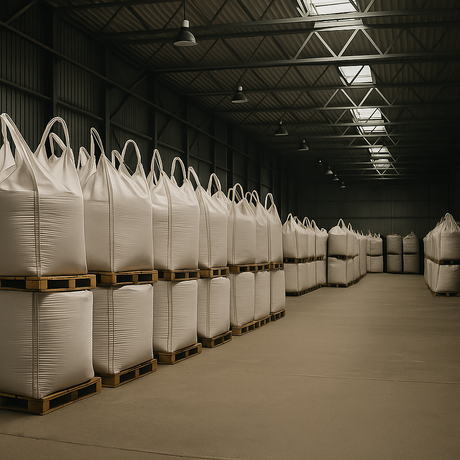
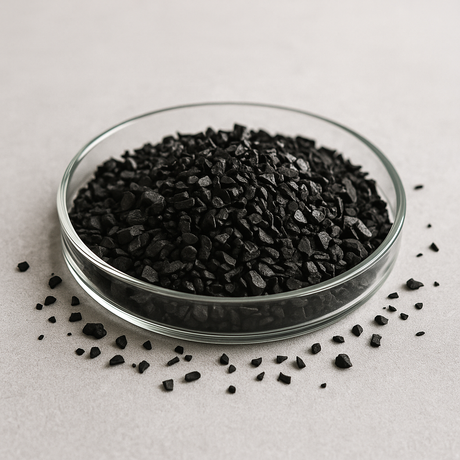
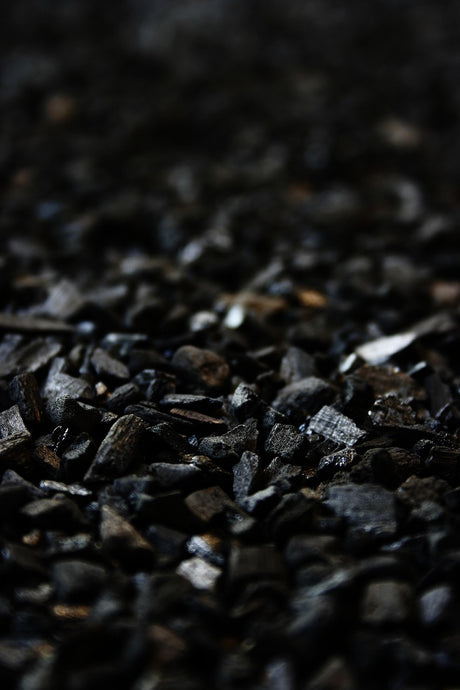

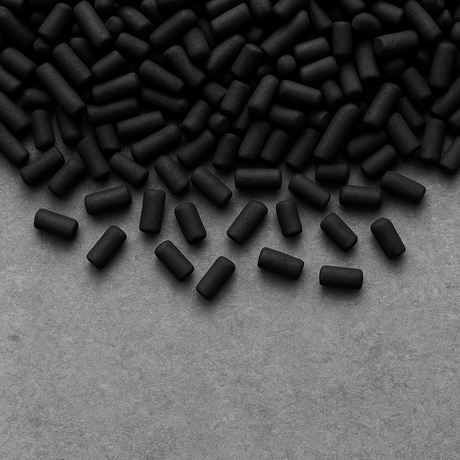


Sorbents & Process Media for Chemical Manufacturing
Sorbents and porous process media are used throughout chemical manufacturing to remove moisture, adsorb contaminants, purify intermediates, separate compounds, control process gases, and support filtration. Common materials include activated carbon, molecular sieves, silica, activated alumina, clay minerals, and filtration aids.
The correct material depends on the target compound, process phase, concentration, operating temperature and pressure, chemical compatibility, required removal level, and equipment configuration. Sorbents that perform similar broad functions can behave very differently under actual process conditions.
Common Chemical Processing Applications
Liquid Purification
Activated carbon, silica, alumina, clays, and other adsorbents can remove selected organics, color bodies, polar impurities, and process contaminants from compatible liquid streams.
Gas & Vapor Treatment
Granular and pelletized activated carbon are widely used for adsorption of VOCs, odors, hydrocarbons, and selected gaseous contaminants in process and ventilation streams.
Drying & Dehydration
Molecular sieves, activated alumina, and silica are used to remove water from gases, solvents, compressed air, and other process streams where moisture affects product quality or equipment performance.
Molecular Separation
Zeolitic molecular sieves provide selective adsorption according to pore structure, molecular size, and polarity for suitable gas, solvent, and chemical-separation processes.
Filtration & Clarification
Diatomaceous earth and other filtration media may be used as precoat or body-feed materials to improve solids capture, cake permeability, and liquid clarification.
Carrier & Substrate Applications
Porous mineral materials can function as carriers or substrates for catalysts, additives, liquids, or active materials where the individual grade and process requirements support the application.
Chemical Processing Sorbent Selection at a Glance
| If You Need To... | Start By Evaluating... | Important Variables |
|---|---|---|
| Remove VOCs or organic compounds | Activated carbon | Compound identity, concentration, humidity, pore structure and contact time |
| Dry solvents, gases or process streams | Molecular sieve, activated alumina or silica | Target moisture, temperature, regeneration, pore size and feed composition |
| Perform selective molecular adsorption | Molecular sieves | Molecular dimensions, polarity, pore type, pressure and temperature |
| Purify or polish a liquid stream | Carbon, silica, alumina, clay or specialty adsorbent | Feed chemistry, target impurity, dosage, contact time and downstream filtration |
| Improve solids filtration | Filter aids such as diatomaceous earth | Retention, permeability, filtration rate and clarity requirements |
| Carry or support another material | Silica, clay, alumina or other porous substrates | Loading, surface chemistry, pore structure, particle size and compatibility |
Activated Carbon in Chemical Processing
Activated carbon is a highly porous adsorbent used in both liquid- and gas-phase chemical processes. Depending on the carbon grade and target compound, applications can include organic contaminant removal, decolorization, odor control, solvent vapor treatment, process polishing, and removal of selected impurities.
Carbon performance depends on more than total surface area. Feedstock, activation method, micropore and mesopore distribution, particle size, surface chemistry, hardness, contaminant concentration, temperature, humidity, and contact time can all affect adsorption behavior.
Browse our Activated Carbon collection for granular, powdered, and pelletized grades.
Molecular Sieves for Chemical Drying & Separation
Molecular sieves are crystalline zeolite adsorbents with controlled pore structures. Their ability to preferentially adsorb molecules according to molecular dimensions and polarity makes them useful for demanding drying and separation processes.
| Molecular Sieve Type | Nominal Pore Size | General Selection Role |
|---|---|---|
| 3A | Approximately 3 Å | Selective water adsorption where larger molecules should generally be excluded |
| 4A | Approximately 4 Å | General dehydration and adsorption of molecules small enough to enter the pore structure |
| 5A | Approximately 5 Å | Drying plus selected molecular-separation applications requiring larger pore accessibility |
| 13X | Approximately 10 Å | Broader adsorption of larger molecules in suitable gas-purification and separation processes |
Actual suitability depends on the complete feed composition and process conditions rather than pore designation alone.
See our Molecular Sieves & Zeolites collection for additional grades and particle forms.
Adsorbent Selectivity Matters More Than Surface Area Alone
The sorbent with the highest reported surface area is not automatically the best material for a chemical process. Adsorption depends on whether the target molecules can access the relevant pores and how strongly they interact with the material's surface.
Pore-size distribution, surface chemistry, polarity, molecular dimensions, process temperature, pressure, concentration, and competing compounds can all influence real-world performance.
Drying Solvents & Process Streams
Moisture can interfere with reactions, catalyst performance, solvent quality, storage stability, and downstream separation. Molecular sieves, silica, and activated alumina are commonly used when physical adsorption is preferred over introducing a chemical drying reagent into the process.
Selecting drying media requires consideration of inlet moisture, required outlet specification, process temperature, competing molecules, adsorption capacity, regeneration conditions, flow rate, and acceptable pressure drop.
For additional drying-media guidance, visit Drying & Dehydration Sorbents.
Filter Aids in Chemical Manufacturing
Filter aids such as diatomaceous earth can support separation of suspended solids from chemical liquids by forming a porous filter cake. Depending on the process, filter aids may be applied as a precoat, body feed, or combination of both.
Grade selection typically balances particle retention and permeability. Finer media can improve clarification of smaller particles but may reduce filtration rate, while more permeable grades allow greater flow with different retention characteristics.
Browse our broader Filtration Media & Sorbents collection for additional process-filtration materials.
How to Select Sorbents for a Chemical Process
1. Define the Target Compound
Identify exactly what must be removed, retained, separated, or carried. Water, VOCs, color bodies, dissolved organics, sulfur compounds, solids, and other contaminants require different media.
2. Identify the Process Phase
Determine whether the sorbent will operate in a liquid, gas, vapor, powder, fixed-bed, batch-treatment, or filtration environment.
3. Review the Feed Chemistry
pH, polarity, solvent composition, competing contaminants, concentration, temperature, and pressure can change adsorption and filtration behavior.
4. Match Physical Form to the Equipment
Powders, granules, beads, and pellets have very different handling and flow characteristics. Particle size influences pressure drop, dispersion, filtration, mass transfer, and media recovery.
5. Evaluate Capacity & Breakthrough
Fixed-bed adsorption systems should be evaluated around usable working capacity and breakthrough behavior rather than only published equilibrium capacity or surface-area values.
6. Consider Regeneration or Disposal
Some molecular sieves and activated alumina grades can be regenerated under suitable conditions. Activated carbon may be industrially reactivated in appropriate applications. Other process media may be used once and disposed of according to the contaminant and applicable requirements.
7. Validate the Grade
Pilot or laboratory testing is often useful before changing process media because adsorption capacity, selectivity, filtration rate, product losses, and downstream effects are specific to the actual feed and operating conditions.
Frequently Asked Questions About Chemical Processing Sorbents
What sorbents are used in chemical processing?
Common chemical-process sorbents include activated carbon, molecular sieves, silica, activated alumina, clay minerals, and specialty adsorbents. Filter aids may also be used where solids separation and clarification are required.
What is the best sorbent for organic compounds?
Activated carbon is widely used for many organic contaminants, but the best carbon grade depends on the specific molecule, concentration, phase, temperature, pore structure, and contact conditions.
What sorbent is used for solvent drying?
Molecular sieves are widely used for solvent dehydration because their pore structures can provide strong and selective water adsorption. The appropriate sieve type depends on the solvent and other molecules present.
What is the difference between 3A, 4A and 5A molecular sieves?
The designations refer primarily to nominal pore dimensions. Different pore openings determine which molecules can enter the internal pore structure and therefore influence adsorption selectivity.
Can activated carbon remove every chemical contaminant?
No. Activated carbon is effective for many compounds but adsorption varies significantly by molecular chemistry, concentration, carbon pore structure, process conditions, and competing species.
Can industrial sorbents be regenerated?
Some can. Molecular sieves and activated alumina can often be regenerated under appropriate operating conditions, while activated carbon may be industrially reactivated in suitable applications. Regeneration feasibility depends on the media and contaminant.
What documentation is available for chemical-process media?
Documentation varies by manufacturer and product. SDS and technical data are commonly available, while certificates of analysis and additional analytical documentation may be available for specific grades or lots.
Bulk Sorbents & Process Media for Chemical Manufacturing
Sorbents Direct supplies activated carbon, molecular sieves, silica, alumina, clays, filtration media, and related process materials for chemical manufacturing, purification, drying, separation, and treatment applications.
When requesting a material recommendation or replacement grade, provide the target compound, process phase, feed chemistry, operating temperature and pressure, current media if applicable, particle-size requirements, required quantity, and relevant specifications. This gives us the best starting point for narrowing suitable material families and available grades.
Need Help Selecting Chemical Process Media?
Tell us what you're trying to remove, separate, dry, filter, or carry, along with your process conditions and required quantity. We'll help identify suitable material families and available grades.


