-
 Request a Custom Quote
Don’t see what you need? We can source it. 

Dicalite 4200 DE Filter Aid for General Liquid Clarification
From $99500Unit price /Unavailable-
Dicalite Speedplus A Fine DE Filter Aid for Liquid Clarification
From $99500Unit price /Unavailable


Diatomaceous Earth Filter Aids for Industrial Liquid Filtration
Diatomaceous earth (DE) filter aids are porous mineral filtration media used to improve solids capture, filter-cake permeability and liquid clarification in compatible industrial processes. DE can be used as a precoat, body feed or a combination of both depending on the filter design, solids loading and required filtrate quality.
Sorbents Direct supplies Dicalite® diatomaceous earth filter aids for food and beverage processing, fermentation, edible oils, chemicals, ingredients and general industrial liquid filtration.
The correct grade should be selected around clarity, permeability, throughput, differential pressure and cake behavior rather than assuming that the finest or fastest DE grade is automatically best.
DE Filter-Aid Selection in 30 Seconds
Dicalite® Speedplus A
Finer, lower-permeability DE filter aid positioned toward tighter clarification, polishing and finer suspended-solids retention.
- Permeability: 85–93 PFRv
- Median particle size: 29–31 µm
- Primary emphasis: clarity / polishing
Choose Speedplus A as a starting point when filtrate quality is a stronger priority than maximum flow.
Dicalite® 4200
Coarser, higher-permeability DE filter aid positioned toward general clarification, more open cake structure and higher-throughput filtration.
- Permeability: 165–190 PFRv
- Median particle size: approximately 62 µm
- Primary emphasis: throughput / permeability
Choose Dicalite 4200 as a starting point when flow and cake permeability are stronger process priorities.
Speedplus A vs. Dicalite 4200
| Selection Factor | Speedplus A | Dicalite 4200 |
|---|---|---|
| Filtration emphasis | Tighter clarification and polishing | Higher-throughput general clarification |
| Permeability | 85–93 PFRv | 165–190 PFRv |
| Median particle diameter | 29–31 µm | Approximately 62 µm |
| Filter-cake tendency | Tighter structure | More open structure |
| Primary operating priority | Cleaner filtrate / finer solids retention | Flow / throughput / permeability |
| Is one universally better? | No. The appropriate grade depends on the required balance of clarity, throughput, pressure rise and filtration economics. | |
The Core DE Tradeoff: Clarity ↔ Permeability ↔ Throughput
Filter-aid grade selection is fundamentally a process tradeoff. Finer DE can provide tighter solids retention, while more permeable DE can produce a more open cake with lower resistance to liquid flow.
The goal is not to maximize either clarity or permeability independently. The practical objective is to achieve the required filtrate quality while maintaining acceptable throughput, differential pressure, cycle length and filter-aid consumption.
What Does Diatomaceous Earth Filter Aid Do?
DE filter aid creates a porous mineral structure through which process liquid can flow while suspended solids become trapped within or on the developing filter cake.
This can help:
- Improve capture of suspended process solids
- Protect the underlying filter screen or septum
- Maintain cake permeability as solids accumulate
- Reduce premature blinding of the filter surface
- Support more consistent filtrate clarity
- Extend productive filtration cycles when the grade and feed rate are properly matched to the process
Precoat vs. Body Feed
| Method | How It Works | Primary Purpose |
|---|---|---|
| Precoat | DE slurry is circulated onto the filter support before the process liquid is introduced. | Establishes an initial porous layer and helps protect the septum. |
| Body feed | DE is continuously or periodically added to the incoming process liquid. | Helps maintain cake porosity as captured solids accumulate. |
| Precoat + body feed | Both methods are used in the same filtration cycle. | Combines initial septum protection with continuing permeability control. |
No universal precoat thickness or body-feed dosage applies to every filtration system. Filter area, solids loading, viscosity, temperature, pressure, DE grade and required filtrate clarity should all be considered.
Common DE Filter-Aid Applications
Food & Beverage Processing
DE filter aids are used in compatible beer, wine, juice, fermentation, syrup, edible-oil and ingredient-processing applications.
Fermentation & Beverage Clarification
Precoat and body-feed filtration can help remove suspended solids and maintain cake permeability in compatible fermentation and beverage streams.
Edible Oil & Ingredient Filtration
DE may be used for mechanical clarification of compatible oils, syrups, ingredients and related food-processing liquids.
Chemical & Industrial Liquids
DE filter aid can support solids removal in compatible chemical, specialty-liquid and general industrial filtration processes.
How to Choose a Diatomaceous Earth Filter Aid
1. Define the Required Filtrate Quality
Determine the actual clarification target. A process requiring final polishing may need a different grade than one focused primarily on bulk solids removal.
2. Understand the Solids Load
Identify the amount, size distribution and behavior of suspended solids. High solids loading can rapidly increase resistance when the cake structure is poorly matched to the feed.
3. Select the Appropriate Permeability Range
Lower-permeability grades generally provide tighter filtration, while higher-permeability grades generally support greater liquid flow.
4. Evaluate the Filtration Equipment
Pressure-leaf filters, filter presses, rotary-vacuum filters and other systems can have different DE requirements depending on septum, filter area, pressure and cake handling.
5. Optimize Precoat & Body Feed Together
Grade selection and dosage should be evaluated as one filtration strategy. Changing body-feed rate can materially affect permeability, pressure rise and cycle duration.
6. Monitor the Entire Filter Cycle
Do not judge performance from initial flow alone. Track filtrate clarity, differential pressure, flow rate, total volume processed, cycle duration and filter-aid consumption.
7. Validate the Grade in the Actual Process
Representative pilot or production trials are the most reliable way to compare DE grades when process economics or final quality are important.
DE Filter Aid vs. Adsorbent
Diatomaceous earth is primarily used here for mechanical filtration, while materials such as activated carbon are primarily used for adsorption.
In some processes, powdered activated carbon is used first to adsorb dissolved color or organic compounds and DE is then used to help capture the spent carbon and suspended solids during filtration.
Browse Activated Carbon or Food & Beverage Process Media for related treatment options.
Food & Beverage Filtration
Food and beverage applications require grade-specific evaluation. Dicalite Speedplus A and Dicalite 4200 provide different starting points based on the required balance of clarification and throughput.
Speedplus A is the finer, lower-permeability option, while Dicalite 4200 provides a more open, higher-permeability filtration structure.
See our dedicated Diatomaceous Earth Filter Aid for Food & Beverage Processing guide for application-specific discussion of beverage filtration, precoat, body feed and grade selection.
Food Processing, Processing-Aid & Regulatory Status
Do not assume every diatomaceous-earth grade has identical regulatory, purity or food-processing qualifications simply because the material is chemically similar.
Review current manufacturer documentation for the specific supplied grade and confirm any required processing-aid status, purity limits, certifications or customer qualification requirements before approval.
Bulk DE Filter Aid Supply
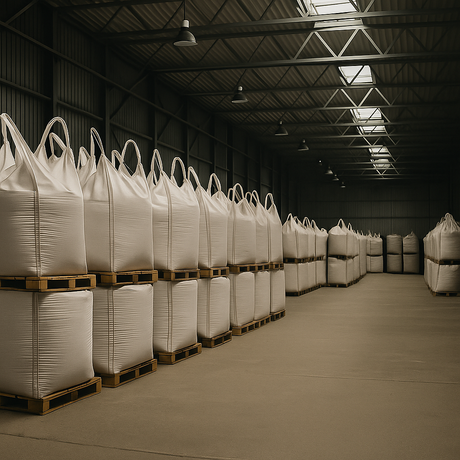
Sorbents Direct supplies Dicalite DE filter aids in practical production-scale quantities with LTL freight support.
| Commercial Format | Configuration | Typical Use |
|---|---|---|
| Half pallet | 20 × 50 lb bags 1,000 lb total |
Validation runs, smaller plants and lower-volume production |
| Full pallet | 40 × 50 lb bags 2,000 lb total |
Recurring plant-scale filtration and higher-volume requirements |
| Multi-pallet / bulk | Quoted according to requirement | Recurring production, higher consumption and delivered purchasing |
For larger supply requirements, visit our Bulk Industrial Adsorbents & Filtration Media Supplier page.
Documentation & Technical Support
Current manufacturer Technical Data Sheets and applicable Safety Data Sheets are available for technical review. Lot-specific documentation may be available depending on the supplied product.
When requesting grade-selection assistance, provide:
- Process liquid
- Current filter-aid manufacturer and grade, if known
- Target filtrate clarity
- Current flow rate or throughput target
- Solids loading or process description
- Filter type and available filter area
- Current pressure-rise or cycle-length concerns
- Required quantity and ship-to destination
- Documentation or regulatory requirements
Frequently Asked Questions
What is diatomaceous earth filter aid?
DE filter aid is porous diatomite used to create a permeable filtration cake that helps capture suspended solids while allowing liquid to pass through compatible filtration equipment.
What is the difference between precoat and body feed?
Precoat establishes the initial DE layer on the filter support before processing begins. Body feed adds DE to the process liquid during filtration to help maintain cake permeability as solids accumulate.
How do I choose a DE filter-aid grade?
Start with required clarity, solids loading, filtration equipment and throughput. Finer grades generally provide tighter filtration, while more permeable grades generally support higher liquid flow.
What is the difference between Speedplus A and Dicalite 4200?
Speedplus A is finer and lower in permeability, placing it toward tighter clarification and polishing. Dicalite 4200 is coarser and more permeable, placing it toward higher-throughput general clarification.
Is a finer DE filter aid always better?
No. Finer filtration can improve solids retention but can also increase resistance and pressure rise. The appropriate grade is the one that reaches the required clarity while maintaining acceptable throughput.
Is higher permeability always better?
No. Higher permeability can increase flow, but the resulting filtrate still has to meet the required clarity specification.
Can DE filter aid be used in food and beverage processing?
Suitable grades can be used in compatible food and beverage filtration applications. Always confirm current grade-specific manufacturer, regulatory and process documentation before qualification.
Can DE be used with powdered activated carbon?
In compatible systems, DE may be used as part of the filtration step after PAC adsorption to help capture spent carbon and suspended process solids. The correct DE grade depends on PAC loading, filter design, required clarity and process-liquid properties.
What quantities are available?
Current Dicalite products are offered in 1,000 lb half-pallet and 2,000 lb full-pallet configurations, with larger recurring requirements available by quotation.
Can I receive the TDS and SDS before ordering?
Yes. Current manufacturer documentation can be provided before purchase for technical review and supplier qualification.
Need Help Selecting a DE Filter-Aid Grade?
Send us the liquid being filtered, current DE grade if known, target clarity, filtration equipment, solids loading, throughput target and required quantity. We can help compare practical starting grades and bulk supply options.


