-
 Request a Custom Quote
Don’t see what you need? We can source it. -

Tixosil® 68B FCC Precipitated Silica for Food & Powder Flow
27.55 lb
$15625Unit price /Unavailable 

DYNOCEL® 600 Activated Alumina for Water & Process Purification
1800.0 lb
$7,20000Unit price /Unavailable-
CHROMATOCEL® S-200 Silica Gel for Chromatography & Purification
1102.0 lb
$6,25000Unit price /Unavailable -
-
-
SILIPORITE® NK 30 AP 3A Molecular Sieve Powder
From $3,70000Unit price /Unavailable -

CHROMATOCEL® S-060 Silica Gel for Chromatography & Purification
From $62500Unit price /Unavailable
4A 8×12 Molecular Sieve Desiccant for Gas & Liquid Drying
From $45100Unit price /Unavailable-
4A 4×8 Blue Indicating Molecular Sieve Desiccant
From $1,88700Unit price /Unavailable -
3A 8x12 Molecular Sieve Desiccant High-Performance Zeolite for Industrial Drying
From $46200Unit price /Unavailable -
13X 4×8 Molecular Sieve for CO₂ & Gas Purification
From $48200Unit price /Unavailable



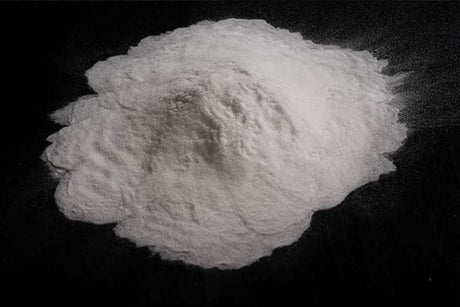

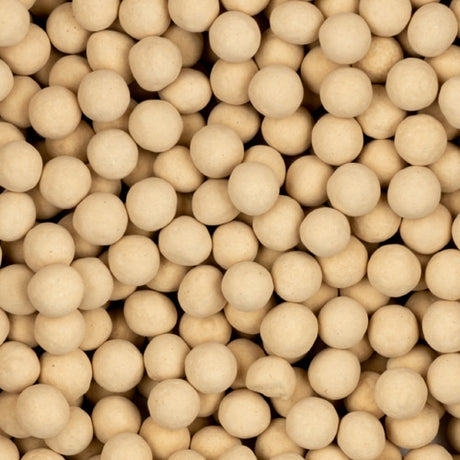

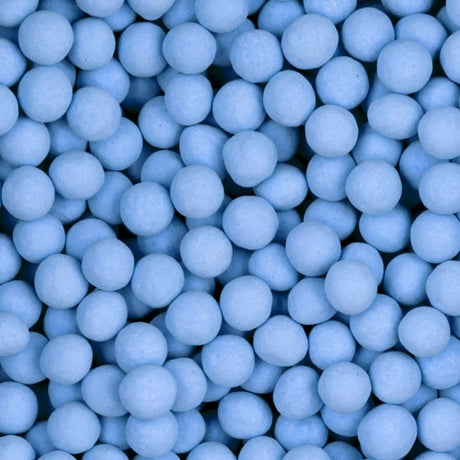

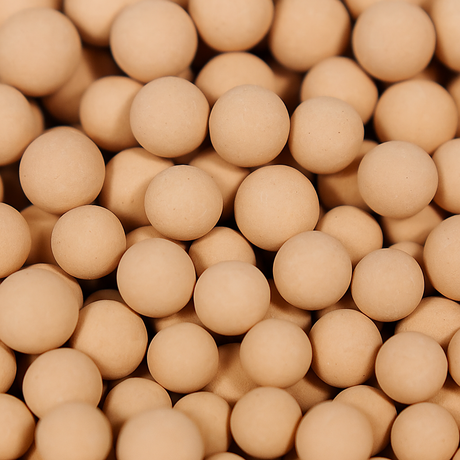

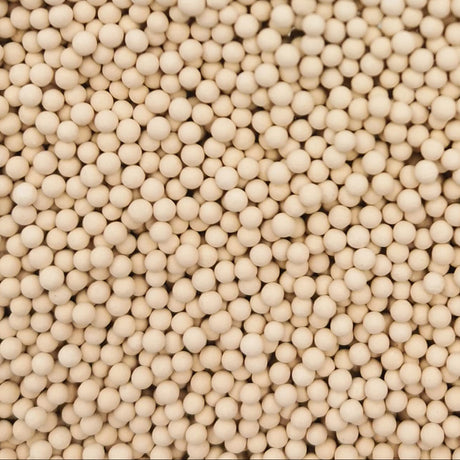

What Is an Industrial Desiccant?
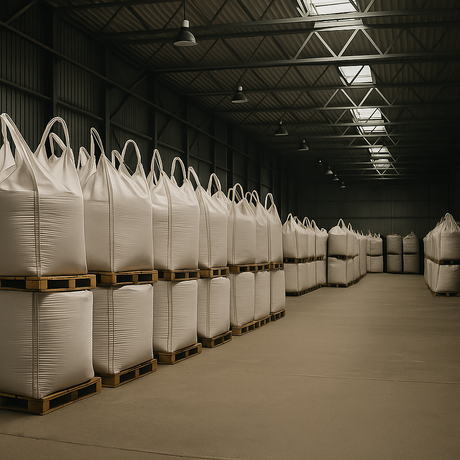
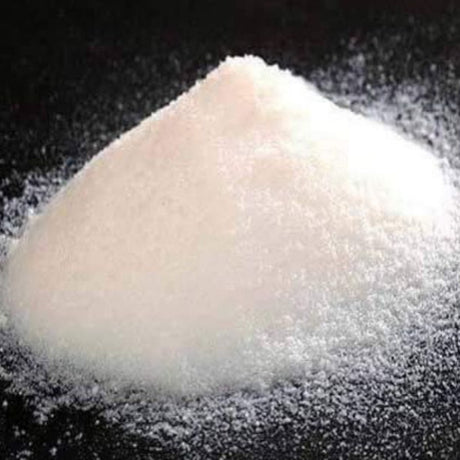
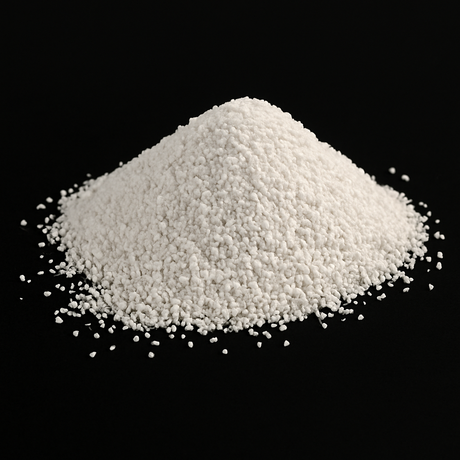
An industrial desiccant is a moisture-adsorbing material used to reduce water vapor or control humidity in a package, vessel, gas stream, process system, or storage environment. Common desiccant materials include silica gel, molecular sieves, activated alumina, clay-based desiccants, and other porous adsorbents.
The best desiccant depends on more than total moisture capacity. Relative humidity, temperature, required final moisture level, adsorption rate, regeneration requirements, particle form, pressure drop, and compatibility with the process can all affect performance.
Common Industrial Desiccant Materials
| Desiccant Material | Typical Strength | Common Applications | Key Selection Factors |
|---|---|---|---|
| Silica Gel | General-purpose moisture adsorption across a broad humidity range | Packaging, storage, equipment protection, cabinets and general humidity control | Relative humidity, particle size, indicating vs. non-indicating grade and packaging format |
| Molecular Sieves | Selective adsorption and very low residual moisture capability | Gas drying, solvent dehydration, ethanol drying, refrigeration and process purification | Pore type, target molecule, temperature, regeneration conditions and required dew point |
| Activated Alumina | Durable moisture adsorption for gas and process systems | Compressed air, gas drying, process purification and packed-bed service | Particle size, crush strength, inlet moisture, operating temperature and regeneration |
| Clay Desiccants | Economical moisture control for suitable storage and packaging environments | Shipping, storage, packaged equipment and general humidity protection | Temperature, humidity range, packaging configuration and grade characteristics |
| Other Mineral Adsorbents | Moisture adsorption or humidity moderation depending on material structure | Bulk materials, formulations, storage systems and specialty industrial uses | Mineralogy, pore structure, particle form, purity and application requirements |
Where Moisture-Control Sorbents Are Used
Packaging & Storage
Desiccants can help control humidity inside sealed packaging, drums, containers, cabinets, and other enclosed spaces where moisture may damage sensitive materials or equipment.
Compressed Air & Gas Drying
Activated alumina and molecular sieves are widely used in packed beds to reduce moisture in compressed air, natural gas, hydrogen, nitrogen, and other industrial gas streams.
Solvent & Liquid Dehydration
Molecular sieves and other compatible adsorbents may be used to remove dissolved or residual water from solvents and process liquids where low moisture levels are required.
Equipment & Component Protection
Moisture-control materials can help protect electronics, machinery, instruments, spare parts, and other moisture-sensitive products during storage and transportation.
How Desiccants Work
Many industrial desiccants work primarily through adsorption, where water molecules are retained on internal and external surfaces within a porous material. Their pore structure, surface chemistry, and affinity for water determine how they behave at different temperatures and humidity levels.
This is different from simply absorbing liquid water into the bulk volume of a material. Understanding that distinction becomes especially important in gas drying, solvent dehydration, and low-dew-point applications.
For a deeper explanation of the terminology, see our Adsorption vs. Absorption guide.
Silica Gel vs. Molecular Sieve vs. Activated Alumina
These materials are all used for moisture control, but they should not be treated as interchangeable.
Silica gel is commonly selected for general humidity control and packaging applications. Activated alumina is frequently used in durable packed-bed drying systems. Molecular sieves are especially valuable where very low moisture levels or selective adsorption are required.
The right choice depends on the inlet moisture level, desired outlet condition, temperature, pressure, regeneration method, contact time, particle size, and overall process design.
How to Choose a Desiccant
1. Define the Moisture-Control Goal
Start by determining whether you need general humidity reduction, condensation prevention, equipment protection, compressed-gas drying, solvent dehydration, or extremely low residual moisture.
2. Determine the Starting Moisture Level
Relative humidity, water concentration, inlet dew point, or dissolved-water content gives important context for selecting a material and estimating required capacity.
3. Establish the Required Final Condition
General packaging protection and ultra-dry process gas are very different applications. The required final humidity, moisture concentration, or dew point can eliminate unsuitable material families quickly.
4. Account for Temperature & Pressure
Adsorption behavior changes with operating conditions. Temperature can strongly influence water capacity, while pressure affects gas-phase drying and regeneration strategies.
5. Match Particle Form to the Equipment
Desiccants are available as beads, pellets, granules, powders, packets, and other formats. Particle form affects pressure drop, handling, dust generation, adsorption rate, and compatibility with vessels or packaging systems.
6. Consider Regeneration
Some molecular sieves, activated alumina, and other industrial desiccants can be regenerated under suitable conditions. The regeneration temperature, purge requirements, cycle duration, and expected service life should be considered alongside initial media cost.
Moisture Control for Packaging vs. Process Drying
Packaging desiccation and industrial process drying are related but fundamentally different applications.
Packaging moisture control generally focuses on maintaining acceptable humidity inside an enclosed space over time. The desiccant may be contained in a packet, canister, bag, or other format and is sized according to package volume, barrier properties, expected moisture ingress, storage duration, and environmental conditions.
Process drying typically involves continuously passing a gas or liquid through a bed of adsorbent. Capacity, mass-transfer behavior, flow rate, pressure drop, breakthrough, regeneration, and bed geometry become much more important.
Desiccant vs. Anti-Caking Agent
A desiccant is selected primarily to remove moisture from an environment or process. An anti-caking agent is selected primarily to reduce clumping or agglomeration in powders.
Moisture can contribute to caking, so there is some overlap, but the two functions are not identical. If your main problem is a powder becoming lumpy or difficult to handle during storage, see our Anti-Caking Materials.
Understanding Desiccant Capacity
A single advertised moisture-capacity number rarely tells the whole story. Actual adsorption depends on temperature, relative humidity, water partial pressure, contact time, material condition, competing molecules, and the specific desiccant grade.
For continuous drying systems, breakthrough behavior and required outlet moisture are often more useful than maximum equilibrium capacity alone. For packaging applications, moisture ingress over the expected storage period also needs to be considered.
Frequently Asked Questions About Desiccants
What is a desiccant?
A desiccant is a material used to remove or control moisture. Industrial desiccants are commonly used in packaging, storage, compressed gases, process systems, solvent dehydration, and equipment protection.
What are common industrial desiccants?
Common industrial desiccants include silica gel, molecular sieves, activated alumina, clay-based desiccants, and other porous mineral adsorbents.
Which desiccant removes the most moisture?
There is no single best material under every condition. Moisture capacity changes with temperature and relative humidity, while applications requiring extremely low final moisture may favor a material with stronger water affinity rather than the highest bulk capacity.
What is the difference between silica gel and molecular sieve?
Silica gel is a porous silica adsorbent widely used for general moisture control. Molecular sieves have highly uniform pore structures and can selectively adsorb molecules according to size and polarity, making them particularly useful for deep drying and separation applications.
Can activated alumina be used as a desiccant?
Yes. Activated alumina is widely used as a desiccant in compressed-air and gas-drying systems because of its porous structure, mechanical durability, and ability to be regenerated under suitable operating conditions.
Can desiccants be regenerated?
Some can. Molecular sieves, activated alumina, and certain other adsorbents can be regenerated by applying appropriate heat, purge gas, pressure cycling, or combinations of these methods. Regeneration requirements vary by material and process.
What does 3A, 4A, 5A, or 13X mean?
These designations identify different molecular sieve structures and effective pore characteristics. Their pore size and chemistry determine which molecules can enter the adsorption structure and therefore which applications each grade is suited for.
See our 3A vs. 4A vs. 5A Molecular Sieve guide for a more detailed comparison.
Industrial Drying Materials & Technical Support
Sorbents Direct supplies silica gel, molecular sieves, activated alumina, zeolites, clay-based sorbents, and other adsorption materials for industrial drying, purification, moisture control, and process treatment.
When evaluating a desiccant, useful information includes the material or stream being dried, inlet moisture, required final moisture level, temperature, pressure, flow rate, existing media, vessel dimensions if applicable, regeneration method, and required quantity.
Need Help Selecting a Desiccant?
Tell us what you're trying to keep dry, your starting moisture conditions, required final specification, operating environment, and quantity. We'll help narrow suitable desiccant materials and available grades.


