-
 Request a Custom Quote
Don’t see what you need? We can source it. -

Coal-Based Granular Activated Carbon (GAC) – 8x30 & 12x40 Mesh
From $17098Unit price /Unavailable 

DYNOCEL® 600 Activated Alumina for Water & Process Purification
1800.0 lb
$7,20000Unit price /Unavailable-

Dicalite 4200 DE Filter Aid for General Liquid Clarification
From $99500Unit price /Unavailable -
Dicalite Speedplus A Fine DE Filter Aid for Liquid Clarification
From $99500Unit price /Unavailable -
Select 450 Selective Silicate Adsorbent for Oils & Biodiesel
1000.0 lb
$3,82900Unit price /Unavailable -
-
Pure-Flo® Supreme 55 Bleaching Earth for Edible Oil Refining
1000.0 lb
$1,71900Unit price /Unavailable -
Select 350 Selective Silicate Adsorbent for Oils & Biodiesel
1000.0 lb
$3,74900Unit price /Unavailable -
Coconut Shell Granular Activated Carbon (GAC) - 8x30 & 12x40 Mesh
From $21298Unit price /Unavailable 

Food-Grade Coconut Shell Powdered Activated Carbon (PAC) - 80x325 Mesh, Acid-Washed
From $28098Unit price /Unavailable



Clarification & Liquid Filtration Media
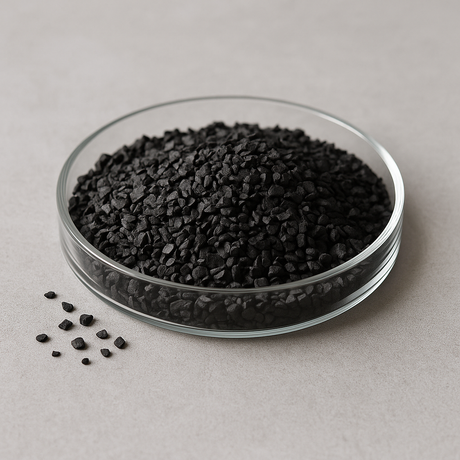
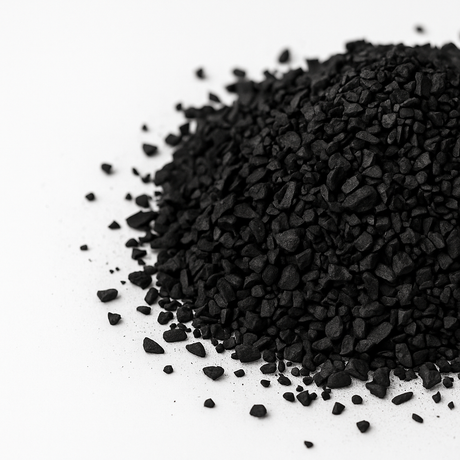
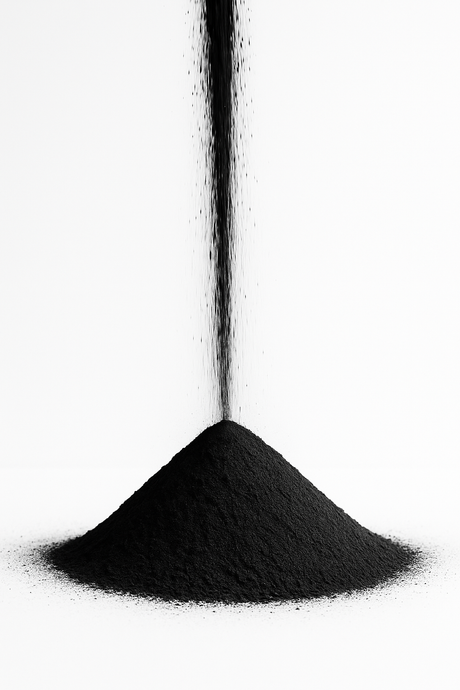
Clarification media and filter aids help remove suspended solids, color bodies, soaps, gums, trace organics, and other impurities from process liquids. Diatomaceous earth, selective silicates, bleaching earths, and activated carbon can be used individually or as complementary treatment steps depending on the fluid, contaminant profile, filtration equipment, and finished-product target.
Common Clarification Applications
- Edible & process oils: Remove suspended solids, soaps, phospholipids, color bodies, oxidation products, and other unwanted components during refining and polishing.
- Biodiesel & renewable fuels: Selective adsorbents can help reduce soaps, metals, phospholipids, and other impurities before downstream processing.
- Industrial liquids: Clarify oils, chemicals, solvents, and specialty process streams before final filtration or reuse.
- Liquid polishing: Activated carbon can remove color, odor, and compatible dissolved organic contaminants following particulate clarification.
Clarification Methods
- Precoat filtration: Filter aids form a permeable layer on the filter surface to improve solids capture and protect the underlying medium.
- Body-feed filtration: Filter aid is added to the process stream to maintain cake permeability as solids accumulate.
- Adsorptive treatment: Clays, silicates, and carbon capture dissolved or colloidal impurities that mechanical filtration alone may not remove.
- Final polishing: A downstream adsorption or fine-filtration step can improve appearance, odor, purity, or consistency after primary clarification.
Clarification Is More Than Particle Removal
Some clarification problems are primarily mechanical, while others require adsorption. Diatomaceous earth is commonly used to improve filtration of suspended solids, while bleaching earths, selective silicates, and activated carbon can target color bodies, soaps, polar impurities, or dissolved organics. The most effective treatment sequence depends on what is actually causing haze, color, fouling, or finished-product variability.
Quick Selection Guide
Diatomaceous Earth for Clarification
- Precoat: Establishes a porous filtration layer before the process stream reaches the filter septum.
- Body-feed: Helps preserve cake permeability during the filtration cycle.
- Grade selection: Fine and coarse DE grades trade off clarity, permeability, throughput, and solids-holding behavior.
- Typical equipment: Pressure leaf filters, filter presses, candle filters, and other cake-filtration systems.
Adsorptive Clarification Media
- Selective silicates: Useful where soaps, phospholipids, metals, and other polar contaminants contribute to downstream processing issues.
- Bleaching earths: Commonly selected for color reduction and impurity adsorption in edible and process oils.
- Activated carbon: Useful for compatible color bodies, odor compounds, and dissolved organic contaminants.
- Combined treatment: Adsorbents may be followed by DE or another filter aid to efficiently remove the spent media and captured impurities.
Clarification vs. Filtration vs. Purification
Clarification focuses on improving the visual and physical cleanliness of a liquid by removing suspended, colloidal, or color-causing impurities. Filtration describes the physical separation step used to remove particles or spent treatment media. Purification is broader and may include adsorption of dissolved contaminants, drying, chemical treatment, or other steps used to reach a target composition or purity.
How to Select Clarification Media
- Identify the impurity: Determine whether the problem is suspended solids, haze, color, soaps, gums, metals, organics, or a combination.
- Define the endpoint: Establish the required clarity, color, contaminant level, filtration rate, or downstream process requirement.
- Review the equipment: Filter type, available pressure, cake capacity, flow rate, and media-retention requirements affect selection.
- Compare dosage & throughput: Higher adsorbent loading can improve removal but may increase filtration load, product retention, and cost.
Process Variables to Consider
- Particle size & permeability: Influence clarification quality, pressure drop, and cycle length.
- Temperature: Can affect viscosity, adsorption behavior, filtration rate, and product retention.
- Contact time: Adsorptive media need sufficient mixing and residence time before filtration.
- Bench testing: Small-scale trials can help compare dosage, clarity, filterability, and product loss before production-scale changes.
Need Help Selecting Clarification Media?
Tell us the liquid you're processing, the impurities or clarity issue you're trying to address, your filtration equipment, current media if applicable, and required quantity. We can help narrow suitable filter-aid, silicate, bleaching earth, and activated-carbon options.
Request a Material Recommendation or Bulk Quote


