-
 Request a Custom Quote
Don’t see what you need? We can source it. -

Tixosil® 68B FCC Precipitated Silica for Food & Powder Flow
27.55 lb
$15625Unit price /Unavailable 
Pure-Flo® B80 Natural Bleaching Adsorbent High-Performance Clay for Edible Oil Refining
From $8800Unit price /Unavailable
Dicalite 4200 DE Filter Aid for General Liquid Clarification
From $99500Unit price /Unavailable-
Dicalite Speedplus A Fine DE Filter Aid for Liquid Clarification
From $99500Unit price /Unavailable -
Select 450 Selective Silicate Adsorbent for Oils & Biodiesel
1000.0 lb
$3,82900Unit price /Unavailable -
-
Pure-Flo® Supreme 55 Bleaching Earth for Edible Oil Refining
1000.0 lb
$1,71900Unit price /Unavailable -
Select 350 Selective Silicate Adsorbent for Oils & Biodiesel
1000.0 lb
$3,74900Unit price /Unavailable -
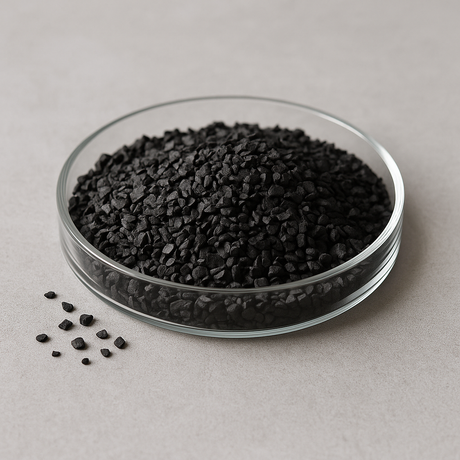
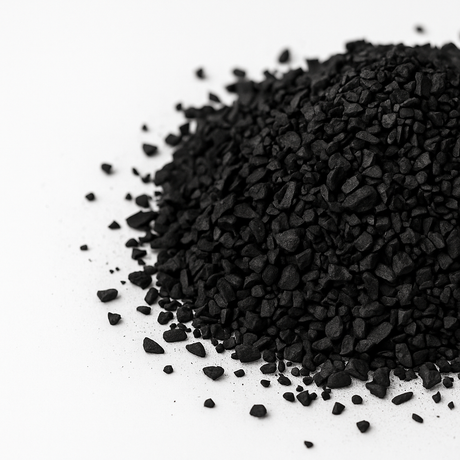
Coconut Shell Granular Activated Carbon (GAC) - 8x30 & 12x40 Mesh
From $21298Unit price /Unavailable 

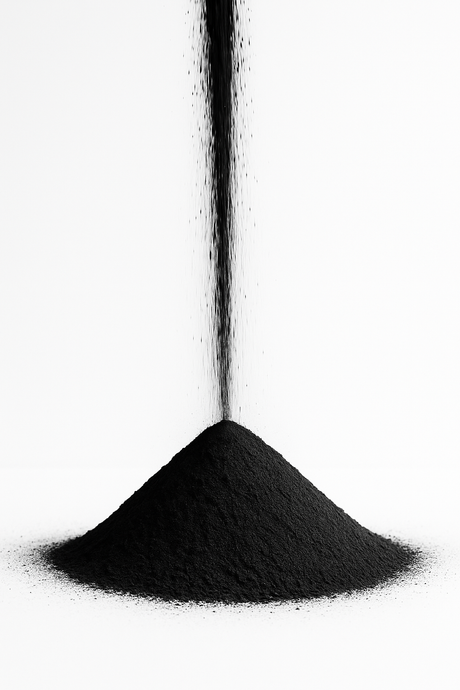
Food-Grade Coconut Shell Powdered Activated Carbon (PAC) - 80x325 Mesh, Acid-Washed
From $28098Unit price /Unavailable




Sorbents & Process Media for Food & Beverage Manufacturing
Food and beverage processors use adsorption media, bleaching clays, filter aids and functional mineral materials for very different process objectives - from edible-oil refining and liquid clarification to color reduction, powder flow and ingredient handling.
The correct material depends on what the process needs to remove or control, how the media is used, how it will be separated from the product stream, and what regulatory or quality requirements apply to the exact grade.
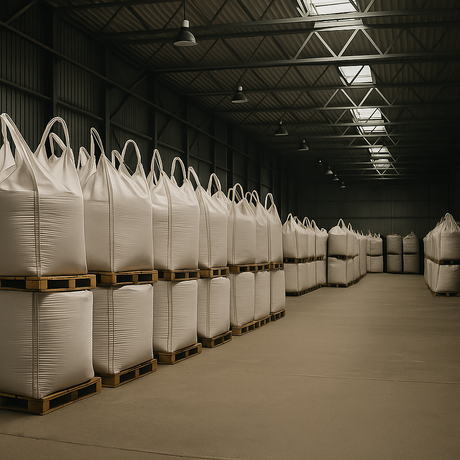
Sorbents Direct supplies diatomaceous-earth filter aids, activated carbon, bleaching earths, selective adsorbents, precipitated silica and related industrial process media in commercial and bulk quantities.
Start With the Process Function
Food-processing sorbents and filter media should not be selected simply by material family. Start with the unit operation:
Clarify Beer, Wine, Juice, Syrups & Ingredients
Evaluate diatomaceous-earth filter aid when the process requires precoat, body feed, solids retention and control of filter-cake permeability.
Browse DE Filter Aids →
DE Filter Aid for Food & Beverage Processing →
Bleach & Purify Edible Oils
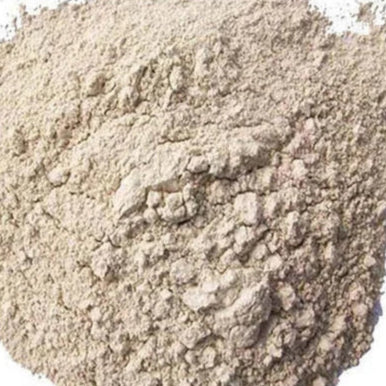
Evaluate bleaching earth and selective mineral adsorbents when the process target involves pigments, soaps, phosphorus-related contaminants, trace metals or other compatible impurities.
Reduce Color, Odor & Selected Organics
Activated carbon can be evaluated for compatible color bodies, taste-and-odor compounds and dissolved organics. PAC is particularly useful where carbon is dosed into a liquid and later removed.
Improve Flow & Reduce Caking
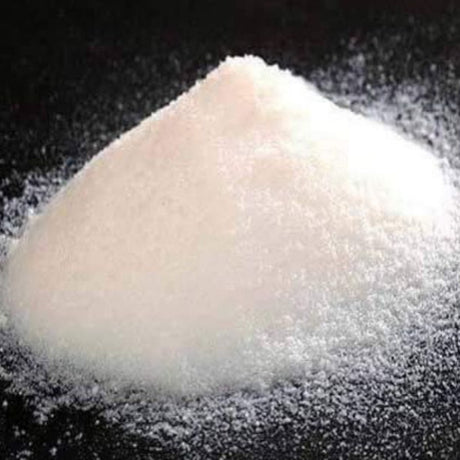
Suitable precipitated-silica grades can support powder flow, anti-caking and related formulation or ingredient-handling functions.
Common Food & Beverage Applications
Edible Oil Refining
Bleaching earths and selective adsorbents are used to reduce compatible pigments, residual soaps, oxidation products, phosphorus-related impurities, selected trace metals and other refining contaminants.
Beverage Clarification
Diatomaceous-earth filter aids can support clarification of compatible beer, wine, juice, fermentation streams, syrups and other liquid ingredients through precoat and/or body-feed filtration.
Browse Diatomaceous Earth Filter Aids →
Explore Food & Beverage DE Filtration →
Decolorization & Purification
Activated carbon can adsorb compatible color bodies, odor-causing compounds and selected dissolved organics from liquid process streams.
Powder Flow & Formulation
Appropriate precipitated-silica grades may improve powder flow, reduce caking, carry liquids or support consistent handling of dry formulations.
Ingredient & Syrup Processing
Adsorbents and filter aids may be evaluated for compatible liquid ingredients where color, organics, suspended solids or filtration behavior affect finished quality.
Process Polishing
Adsorption or filtration can be used as an intermediate or final purification step where selected impurities, color or suspended material must be reduced before downstream processing.
Food & Beverage Process Media at a Glance
| If You Need To... | Start By Evaluating... | Primary Selection Variables |
|---|---|---|
| Clarify beer, wine, juice or liquid ingredients | Suitable diatomaceous-earth filter aid | Clarity target, permeability, solids loading, precoat/body-feed method, flow rate and cake behavior |
| Bleach or purify edible oils | Bleaching earth or selective adsorbent | Feedstock, color target, soaps, phosphorus-related impurities, trace metals, dosage, filtration and oil retention |
| Reduce color, odor or selected organics | Activated carbon | Target compounds, pore structure, carbon form, dosage, contact conditions and downstream separation |
| Improve powder flow or reduce caking | Appropriate precipitated silica | Grade-specific regulatory status, particle characteristics, loading level and formulation behavior |
| Target soaps, metals or phosphorus-related impurities | Selective mineral / silicate adsorbent | Feed analysis, target contaminants, downstream process sensitivity and filtration |
| Remove several different impurity classes | A staged treatment train | Which contaminant should be handled by adsorption, selective pretreatment, bleaching or mechanical filtration |
Adsorbent and Filter Aid Are Not the Same Thing
An adsorbent removes dissolved or molecular contaminants by interaction with its internal or surface structure. A filter aid primarily improves mechanical solids separation and filter-cake behavior.
For example, powdered activated carbon may be added to adsorb color or organic compounds, while diatomaceous earth may then help capture the PAC and other suspended solids during filtration.
In many food and beverage processes, the best result comes from matching each media to a specific unit operation rather than expecting one material to perform every treatment function.
Diatomaceous Earth Filter Aid for Food & Beverage Processing
Diatomaceous-earth filter aid is used in compatible food and beverage filtration systems to build a porous filter cake that captures suspended material while allowing liquid to pass through the filtration system.
DE may be used as:
- Precoat: Applied to the filter support before processing to establish the initial porous filtration layer
- Body feed: Added during filtration to help maintain cake permeability as solids accumulate
- Precoat + body feed: Used together in processes where both initial protection and continuing permeability control are required
The central grade-selection tradeoff is clarity ↔ permeability ↔ throughput ↔ cake behavior.
Finer filter-aid grades generally provide tighter particle retention but can increase resistance to flow. More permeable grades can support greater throughput but may provide different clarification characteristics. Neither is automatically better.
Compare Available DE Filter-Aid Grades
Sorbents Direct currently offers Dicalite® food-and-beverage filter-aid options including Speedplus A and Dicalite 4200.
Speedplus A provides a finer, lower-permeability filtration profile for processes where tighter clarification is the stronger priority.
Dicalite 4200 provides a coarser, higher-permeability filtration profile where throughput and maintaining flow through the filter cake are stronger process considerations.
How to Select a DE Filter-Aid Grade
| Process Variable | What It Changes | Why It Matters |
|---|---|---|
| Target clarity | Required solids retention | Tighter clarity requirements may require a less permeable or finer filtration approach |
| Permeability | Ease of liquid flow through the cake | Higher permeability generally supports higher throughput but changes the retention profile |
| Solids loading | Rate at which the cake builds | Heavy solids loading can rapidly increase differential pressure if cake structure is poorly matched |
| Body-feed rate | Cake structure during the run | Appropriate body feed can help maintain permeability as captured solids accumulate |
| Liquid viscosity | Resistance to filtration | More viscous streams may require a different permeability balance than low-viscosity beverages |
| Filter equipment | Available cake depth, pressure and operating method | Pressure-leaf, filter-press and other systems can require different grade and operating strategies |
See our dedicated Food & Beverage DE Filter-Aid Selection Guide for a deeper discussion of precoat, body feed and grade selection, or browse available DE filter aids .
Bleaching Earth & Selective Adsorbents for Edible Oils
Edible-oil purification can involve multiple contaminant classes, and traditional bleaching earth is not always performing the same function as a selective pretreatment adsorbent.
Broad bleaching-earth grades are generally evaluated for color reduction, compatible polar impurities and oil polishing, while selective adsorbents may focus more strongly on soaps, phosphorus-related contaminants and selected metals.
Browse Bleaching Clays & Purification Adsorbents to compare B80, Supreme B81, Supreme 55, Select 350 and Select 450.
For process-level guidance, see Bleaching Earth for Edible Oil Refining.
Activated Carbon for Food & Beverage Purification
Activated carbon may be used in compatible food, beverage and ingredient processes for reduction of selected color bodies, taste-and-odor compounds and dissolved organics.
Powdered activated carbon is particularly useful where the carbon is dosed → contacted → separated from the liquid. This differs from granular activated carbon, which is normally retained in a fixed treatment bed.
Carbon source, pore structure, particle size, purity, target compounds, dosage, contact conditions and downstream filtration all affect process performance.
Browse the Activated Carbon collection or read the Activated Carbon Practical Guide.
PAC Treatment Often Creates a Filtration Problem Next
Powdered activated carbon can provide rapid adsorption because of its fine particle size, but the spent PAC must then be removed from the process liquid.
In compatible filtration systems, a DE filter aid used as precoat and/or body feed may help build a permeable cake and support capture of spent carbon and other suspended material.
The correct approach depends on the PAC loading, liquid properties, filter design, solids concentration and required finished clarity.
This is why adsorption and mechanical filtration should be considered as parts of the same treatment train rather than independent material choices.
Precipitated Silica in Food & Ingredient Processing
Precipitated silica is available in grades engineered for different particle characteristics, surface areas, absorption behavior and purity requirements.
Suitable grades may be used for powder flow, anti-caking, liquid carrying and related ingredient or formulation functions. Selection should always be made at the individual-grade level.
Regulatory status, particle size, bulk density, absorption behavior and formulation performance can vary considerably among silica grades.
See our Silica & Silica-Based Media collection for available products.
Food Grade, FCC & Processing-Aid Status Are Not Interchangeable
Terms such as food grade, FCC, processing aid and food-processing use describe different forms of qualification and should not be treated as equivalent.
FCC specifications establish compendial identity and purity requirements for materials covered by the relevant monograph. Other products may be suitable for specific food-processing applications or as processing aids without being sold as FCC ingredients.
Always verify the exact product grade, current manufacturer documentation, applicable regulations and intended use before approving a material for food or beverage processing.
How to Select Food-Processing Sorbent or Filter Media
1. Define the Unit Operation
Determine whether the material needs to adsorb dissolved compounds, clarify suspended solids, improve filter-cake behavior, bleach oil, control powder flow or perform another specific process function.
2. Identify the Product Stream
Beer, wine, juice, syrups, edible oils, aqueous ingredients and dry powders all behave differently and may require completely different media.
3. Identify the Actual Target
Define the contaminant or performance objective rather than selecting a media family first. Color bodies, suspended solids, soaps, metals, phosphorus-related impurities, organics and powder caking are different treatment problems.
4. Determine Regulatory & Documentation Requirements
Identify required food-use, FCC, processing-aid, purity, certification, lot-documentation or customer-qualification requirements before final grade selection.
5. Evaluate Process Behavior
Particle size, permeability, dosage, contact time, pH, temperature, viscosity, solids loading, filtration equipment and other operating variables can materially affect performance.
6. Consider the Separation Step
Powdered adsorbents and bleaching clays must normally be removed from the treated liquid. Evaluate filtration behavior, cake formation, retained product and downstream clarity along with adsorption performance.
7. Validate Before Scale-Up
Laboratory or pilot trials can help establish media dosage, filtration behavior, throughput, product quality, yield impact and overall treatment economics before full-scale production.
Frequently Asked Questions About Food & Beverage Process Media
What sorbents are used in food processing?
Depending on the unit operation, processors may use bleaching earths, selective mineral adsorbents, precipitated silica, activated carbon, diatomaceous-earth filter aids and other grade-specific process media.
What is diatomaceous earth used for in beverage filtration?
Suitable DE grades can be used as precoat, body feed or both to create a porous filter cake that captures suspended solids while maintaining liquid flow through compatible filtration equipment.
How do I choose between finer and faster DE filter aid?
Finer grades generally provide tighter retention but lower permeability, while more permeable grades can support greater throughput with different clarification characteristics. Grade selection should balance clarity, flow rate, solids loading and cake behavior.
Where can I compare available DE filter aids?
Browse the Diatomaceous Earth Filter Aids collection for current commercial DE grades, or use the Food & Beverage DE Filter-Aid Selection Guide for process-level guidance.
What is bleaching earth used for?
Bleaching earth is used primarily during oil and fat refining to reduce compatible pigments, polar impurities, oxidation products and other contaminants before the spent clay is removed by filtration.
Why is activated carbon used in food and beverage processing?
Activated carbon can adsorb compatible color bodies, odors and selected dissolved organic compounds. The appropriate grade and carbon form depend on the target compounds and treatment process.
What is the difference between powdered carbon and filter aid?
Powdered activated carbon is primarily an adsorbent. DE filter aid is primarily used to improve mechanical filtration and cake permeability. They may be used together in compatible processes when adsorption is followed by solids removal.
What is FCC-grade silica?
FCC refers to the Food Chemicals Codex, which establishes identity and purity specifications for materials covered by its monographs. Exact regulatory status should be confirmed from current manufacturer documentation.
Is all silica food grade?
No. Silica grades are manufactured for many different industrial and specialty uses. Food-processing suitability depends on the exact grade, specification, regulatory status and intended use.
Is all activated carbon food grade?
No. Activated-carbon grades vary in feedstock, processing, purity, particle form and intended use. Food or beverage suitability should be verified for the exact grade.
Should process media be tested before production use?
Representative trials are often valuable when changing grades or adding a new treatment step because adsorption, filtration, dosage, yield and finished-product quality can be highly process dependent.
Bulk Sorbents & Filtration Media for Food Processing
Sorbents Direct supplies food and beverage processors with activated carbon, bleaching earths, selective adsorbents, precipitated silica and diatomaceous-earth filter aids in commercial and bulk quantities.
When requesting a recommendation or quote, provide:
- Product or process stream being treated
- Target contaminant or filtration objective
- Current material and grade, if applicable
- Required quantity and packaging preference
- Ship-to ZIP code or destination
- Required SDS, TDS, COA or regulatory documentation
For larger or recurring requirements, see our Bulk Industrial Adsorbents & Filtration Media Supplier page.
Need Help Selecting Food & Beverage Process Media?
Tell us what you're processing, the contaminant or filtration problem, current material if applicable, required quantity and any documentation requirements. We can help narrow practical starting grades and commercial supply options.


