-
 Request a Custom Quote
Don’t see what you need? We can source it. 
-
-
SILIPORITE® NK 30 AP 3A Molecular Sieve Powder
From $3,70000Unit price /Unavailable -
3A 8x12 Molecular Sieve Desiccant High-Performance Zeolite for Industrial Drying
From $46200Unit price /Unavailable 
4A 8×12 Molecular Sieve Desiccant for Gas & Liquid Drying
From $45100Unit price /Unavailable
13X 4×8 Molecular Sieve for CO₂ & Gas Purification
From $48200Unit price /Unavailable-
4A 4×8 Blue Indicating Molecular Sieve Desiccant
From $1,88700Unit price /Unavailable






Molecular Sieve & Zeolite Selection Guide
Molecular sieves are crystalline zeolite adsorbents with controlled pore structures that selectively adsorb molecules according to size, polarity, and process conditions. They are widely used for drying, dehydration, purification, and separation in gas and liquid systems.
Quick Answer: What Is a Molecular Sieve?
A molecular sieve is a porous crystalline adsorbent that selectively captures molecules small enough to enter its pore structure. Common industrial grades such as 3A, 4A, 5A, and 13X differ in effective pore size and adsorption behavior, allowing engineers to target water and other molecules under specific operating conditions.
Zeolite vs. Molecular Sieve
Zeolite refers to a family of crystalline aluminosilicate materials with ordered pore structures. Molecular sieve describes the selective adsorption behavior of materials whose pore dimensions allow some molecules to enter while excluding others.
Many industrial molecular sieves are manufactured from synthetic zeolites because their composition, pore structure, particle form, and adsorption properties can be tightly controlled. Natural zeolites are also used in selected adsorption, ion-exchange, filtration, and environmental applications.
3A vs. 4A vs. 5A vs. 13X Molecular Sieves
| Type | Nominal Pore Opening | General Selectivity | Common Applications |
|---|---|---|---|
| 3A | Approx. 3 Å | Strong water adsorption while excluding many larger molecules such as ethanol and other hydrocarbons. | Ethanol dehydration, solvent drying, polymer and process-fluid drying. |
| 4A | Approx. 4 Å | Adsorbs water and other small molecules capable of entering the Type A zeolite structure. | General gas and liquid drying, compressed air, process purification, detergent and powder applications. |
| 5A | Approx. 5 Å | Larger pore opening than 4A, allowing adsorption and separation of selected normal paraffins and other molecules. | Gas purification, hydrocarbon separation, specialty adsorption and process purification. |
| 13X | Approx. 10 Å | Larger-pore zeolite with high capacity for water, CO₂, and other larger polar molecules. | Air separation pretreatment, gas purification, CO₂ removal, sulfur-compound removal and PSA systems. |
Nominal pore size is a useful selection guide but does not by itself determine process performance. Adsorption equilibrium, kinetics, temperature, pressure, feed composition, competing molecules, and regeneration conditions also matter.
Common Molecular Sieve Applications
Gas & Compressed-Air Drying
Molecular sieves are widely used to remove water vapor from compressed air, natural gas, hydrogen, nitrogen, oxygen-containing streams, and other process gases where low residual moisture is required.
Ethanol & Solvent Dehydration
3A molecular sieve is commonly selected for ethanol dehydration because water can enter the pore structure while ethanol is largely excluded. Molecular sieves are also used for drying other solvents where compatibility and selectivity are appropriate.
Gas Purification & CO₂ Removal
Larger-pore molecular sieves such as 13X are commonly evaluated for carbon-dioxide removal, gas purification, and pretreatment ahead of cryogenic or pressure-swing separation systems.
Molecular Separation
Controlled pore dimensions allow certain zeolite grades to separate molecules according to size and adsorption affinity. Applications can include hydrocarbon separation, purification, and specialty gas-processing duties.
How to Choose the Right Molecular Sieve
1. Identify the Molecule You Need to Remove
Start with the adsorbate: water, carbon dioxide, a hydrocarbon, sulfur-containing compound, or another impurity. Selection begins with whether the target molecule can enter the pore structure and whether competing components will also be adsorbed.
2. Choose the Appropriate Pore Size
The 3A, 4A, 5A, and 13X designations indicate different zeolite structures and effective pore openings. A smaller pore may provide useful exclusion of larger molecules, while a larger pore allows adsorption of a broader range of species.
3. Define the Required Outlet Specification
General moisture reduction and ultra-low dew-point drying are different service conditions. Define the required outlet moisture, contaminant concentration, or separation target before selecting the material and sizing the adsorption system.
4. Evaluate Temperature, Pressure, and Feed Composition
Molecular-sieve capacity and selectivity depend on operating conditions. Temperature, pressure, inlet concentration, humidity, flow rate, competing adsorbates, and contact time can materially affect usable capacity and breakthrough behavior.
5. Select the Appropriate Physical Form
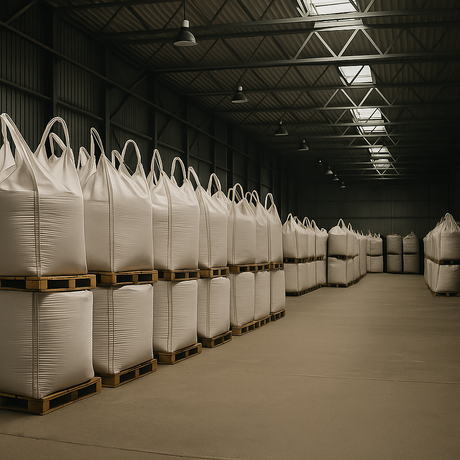
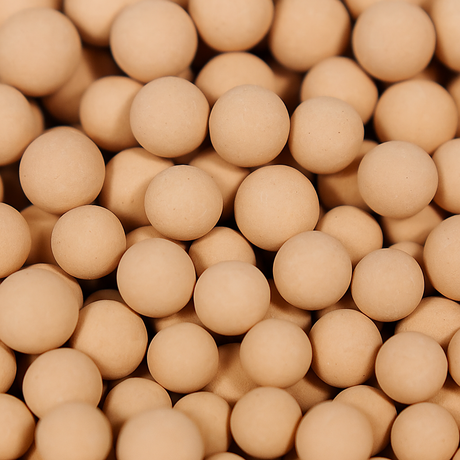
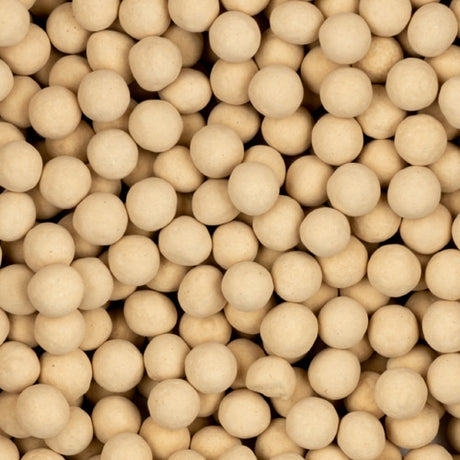
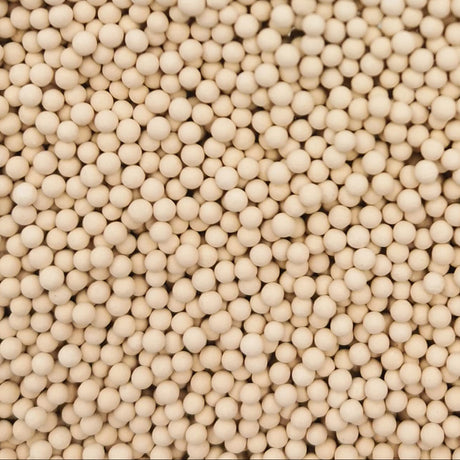
Molecular sieves are supplied as beads, pellets, granules, and powders. Beads and pellets are commonly used in fixed adsorption beds, while powders may be incorporated into coatings, polymer systems, sealants, packaged products, or specialty process formulations.
6. Plan the Regeneration Cycle
Many molecular sieves can be regenerated by removing the adsorbed material through controlled heating, pressure reduction, purge gas, or a combination of methods. The correct regeneration procedure depends on the grade, adsorbate, system design, and operating conditions.
Beads, Pellets, and Molecular Sieve Powders
| Form | Typical Use | Key Considerations |
|---|---|---|
| Beads | Fixed-bed gas and liquid drying or purification | Pressure drop, crush strength, bed geometry, flow rate and regeneration |
| Pellets | Fixed-bed adsorption and specialty process systems | Mechanical strength, size, pressure drop and attrition |
| Powders | Formulations, polymers, coatings, sealants and specialty process uses | Particle size, dispersion, loading level, moisture exposure and handling |
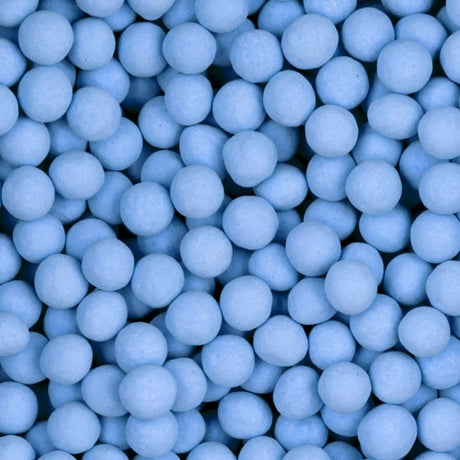
| Indicating Media | Applications where a visual indication of moisture loading is useful | Indicator chemistry, application suitability and regeneration requirements |
Molecular Sieve Selection at a Glance
| If You Need To... | Start By Evaluating... | Key Considerations |
|---|---|---|
| Dehydrate ethanol | 3A molecular sieve | Inlet water content, product target, bed design and regeneration cycle |
| Dry general gas or liquid streams | 3A or 4A depending on feed chemistry | Target molecule, competing adsorbates, dew point and compatibility |
| Remove CO₂ from a gas stream | 13X or another application-specific molecular sieve | CO₂ concentration, water loading, pressure, temperature and regeneration |
| Separate selected hydrocarbons | 5A or other separation-grade zeolite | Molecular dimensions, feed composition, pressure and selectivity |
| Add a desiccant directly to a formulation | Molecular sieve powder | Particle size, dispersion, moisture capacity and formulation compatibility |
| Reach very low residual moisture | Application-specific molecular sieve system | Required dew point, bed sizing, contact time, regeneration and breakthrough |
Questions to Answer Before Selecting a Grade
- What molecule or contaminant are you trying to remove?
- Is the process gas phase, liquid phase, or a formulation?
- What is the inlet concentration or moisture level?
- What outlet specification must be reached?
- What are the operating temperature and pressure?
- What other molecules are present that may compete for adsorption sites?
- What flow rate or throughput is required?
- Will the material be used in a fixed bed or incorporated into a formulation?
- What regeneration method is available?
- What particle size, bead size, pellet size, or powder specification is required?
Frequently Asked Questions
What is the difference between 3A and 4A molecular sieve?
3A has a smaller effective pore opening than 4A. This allows 3A to strongly adsorb water while excluding many molecules that can enter 4A, making 3A particularly useful where selective water removal is required.
What is 3A molecular sieve used for?
3A molecular sieve is commonly used for ethanol and solvent dehydration, gas drying, polymer and formulation drying, and other applications where water must be removed without significant adsorption of larger molecules.
What is 4A molecular sieve used for?
4A molecular sieve is widely used for general drying and purification of gas and liquid streams and is also available in powder form for selected industrial formulations and process applications.
What is 5A molecular sieve used for?
5A molecular sieve has a larger effective pore opening than 4A and is used in selected hydrocarbon separations, gas purification, and specialty adsorption applications where molecules larger than water must enter the pore structure.
What is 13X molecular sieve used for?
13X is a larger-pore molecular sieve commonly evaluated for gas purification, carbon-dioxide removal, air-separation pretreatment, and other applications involving larger polar molecules.
Can molecular sieves be regenerated?
Yes. Many molecular sieve grades can be regenerated by controlled heating, pressure reduction, purge gas, or combinations of these methods. The appropriate regeneration conditions depend on the grade, adsorbate, equipment, and process.
Are zeolites and molecular sieves the same thing?
Many molecular sieves used industrially are synthetic zeolites, but the terms are not perfectly interchangeable. Zeolite describes a material family, while molecular sieve emphasizes selective adsorption based on pore structure and molecular size.
How do I choose between molecular sieve beads and powder?
Beads or pellets are generally selected for packed adsorption beds and continuous-flow systems. Powders are better suited to formulations, polymers, coatings, sealants, and processes where the adsorbent is incorporated directly into another material.
Related Drying & Purification Materials
Depending on the process, molecular sieves may be compared with or used alongside other industrial adsorbents and desiccants:
- Activated Alumina
- Silica & Silica Gel
- Drying & Dehydration Materials
- Moisture-Control Sorbents
- Purification-Grade Sorbents
Need Help Selecting a Molecular Sieve?
Send us your target molecule, inlet concentration, required outlet specification, operating temperature and pressure, flow rate, current material if applicable, and estimated quantity. We can help narrow the appropriate molecular sieve type, physical form, and available grade.
Product suitability should be confirmed against the actual process and required specifications. Nominal pore size and general application guidance do not replace grade-specific technical data, adsorption testing, or system design calculations.


