
-
 Request a Custom Quote
Don’t see what you need? We can source it. -

Tixosil® 68B FCC Precipitated Silica for Food & Powder Flow
27.55 lb
$15625Unit price /Unavailable 
Ultra-Clear® Attapulgite Clarification Media for Fuels & Oils
From $17500Unit price /Unavailable
Pure-Flo® B80 Natural Bleaching Adsorbent High-Performance Clay for Edible Oil Refining
From $8800Unit price /Unavailable
SIPERNAT® 28 Precipitated Silica for Anti-Caking & Powder Flow
$4,10000Unit price /Unavailable-
Dicalite 4200 DE Filter Aid for General Liquid Clarification
From $99500Unit price /Unavailable -
Dicalite Speedplus A Fine DE Filter Aid for Liquid Clarification
From $99500Unit price /Unavailable -
Select 450 Selective Silicate Adsorbent for Oils & Biodiesel
1000.0 lb
$3,82900Unit price /Unavailable -
-
Pure-Flo® Supreme 55 Bleaching Earth for Edible Oil Refining
1000.0 lb
$1,71900Unit price /Unavailable -
Select 350 Selective Silicate Adsorbent for Oils & Biodiesel
1000.0 lb
$3,74900Unit price /Unavailable -
Coconut Shell Granular Activated Carbon (GAC) - 8x30 & 12x40 Mesh
From $21298Unit price /Unavailable -
CHROMATOCEL® S-200 Silica Gel for Chromatography & Purification
1102.0 lb
$6,25000Unit price /Unavailable 
CHROMATOCEL® S-060 Silica Gel for Chromatography & Purification
From $62500Unit price /Unavailable




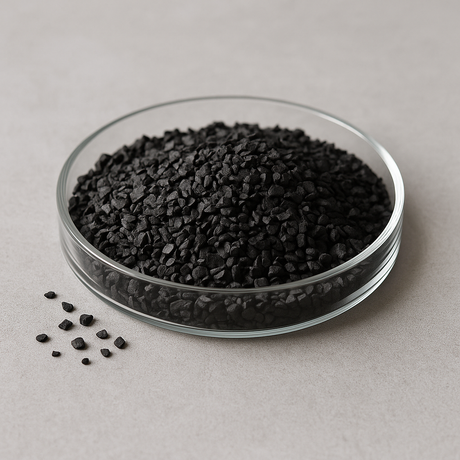
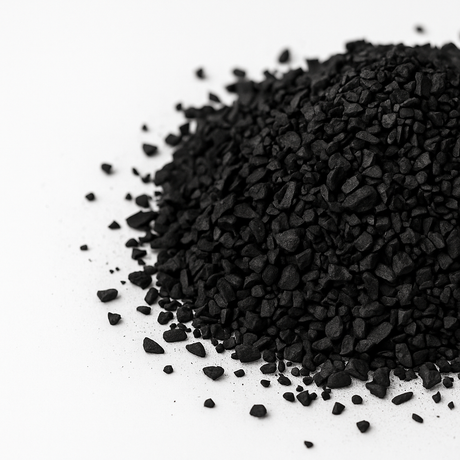


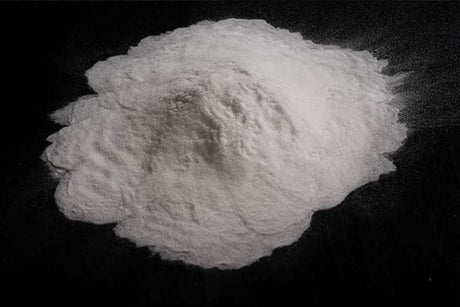

What Is a Powder Flow Aid?
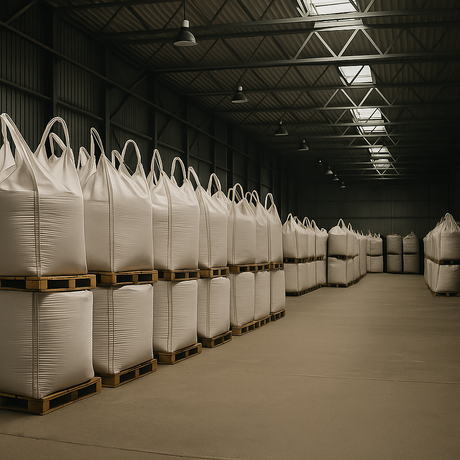
A powder flow aid is a material added to or used with powders and granular products to improve handling, movement, blending, feeding, or discharge. Flow aids are commonly used where cohesive powders bridge, rat-hole, compact, cling to equipment, feed inconsistently, or otherwise create processing problems.
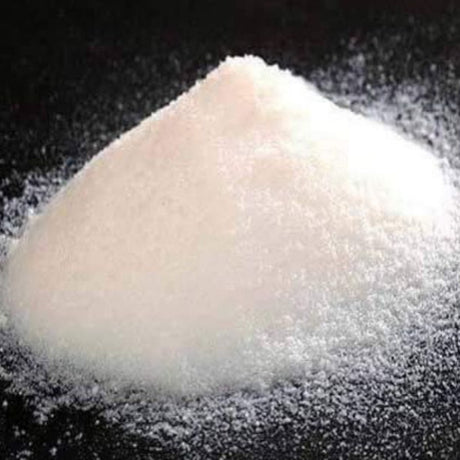
Depending on the formulation and process, materials such as precipitated silica, alumina, silicates, and specialty mineral powders may help modify particle-to-particle interactions, reduce surface cohesion, improve flowability, or support more consistent bulk handling.
Common Powder Flow Problems
Bridging
Powder forms a stable arch across a hopper or outlet, preventing material from discharging even though product remains above the opening.
Ratholing
Material flows through a narrow channel while surrounding powder remains stagnant, reducing usable hopper capacity and causing inconsistent discharge.
Clumping & Cohesion
Fine particles can adhere to one another because of moisture, electrostatic forces, particle shape, surface chemistry, or compaction during storage and transport.
Inconsistent Feeding
Poor flow can cause surging, interrupted discharge, uneven dosing, and inconsistent transfer through feeders, mixers, filling equipment, and packaging systems.
Common Flow-Aid Materials
| Material Type | Why It May Be Used | Typical Considerations |
|---|---|---|
| Precipitated Silica | Fine-powder flow modification, anti-caking support, carrier functionality and formulation control | Surface area, particle size, oil absorption, moisture, dosage and product-grade requirements |
| Silica Gel | Moisture adsorption and process protection where humidity contributes to poor handling | Particle size, moisture capacity, pore structure and whether direct blending is appropriate |
| Activated Alumina | Moisture adsorption and specialty processing applications | Particle form, surface properties, regeneration requirements and process compatibility |
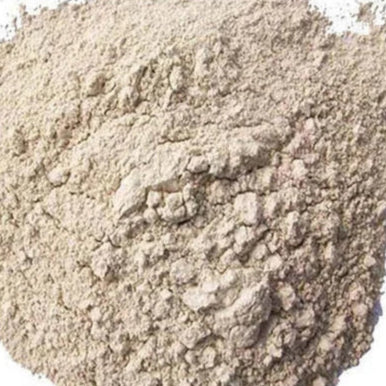
| Clay & Silicate Minerals | Carrier, absorbency, flow modification and formulation support depending on grade | Mineralogy, density, particle size, moisture, surface chemistry and interaction with the formulation |
Where Powder Flow Aids Are Used
Hoppers, Bins & Bulk Storage
Flow aids may be evaluated when powders compact during storage, fail to discharge uniformly, or develop bridging and ratholing around hopper outlets.
Powder Blending
Consistent powder movement can improve mixing behavior and reduce segregation or feed inconsistency. The appropriate additive depends on the particle characteristics, formulation, loading level, and blending process.
Feeding & Metering
Poorly flowing powders can cause erratic screw-feeder performance, interrupted dosing, surging, or inconsistent fill weights. Improving bulk flow characteristics can help stabilize downstream processing.
Packaging & Filling
Powders with more consistent flow characteristics can be easier to transfer, meter, fill, and package, particularly where repeatable bulk density and discharge behavior are important.
Formulation & Carrier Applications
Some silica and mineral materials are used as carriers, absorbents, or processing aids in formulations. Grade-specific purity, documentation, and application requirements should always be verified before use.
Flow Aid vs. Anti-Caking Agent
The terms are related but not identical. A flow aid is selected primarily to improve powder movement and handling, while an anti-caking agent is intended primarily to reduce clumping or agglomeration during storage and use.
A single material may provide both functions in some formulations, but the correct choice depends on why the powder is flowing poorly. If moisture-driven caking is the primary issue, see our Anti-Caking Materials collection.
What Causes Poor Powder Flow?
Powder flow is influenced by much more than particle size alone. Material behavior can change with humidity, electrostatic charge, particle shape, surface roughness, bulk density, compaction, storage time, temperature, formulation chemistry, and equipment geometry.
- Fine particle size: Fine powders often exhibit stronger cohesive forces relative to particle weight.
- Moisture: Humidity can create liquid bridges and increase cohesion in hygroscopic powders.
- Irregular particle shape: Angular particles may mechanically interlock and resist movement.
- Electrostatic attraction: Charged particles can adhere to one another or equipment surfaces.
- Compaction: Storage pressure and vibration can increase consolidation over time.
- Equipment design: Hopper angle, outlet size, wall friction, and feeder configuration can strongly affect discharge.
How to Select a Powder Flow Aid
1. Identify the Actual Flow Problem
Determine whether the issue is bridging, ratholing, caking, poor discharge, inconsistent feeding, static adhesion, excessive moisture, or another handling problem.
2. Characterize the Base Powder
Particle size, particle shape, bulk density, moisture sensitivity, surface chemistry, and existing formulation ingredients can all affect which flow-aid material performs best.
3. Determine How the Material Will Be Used
A flow aid blended directly into a formulation has different requirements from a desiccant used to protect stored material or a processing medium used elsewhere in the equipment.
4. Evaluate Dosage & Compatibility
More flow aid is not automatically better. Excess additive can change bulk density, texture, downstream filtration, formulation performance, or other physical properties. Bench testing at several loading levels is often the best way to identify an effective range.
5. Verify Grade Requirements
Food, pharmaceutical, cosmetic, chemical, and other regulated applications may require specific purity, documentation, certifications, or analytical limits. These requirements should be verified against the individual product grade rather than assumed for an entire material family.
Powder Flow Testing & Evaluation
Flow performance is best evaluated under conditions that resemble the actual process. Useful comparisons may include discharge time, hopper behavior, angle of repose, bulk and tapped density, tendency to bridge, feeder consistency, moisture sensitivity, and performance after storage or vibration.
For formulation applications, comparative testing at multiple addition levels can help determine whether a candidate flow aid improves handling without negatively affecting other product characteristics.
Frequently Asked Questions About Powder Flow Aids
What is a powder flow aid?
A powder flow aid is a material used to improve the handling or movement of powders and granular products. It may reduce cohesion, improve discharge, support more consistent feeding, or help reduce flow problems such as bridging and ratholing.
What materials are used as flow aids?
Depending on the application, flow-aid materials may include precipitated silica, silicates, specialty mineral powders, alumina, and other formulation or processing additives.
Is silica a flow aid?
Certain silica products are widely used as powder-processing and flow-control additives. Their suitability depends on silica type, particle characteristics, surface properties, formulation requirements, and dosage.
What is the difference between a glidant and a flow aid?
Glidant is commonly used for an additive intended to improve powder flow, particularly in formulation applications. Flow aid is a broader industrial term that can include materials used to improve powder movement, discharge, handling, or processing behavior.
Can a flow aid prevent caking?
Some flow aids may also reduce caking, especially when they help control moisture or reduce particle-to-particle contact. However, caking and poor flow can have different causes, so the material should be selected for the specific problem.
How much flow aid should be added?
There is no universal dosage. The appropriate addition rate depends on the base powder, flow-aid grade, processing conditions, formulation requirements, and desired performance. Small-scale comparative testing is generally preferable to selecting a loading level from a generic recommendation.
Industrial Powder Flow Materials & Technical Support
Sorbents Direct supplies silica, alumina, clay and specialty mineral materials used across powder processing, moisture control, formulation, adsorption, filtration, and bulk-handling applications.
If you're trying to improve an existing powder process, providing the base material, current flow problem, particle size, moisture conditions, equipment type, existing additive if any, and required quantity gives us a useful starting point for narrowing potential options.
Need Help Improving Powder Flow?
Tell us what material you're handling, the problem you're experiencing, your operating conditions, and the quantity you need. We'll help identify suitable flow-aid and mineral-processing options.


