
13X 4×8 Molecular Sieve for CO₂ & Gas Purification
13X 4×8 Molecular Sieve for CO₂ & Gas Purification - 100kg (220.46 lbs) Pallet (Vendor MOQ) is backordered and will ship as soon as it is back in stock.
Couldn't load pickup availability
(Vendor MOQ 100kg) Buy 2+ 100kg pallets to save 10%, or 6+ 100kg pallets to save 20% — auto-applied at checkout.
| Qty | Discount |
|---|---|
| Buy 2 | 10% off each |
| Buy 6 | 20% off each |
13X 4×8 Molecular Sieve from Delta Adsorbents is a high-capacity Type X synthetic zeolite adsorbent designed for broad gas and liquid purification applications.
Its nominal 10-angstrom pore opening is substantially larger than the openings in 3A and 4A molecular sieves. This allows 13X to adsorb water, carbon dioxide, hydrogen sulfide, mercaptans, selected hydrocarbons, and other molecules that smaller-pore molecular sieves may exclude.
Molecular sieve type: Sodium-form Type X synthetic zeolite
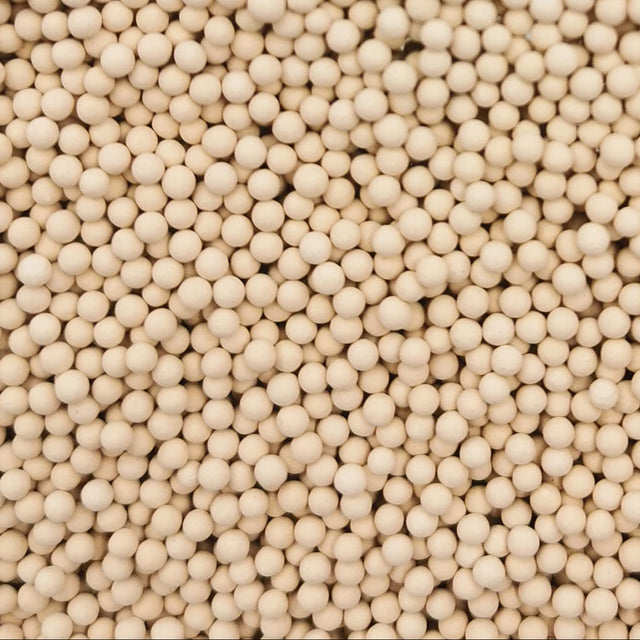
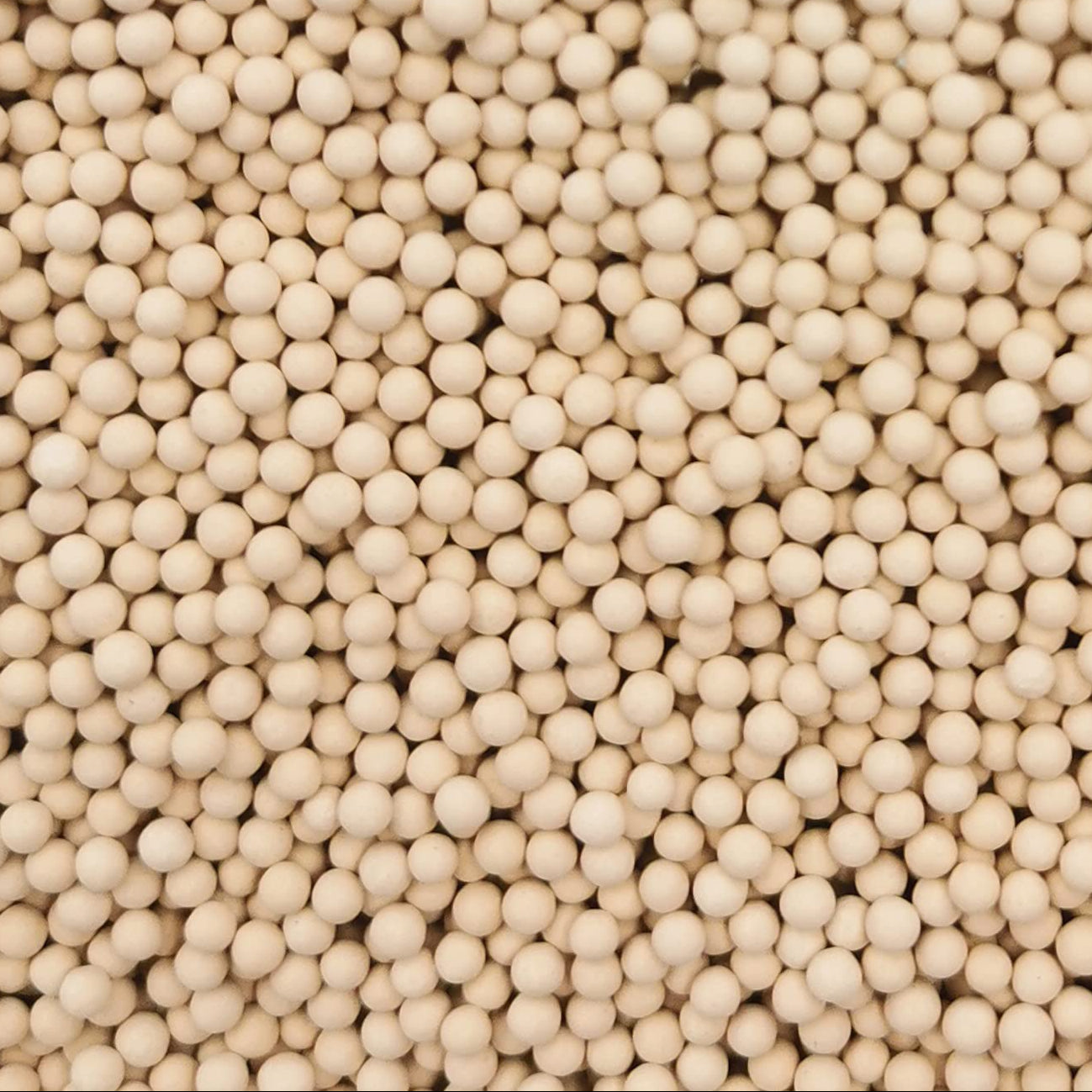
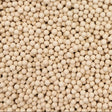
Particle size: 4×8 mesh spherical beads
Nominal pore opening: Approximately 10 Å
Primary uses: Gas purification, CO₂ and moisture removal, natural-gas sweetening, and PSA oxygen systems
Minimum order: 100kg (approximately 220lb)
Where it fits
- Natural-gas purification: Simultaneous removal of water, carbon dioxide, hydrogen sulfide, and selected mercaptans from compatible streams.
- Cryogenic air separation: Pretreatment of feed air to remove moisture and carbon dioxide before low-temperature separation.
- PSA oxygen generation: Preferential nitrogen adsorption in pressure-swing adsorption oxygen concentrators and industrial oxygen systems.
- Industrial gas drying: Deep moisture removal from compatible hydrogen, nitrogen, oxygen, synthesis-gas, and process-gas streams.
- Compressed-air purification: Removal of moisture, carbon dioxide, and selected contaminants where broader adsorption than 4A is required.
- Hydrocarbon-stream treatment: Drying and purification of compatible gas and liquid hydrocarbon streams.
- Liquid purification: Adsorption of moisture and selected dissolved contaminants from compatible solvents and process liquids.
- Catalyst and adsorbent systems: Selected applications requiring a high-capacity, broad-pore zeolite structure.
Why choose 13X molecular sieve?
- Large 10 Å pore opening: Adsorbs a broader range of molecules than 3A, 4A, or 5A molecular sieves.
- High water capacity: Published equilibrium water capacity of at least 26 wt.%.
- Strong CO₂ adsorption: Published carbon-dioxide adsorption capacity of at least 18 wt.%.
- Simultaneous purification: Can remove moisture and carbon dioxide in the same adsorption bed.
- Acid-gas treatment potential: Used in compatible processes for hydrogen sulfide and mercaptan removal.
- Adsorbs larger molecules: Can admit selected aromatic and branched-chain hydrocarbons that smaller A-type sieves exclude.
- High mechanical strength: The coarse 4×8 grade has a published crush strength of at least 80 N.
- Regenerable media: Suitable for properly designed thermal and pressure-swing adsorption cycles.
Typical specifications
| Product type | 13X molecular sieve adsorbent and desiccant |
|---|---|
| Structure | Sodium form of Type X synthetic zeolite |
| Chemical formula | Na86[(AlO2)86(SiO2)106] • nH2O |
| Form | Spherical beads |
| Particle size | 4×8 mesh |
| Nominal pore opening | Approximately 10 Å |
| Equilibrium water capacity | ≥26 wt.% at 25°C |
| CO₂ adsorption capacity | ≥18 wt.% |
| Heat of adsorption | Approximately 1,800 BTU/lb of H2O |
| Bulk density | ≥0.64 g/mL (≥40 lb/ft³) |
| Crush strength | ≥80 N (≥18 lb) |
| Size qualification | ≥97% |
| Package moisture | ≤1.5 wt.% as shipped |
| Supplier | Delta Adsorbents |
Values shown are manufacturer specifications for the 13X 4×8 beaded grade. Final acceptance requirements should be confirmed using the current technical specification and lot-specific COA.
What can 13X molecular sieve adsorb?
| Molecule or contaminant | General adsorption behavior |
|---|---|
| Water | Readily adsorbed for deep drying and low-moisture purification. |
| Carbon dioxide | Strongly adsorbed, making 13X useful in air purification, gas treatment, and cryogenic pretreatment. |
| Hydrogen sulfide | May be adsorbed in compatible natural-gas and hydrocarbon-stream treatment applications. |
| Mercaptans | Selected mercaptans may be removed from compatible gas and liquid hydrocarbon streams. |
| Nitrogen | Preferential adsorption supports PSA oxygen-generation applications. |
| Straight-chain hydrocarbons | Many are small enough to enter the pore structure. |
| Branched-chain hydrocarbons | Selected branched molecules can be adsorbed because of the larger pore opening. |
| Aromatic hydrocarbons | Selected aromatic molecules may enter and be adsorbed by the 13X pore structure. |
Actual adsorption depends on molecular dimensions, concentration, pressure, temperature, competing compounds, and process conditions.
13X vs. 4A molecular sieve
| Selection factor | 13X molecular sieve | 4A molecular sieve |
|---|---|---|
| Nominal pore opening | Approximately 10 Å | Approximately 4 Å |
| Adsorption range | Broad; includes larger molecules, aromatics, and selected branched hydrocarbons | Narrower; generally excludes larger aromatic and branched molecules |
| CO₂ removal | High capacity and commonly selected | Can adsorb CO₂, but with a narrower pore structure and different capacity profile |
| Typical emphasis | Gas purification, CO₂ removal, acid-gas treatment, PSA oxygen, and broad molecular adsorption | General drying, compressed air, refrigerants, solvents, and selected small-molecule adsorption |
| Product co-adsorption risk | Higher because more process molecules can enter the pores | Lower for molecules too large to enter the 4 Å structure |
13X vs. 3A molecular sieve
| Selection factor | 13X molecular sieve | 3A molecular sieve |
|---|---|---|
| Nominal pore opening | Approximately 10 Å | Approximately 3 Å |
| Primary strength | Broad purification and adsorption of larger molecules | Highly selective water removal |
| Alcohol dehydration | May adsorb alcohol and other process molecules | Generally preferred because ethanol and methanol are excluded |
| Gas purification | Preferred when CO₂, acid gases, or larger contaminants must also be removed | Preferred when selective moisture removal is the principal objective |
Select 13X only when its broader adsorption range benefits the process. It can also adsorb valuable product molecules that smaller-pore sieves would exclude.
Packaging & availability
| Format | Availability and use |
|---|---|
| 100kg minimum order | Standard Sorbents Direct minimum for production trials, vessel fills, and recurring industrial requirements. |
| 308lb (140 kg) drum | Published manufacturer drum configuration. Final order quantity and fulfillment arrangement are confirmed at quotation. |
| Supersack | Bulk quantities filled to order specification and quoted based on required weight, availability, and delivery lane. |
- Minimum order: 100kg (approximately 220lb).
- Lead time: Typically 1-2 weeks, subject to current inventory, packaging, quantity, and destination.
- Freight: Pallet or LTL service based on the selected package configuration.
- Bulk requirements: Contact Sorbents Direct for supersack, recurring pallet, scheduled-release, or truckload pricing.
System design considerations
13X performance depends on the complete inlet composition, not moisture loading alone. Its large pore structure can adsorb carbon dioxide, sulfur compounds, hydrocarbons, and other process molecules that compete for available capacity.
- Inlet composition: Quantify water, CO₂, H₂S, mercaptans, hydrocarbons, particulates, and other contaminants.
- Target outlet specification: Establish required dew point, CO₂ concentration, sulfur limit, oxygen purity, or other performance target.
- Operating temperature: Lower adsorption temperatures generally favor capacity.
- Operating pressure: Influences gas density, adsorption equilibrium, velocity, and PSA performance.
- Bed depth: Must accommodate the mass-transfer zone and provide adequate protection before breakthrough.
- Flow velocity: Excessive superficial velocity may increase pressure drop and reduce effective contact time.
- Competing adsorbates: Water, CO₂, sulfur compounds, and hydrocarbons may consume capacity simultaneously.
- Regeneration: Temperature, purge rate, depressurization, cooling, and cycle timing affect restored working capacity.
- Upstream protection: Coalescing, particulate filtration, and liquid knock-out may help protect the sieve from fouling.
PSA oxygen-system considerations
13X molecular sieve is widely used in pressure-swing adsorption systems because it preferentially adsorbs nitrogen from compressed air, allowing an oxygen-enriched product stream to pass through the bed.
- Bead size must match the vessel, screen system, pressure-drop limit, and required mass-transfer rate.
- Compressed feed air should be appropriately filtered to remove oil, liquid water, and particulates.
- Cycle pressure, equalization, purge, depressurization, and timing directly affect oxygen purity and recovery.
- Moisture and carbon dioxide pretreatment may be necessary depending on the PSA design.
- Replacement media should match the original equipment specification rather than being selected solely by the “13X” designation.
PSA note: Not every 13X grade is interchangeable in every oxygen concentrator or industrial PSA system. Confirm bead size, adsorption properties, vessel design, pressure-drop limits, and equipment-manufacturer requirements before replacement.
Regeneration guidance
13X molecular sieve can be regenerated using controlled heating, dry purge, pressure reduction, vacuum, or a combined process. The correct method depends on whether the bed contains only moisture or also carbon dioxide, sulfur compounds, solvents, or hydrocarbons.
- Follow the adsorption-system or vessel manufacturer’s regeneration procedure.
- Heat gradually to reduce thermal stress and bead damage.
- Use sufficiently dry purge gas where thermal regeneration is employed.
- Provide enough purge flow to remove desorbed moisture and contaminants from the vessel.
- Account for higher-boiling or strongly adsorbed compounds that may require more demanding regeneration conditions.
- Cool the regenerated bed under dry conditions before returning it to adsorption service.
- Avoid exposing hot regenerated sieve directly to humid ambient air.
- Monitor outlet dew point, CO₂, sulfur breakthrough, oxygen purity, or the applicable process parameter.
Regeneration note: A bed exposed to hydrogen sulfide, mercaptans, heavy hydrocarbons, or reactive contaminants may require process-specific regeneration, disposal, or safety review. Do not assume a moisture-only regeneration procedure is sufficient.
Handling & storage
- Store unopened molecular sieve in a clean, dry, well-ventilated location.
- Keep drums and supersacks tightly closed until use.
- Reseal partially used packaging immediately to limit unintended moisture and CO₂ adsorption.
- Minimize exposure to humid ambient air during transfer and vessel loading.
- Protect the media from oils, liquid water, particulates, chemicals, and incompatible contaminants.
- Avoid breathing dust and use suitable local exhaust ventilation where airborne material may be generated.
- Use safety glasses and respiratory protection as directed by the current SDS and site risk assessment.
- Do not store supersacks outdoors, where weather and ultraviolet exposure can weaken packaging.
- Handle used sieve according to the hazards of the substances it has adsorbed.
Important: Active molecular sieve releases heat when exposed to water. Used 13X media may also contain hazardous adsorbed gases or chemicals. Review the current SDS and process-specific hazards before unloading, handling, regeneration, removal, or disposal.
Why buy from Sorbents Direct?
Sorbents Direct helps industrial buyers compare molecular-sieve pore size, bead size, adsorption objectives, packaging, freight, and regeneration requirements before ordering.
- Industrial package quantities for production trials, vessel fills, PSA systems, and recurring requirements.
- Manufacturer documentation including SDS, technical specifications, and lot-specific COA when available.
- Grade-selection assistance when comparing 3A, 4A, 5A, and 13X molecular sieves.
- Application support based on water, CO₂, sulfur, hydrocarbon, or air-separation targets.
- Packaging and freight assistance for drums, supersacks, and volume requirements.
- Transparent pricing and fast quotation support for industrial buyers.
Documentation & technical support
The manufacturer technical specification and molecular-sieve Safety Data Sheet are available for this product. A lot-specific Certificate of Analysis may be requested for shipped material.
Visit our Documentation Center or contact Sorbents Direct to discuss your inlet composition, target outlet condition, flow rate, operating pressure, vessel dimensions, regeneration method, quantity, and documentation requirements.
Questions & answers
What is 13X molecular sieve?
13X is the sodium form of a Type X synthetic zeolite. It has a nominal pore opening of approximately 10 angstroms and adsorbs a broader range of molecules than 3A, 4A, or 5A molecular sieves.
Why is it sometimes called 10A molecular sieve?
The 10A designation refers to the approximate 10-angstrom pore opening. The commonly used commercial grade name is 13X molecular sieve.
What does 4×8 mesh mean?
4×8 mesh describes the nominal bead-size range. The beads pass through a 4-mesh screen while being substantially retained by an 8-mesh screen, subject to the manufacturer’s size-qualification specification.
What can 13X molecular sieve remove?
It can adsorb water, carbon dioxide, hydrogen sulfide, selected mercaptans, nitrogen, hydrocarbons, aromatics, and other molecules small enough to enter its approximately 10 Å pore structure.
Can 13X remove water and CO₂ at the same time?
Yes. Simultaneous water and carbon-dioxide removal is one of its common gas- and air-purification applications.
Can 13X remove hydrogen sulfide?
13X may be used to remove hydrogen sulfide and selected mercaptans from compatible natural-gas and liquid-hydrocarbon streams. Capacity and regeneration requirements depend on the complete stream composition and operating conditions.
Is 13X used in oxygen concentrators?
Yes. 13X molecular sieve is used in PSA oxygen systems because it preferentially adsorbs nitrogen from compressed air. Replacement media must match the equipment’s bead size and performance requirements.
What is its equilibrium water capacity?
The current manufacturer specification lists equilibrium water capacity at a minimum of 26 wt.% at 25°C.
What is its CO₂ adsorption capacity?
The manufacturer specification lists carbon-dioxide adsorption capacity at a minimum of 18 wt.% under the stated test conditions.
Can it be used for ethanol dehydration?
13X can adsorb ethanol and many other larger molecules, so it is generally not the preferred grade for selective ethanol dehydration. 3A molecular sieve is usually the better starting point when ethanol retention is important.
Can 13X molecular sieve be regenerated?
Yes. It can be regenerated using an appropriately designed thermal, purge, pressure-swing, vacuum, or combined cycle. Conditions must account for every adsorbed compound, not only water.
How should unused molecular sieve be stored?
Keep it tightly sealed in a clean, dry location and limit exposure to ambient air. Active media begins adsorbing moisture and carbon dioxide immediately after opening.
What package sizes are available?
The Sorbents Direct minimum order is 100kg. Final package configuration is confirmed at quotation.
What is the typical lead time?
Typical lead time is approximately 1–2 weeks, subject to current inventory, package configuration, quantity, and destination.
What documentation is available?
The manufacturer technical specification and molecular-sieve SDS are available. A lot-specific COA may also be requested for shipped material.
Related products & resources
13X 4×8 Molecular Sieve for CO₂ & Gas Purification