Activated Alumina for Industrial Purification & Drying
Compare granular activated alumina for vapor- and liquid-phase purification, moisture removal, selected ionic-contaminant treatment and industrial adsorption. Learn how DYNOCEL® 600 and DYNOCEL® 900 fit, how mesh size affects process design, and what to evaluate before selecting a grade.
What Is Activated Alumina?
Activated alumina is a high-surface-area, porous form of aluminum oxide used as an industrial adsorbent. Depending on the grade and process, it can remove moisture, compatible polar compounds, ionic species and other impurities from vapor or liquid streams.
For Sorbents Direct, the key distinction is that activated alumina is not only a drying media. Granular DYNOCEL® 600 and DYNOCEL® 900 can also function as process purification media in aqueous, hydrocarbon and other compatible streams.
Where Activated Alumina Fits
Industrial Purification
Granular activated alumina can be used to adsorb compatible polar or ionic impurities from aqueous, oil, solvent and hydrocarbon streams. Performance depends on the complete stream chemistry and process design.
Gas & Process Purification
Activated alumina may be used in fixed beds to remove moisture and compatible trace impurities from gas or vapor streams where its surface chemistry and particle form fit the process.
Drying & Dehydration
Activated alumina is an established desiccant technology and may be used where moisture adsorption, durability and regenerable fixed-bed operation are required.
Selected Ionic Contaminants
Activated alumina is used in properly designed water-treatment systems for selected ionic contaminants, including fluoride and arsenic species. Performance can be highly sensitive to water chemistry, pH and competing ions.
Activated Alumina Is More Than an Air-Dryer Desiccant
Activated alumina is often introduced simply as a drying material, but that description misses much of its industrial usefulness.
High internal surface area and porous structure make activated alumina useful for adsorption duties beyond water removal. Appropriate grades may be used to scavenge compatible polar or charged impurities from process streams, support liquid purification, remove selected water-treatment contaminants, or provide moisture control in gas and liquid systems.
Purification vs. Drying
Drying is one type of purification. Activated alumina can do more than remove water.
The process should therefore be defined by the actual treatment objective: moisture removal, trace-impurity adsorption, ionic-contaminant treatment, or a combination of requirements.
How Activated Alumina Works
Activated alumina contains a network of pores that provides substantial internal surface area. Molecules and ions that interact favorably with the alumina surface can be retained through physical and chemical adsorption mechanisms.
Actual performance depends on whether the target impurity can reach and interact with those active surfaces before the bed reaches breakthrough.
Contaminant • Moisture • Flow Rate • Contact Time • Temperature • Stream Chemistry • Bed Design
DYNOCEL® 600 vs. DYNOCEL® 900
Sorbents Direct supplies two granular Evonik activated-alumina grades for industrial purification and adsorption requirements. Both belong to the same general DYNOCEL® purification family, but available particle sizes and process requirements should be compared before selecting a grade.
DYNOCEL® 600
DYNOCEL® 600 is a granular activated alumina used for compatible vapor- and liquid-phase purification, low-level polar or ionic impurity removal, selected water-treatment duties and desiccation.
DYNOCEL® 900
DYNOCEL® 900 is a high-surface-area granular activated alumina used for process purification, adsorption of compatible polar or ionic impurities, hydrocarbon and liquid-stream treatment, and desiccation.
DYNOCEL® 600 and 900 Should Not Be Ranked as “Good / Better / Best”
The correct choice depends on the target impurity, stream chemistry, equipment, required outlet condition, mesh size, flow rate, allowable pressure drop and validated adsorption performance.
DYNOCEL® 900 provides an additional 28×48 mesh option, while DYNOCEL® 600 is currently offered in 14×28 and 20×50 mesh. Particle size should be selected according to the actual process rather than treated as a quality ranking.
How Mesh Size Affects Activated Alumina Selection
Mesh size influences flow resistance, external surface exposure, mass-transfer behavior, bed retention and compatibility with vessel screens or downstream filtration.
| Mesh Range | Relative Particle Size | General Process Consideration | Available Grades |
|---|---|---|---|
| 14×28 | Coarser | Often evaluated where lower pressure drop and more open bed flow are important. | DYNOCEL® 600 and 900 |
| 20×50 | Intermediate / finer | Provides a different balance of contact, flow resistance and bed behavior than 14×28. | DYNOCEL® 600 and 900 |
| 28×48 | Fine | May be evaluated where finer granular media fit the vessel and process requirements; pressure drop and retention should be checked. | DYNOCEL® 900 |
Mesh size alone does not predict adsorption performance. Vessel geometry, screen retention, superficial velocity, contact time, contaminant loading, pressure drop and breakthrough behavior should be evaluated together.
Purification Applications
Oil & Hydrocarbon Purification
Granular activated alumina can be evaluated for removal of compatible polar or charged impurities from oil and hydrocarbon streams. Feed composition, desirable product components and competing adsorbates must be considered.
Chemical & Solvent Processing
Activated alumina may support removal of trace impurities from compatible solvents and chemical-process streams where surface chemistry and physical form match the treatment objective.
Refrigerant & Gas Purification
Appropriate alumina grades can support contaminant control in vapor or gas streams where moisture, polar impurities or other compatible contaminants must be reduced.
Activated Alumina for Drying
Activated alumina is widely used as a regenerative desiccant in industrial drying systems because its porous surface can adsorb substantial moisture while maintaining useful physical strength.
But the correct drying media depends on the required outlet moisture level, inlet conditions, regeneration strategy and molecules present in the stream. Activated alumina should not automatically be substituted for silica gel or molecular sieve solely because all three adsorb water.
See our Silica Gel vs. Activated Alumina vs. Molecular Sieve comparison for a broader drying-media selection framework.
Activated Alumina vs. Molecular Sieve vs. Silica Gel
| Media | General Strength | Common Starting Applications | Important Selection Variables |
|---|---|---|---|
| Activated Alumina | Robust porous adsorbent for drying and grade-specific purification | Gas drying, process purification, selected ionic-contaminant treatment | Target impurity, water chemistry, particle size, flow, regeneration |
| Molecular Sieve | Defined crystalline pore openings and molecular selectivity | Deep drying, dehydration and selective molecular adsorption | Pore type, molecules present, moisture target, particle form |
| Silica Gel | Porous amorphous silica with strong moisture adsorption | General moisture control and grade-specific process duties | Humidity, pore structure, particle size, capacity and regeneration |
There Is No Universal “Best” Drying Media
Select according to the target outlet condition, stream chemistry, contaminant load, operating temperature and pressure, regeneration strategy, equipment design and required selectivity.
Water Treatment & Selected Ionic Contaminants
Activated alumina is an established adsorptive treatment technology for selected ionic contaminants in water. Depending on the specific system, applications may include fluoride and arsenic-species removal.
Performance is strongly affected by pH, competing ions, contaminant speciation, contact time, media condition and required finished concentration. Published use of activated alumina for a contaminant should therefore not be interpreted as a guarantee that any activated-alumina grade will achieve a specific treatment result.
Water Chemistry Matters
Activated alumina is not a universal “water purifier.” Treatment systems should be designed and qualified around the actual feed-water chemistry, target contaminant and finished-water requirement.
Important Process Variables
- Target contaminant or moisture level
- Gas, vapor or liquid phase
- Starting contaminant concentration
- Required outlet specification
- Water content and humidity
- pH and ionic composition where relevant
- Temperature and pressure
- Flow rate and superficial velocity
- Bed depth and vessel dimensions
- Particle-size retention
- Allowable pressure drop
- Competing adsorbates
- Regeneration strategy
- Media replacement or disposal requirements
Breakthrough, Regeneration & Media Life
Activated alumina does not maintain unlimited adsorption capacity. As active sites become occupied, contaminant concentration at the outlet eventually begins to rise. This is commonly described as breakthrough.
Useful media life depends on inlet loading, capacity under the actual process conditions, bed size, flow rate, competing species and required outlet specification.
Some activated-alumina systems are designed for regenerative service. Thermal or pressure-swing regeneration should be based on the exact media, adsorbed contaminants, equipment and manufacturer guidance rather than a generic temperature recommendation.
Capacity on a Data Sheet Is Not the Same as Working Capacity
Real process capacity can differ substantially from laboratory or nominal values because the media operates under finite contact time, competing adsorption and a defined breakthrough limit.
Activated Alumina Process Economics
Purchase price per kilogram is only one part of activated-alumina economics. For fixed-bed or recurring treatment systems, buyers should consider the complete operating cycle.
Working Capacity
How much target contaminant can the bed remove before the required outlet specification is exceeded?
Pressure Drop
Particle size and bed design influence energy demand, throughput and equipment limits.
Changeout / Regeneration
Media life, regeneration energy, labor and disposal can materially affect total treatment cost.
Bulk Packaging & Industrial Supply
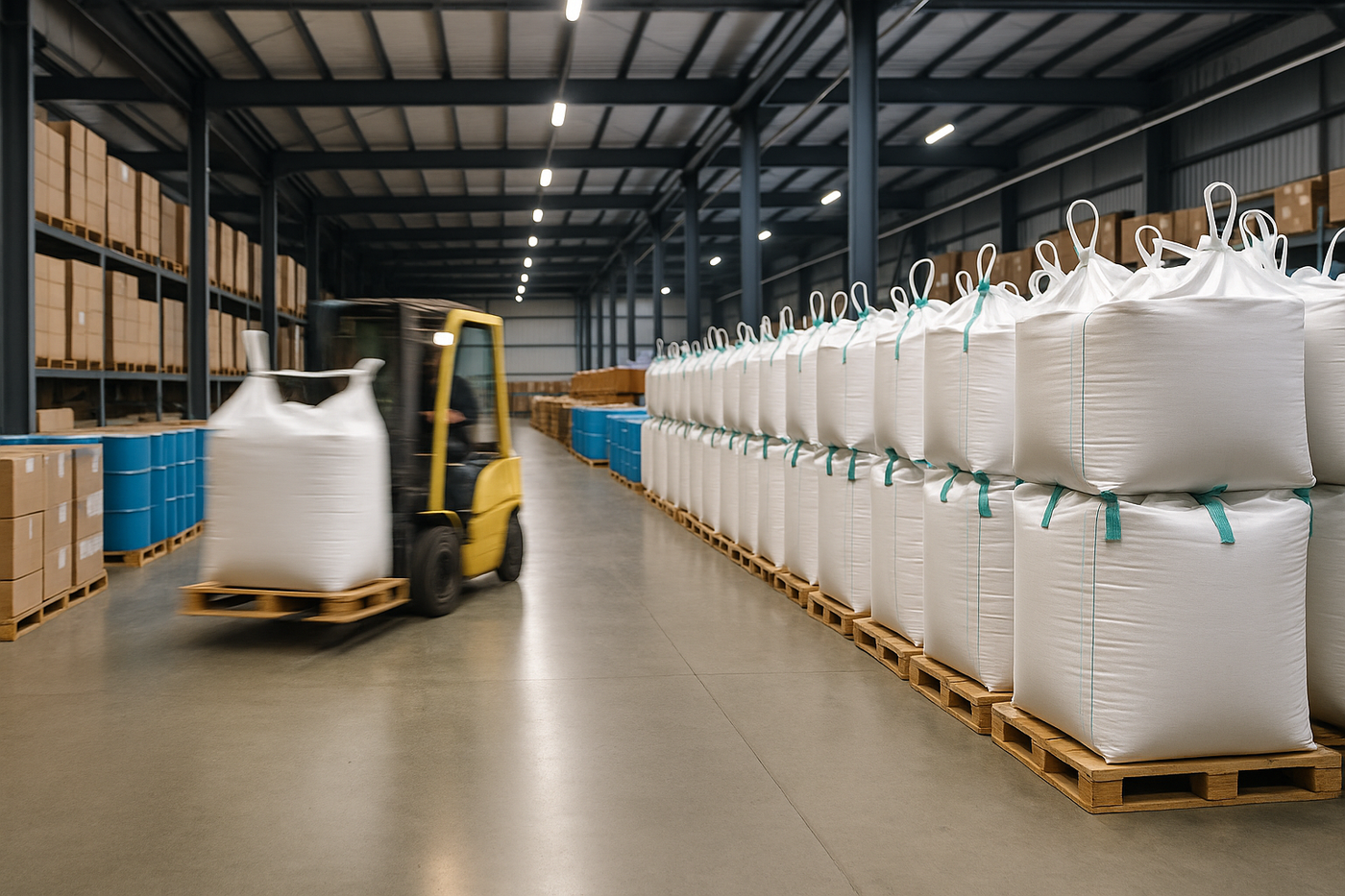
Sorbents Direct supplies DYNOCEL® 600 and DYNOCEL® 900 in manufacturer supersack quantities for industrial purification, treatment and recurring production requirements.
| Product | Available Mesh | Current Bulk Format | Commercial Support |
|---|---|---|---|
| DYNOCEL® 600 | 14×28, 20×50 | 816.5 kg / 1,800 lb supersack | Bulk and recurring-volume quotations |
| DYNOCEL® 900 | 14×28, 20×50, 28×48 | 816.5 kg / 1,800 lb supersack | Bulk and recurring-volume quotations |
Freight, availability and lead time depend on quantity, mesh size, destination and current manufacturer inventory.
For larger or recurring requirements, see Bulk Industrial Adsorbents & Filtration Media Supply .
Handling, Storage & Documentation
Activated alumina should be stored in its original sealed packaging in a dry, covered environment and protected from liquid water and unnecessary exposure to ambient moisture.
Product qualification and incoming-material review may include:
- Technical Data Sheet (TDS)
- Safety Data Sheet (SDS)
- Lot-specific Certificate of Analysis (COA), where available
- Particle-size / mesh confirmation
- Surface-area and physical-property documentation
- Packaging and lot-identification information
Visit the Documentation Center or contact Sorbents Direct if documents are required before ordering.
How to Select an Activated Alumina Grade
1. Define the Treatment Objective
Identify whether the media must remove moisture, an ionic species, a polar impurity or another specific contaminant.
2. Characterize the Stream
Document phase, chemistry, temperature, pressure, pH where relevant and competing compounds.
3. Choose the Physical Size
Match 14×28, 20×50 or 28×48 mesh to equipment retention, pressure-drop limits and mass-transfer requirements.
4. Define the Finished Specification
Selection is much easier when the target outlet moisture or contaminant concentration is known.
5. Review Documentation
Compare the current manufacturer TDS, SDS, COA requirements and any application-specific qualification criteria.
6. Validate Performance
Bench, pilot or representative process testing is recommended when grade selection can materially affect purity, yield or operating economics.
Frequently Asked Questions
What is activated alumina?
Is activated alumina only used for drying?
What is the difference between DYNOCEL® 600 and DYNOCEL® 900?
Does finer activated alumina work better?
Can activated alumina remove fluoride or arsenic?
Can activated alumina be regenerated?
How does activated alumina compare with molecular sieve?
How is DYNOCEL® activated alumina packaged?
What information should I provide for an activated alumina quote?
Related Activated Alumina Resources
Need Help Choosing DYNOCEL® 600 or 900?
Send us the process stream, target contaminant, current media if applicable, desired mesh size, quantity and delivery ZIP code. Sorbents Direct can help compare available grades, documentation, bulk packaging and freight options.