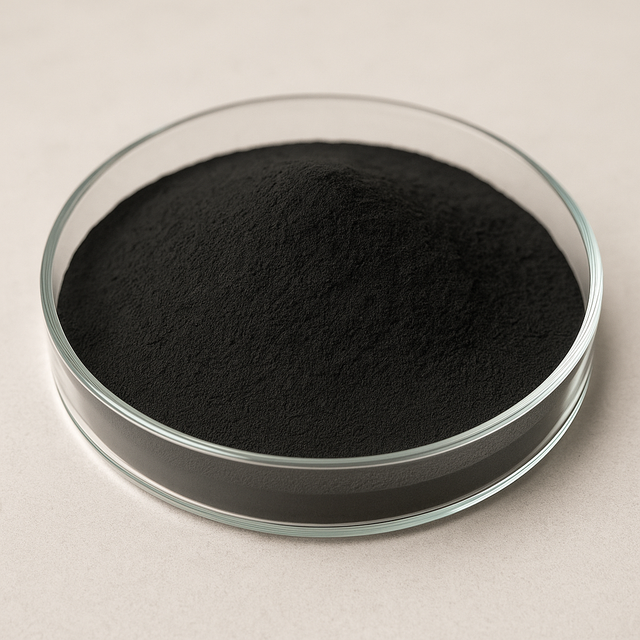
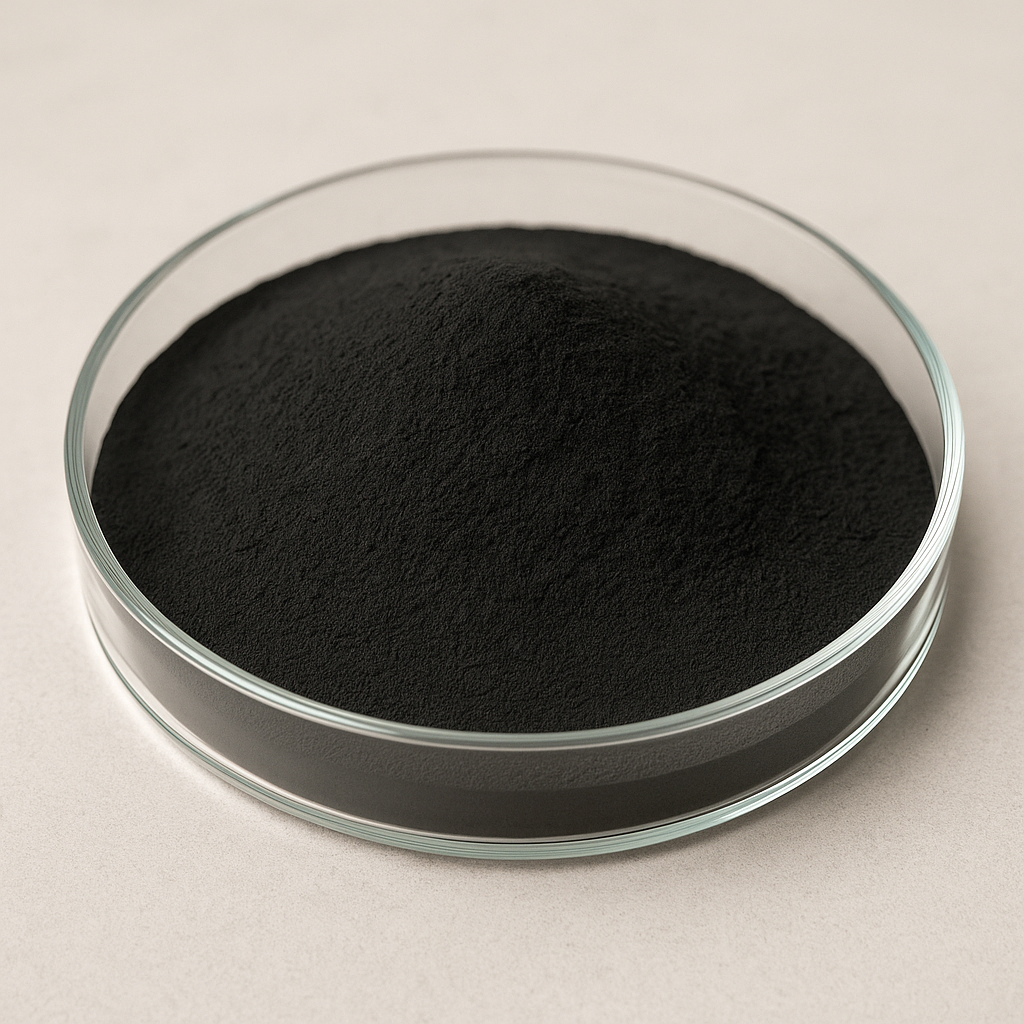
Food-Grade Coconut Shell Powdered Activated Carbon – 80×325, Acid Washed
Food-Grade Coconut Shell Powdered Activated Carbon – 80×325, Acid Washed - 80x325 / Trial bag - 27.5 lb (12.5kg) is backordered and will ship as soon as it is back in stock.
Couldn't load pickup availability
Bulk pallet & supersack discount - save on 2+ pallets or supersacks. Live freight quotes at checkout.
| Qty | Discount |
|---|---|
| Buy 2 | 5% off each |
| Buy 4 | 10% off each |
Overview
Food-Grade Coconut Shell Powdered Activated Carbon (PAC), 80×325 Mesh is a fine, acid-washed adsorption media supplied by Carbon Activated Corporation for compatible food, beverage, ingredient, edible-oil, process-water, and industrial liquid-treatment applications.
The coconut shell base provides a predominantly microporous adsorption structure, while the fine powdered form supports rapid contact with dissolved color bodies, taste-and-odor compounds, and selected organic impurities. Acid washing helps reduce residual mineral matter and soluble inorganic impurities compared with standard, non-washed carbon grades.
Carbon type: Food-grade, acid-washed coconut shell powdered activated carbon
Commercial particle-size designation: 80×325 mesh
Available packaging: 27.5 lb (12.47 kg) bags and 1,100 lb (approximately 499 kg) supersacks
Common uses: Beverage polishing, ingredient purification, edible-oil processing, color reduction, and batch liquid treatment
Primary applications
- Beverage processing: Color, taste, odor, and selected dissolved-organic reduction in compatible beverage and process streams
- Syrups and sweeteners: Batch decolorization and polishing where fine powdered carbon can be mixed and subsequently removed
- Ingredient purification: Treatment of compatible liquid ingredients where low residual mineral content and a clean sensory profile are important
- Edible-oil processing: Supplemental color and organic-impurity adsorption in compatible refining or polishing operations
- Food-process water: Batch treatment where a food-grade powdered activated carbon is required
- Industrial process liquids: Rapid adsorption of selected color bodies, odors, and dissolved organic contaminants
- Wastewater polishing: Batch dosing for selected residual organics before clarification, flotation, or filtration
- Pilot and laboratory trials: Jar testing and dose-response studies before production-scale implementation
Why choose acid-washed coconut shell PAC?
- Rapid adsorption kinetics: Fine powdered particles provide short diffusion paths and broad contact with the treated liquid
- Microporous pore structure: Coconut shell carbon is commonly selected for taste-and-odor compounds, color bodies, and many smaller dissolved organics
- Acid-washed processing: Helps reduce residual ash, soluble minerals, and acid-soluble inorganic impurities
- Food-grade designation: Supplied by Carbon Activated Corporation for compatible food, beverage, ingredient, and process applications
- Batch-treatment flexibility: Carbon dose, mixing time, contact time, and filtration can be adjusted for the specific process
- Clean-processing potential: Useful where mineral carryover and sensory impact are important selection factors
- Scalable packaging: Available for trials, intermittent batch treatment, and ongoing production use
Exact ash, acid-soluble matter, pH, iodine number, moisture, particle-size distribution, purity limits, and certification details depend on the supplied grade and should be confirmed using current manufacturer documentation when required.
What does 80×325 mesh mean?
80×325 is the commercial particle-size designation for this powdered activated carbon grade. An 80-mesh opening is approximately 180 microns, while a 325-mesh opening is approximately 45 microns.
The designation identifies a fine powdered carbon associated with this general particle-size range. It should not be interpreted to mean that every particle falls strictly between 45 and 180 microns unless confirmed by the current manufacturer particle-size specification or lot documentation.
| Characteristic | General implication |
|---|---|
| Fine particle size | Supports rapid dispersion and adsorption during batch treatment |
| High external surface exposure | Provides fast contact between the carbon and dissolved contaminants |
| Powdered form | Requires an effective downstream solids-separation step |
| Fine-dust potential | Requires controlled transfer, ventilation, and suitable personal protective equipment |
What can this PAC reduce?
| Treatment objective | General suitability | Important considerations |
|---|---|---|
| Color bodies | Common application | Performance depends on molecular size, carbon dose, temperature, pH, and competing compounds |
| Taste and odor compounds | Common polishing application | Confirm performance with the actual beverage, water, syrup, or process matrix |
| Dissolved organics | Suitable for many compounds | Adsorption varies by molecular structure, concentration, polarity, and background organic loading |
| Selected oxidation products | May provide useful reduction | Bench testing is recommended to confirm effectiveness and dosage |
| Residual odor or flavor compounds | Potentially suitable | A clean carbon grade and appropriate filtration are especially important in sensory-sensitive applications |
| Dissolved metals and inorganic salts | Not the primary function of standard PAC | Acid washing reduces impurities in the carbon itself but does not make PAC a universal metals-removal media |
Important: Activated carbon is not equally effective for every contaminant. Confirm suitability through treatment trials using the actual liquid and current manufacturer guidance where available.
Typical product characteristics
| Product type | Food-grade powdered activated carbon |
|---|---|
| Carbon source | Coconut shell |
| Processing | Acid washed |
| Commercial particle size | 80×325 mesh |
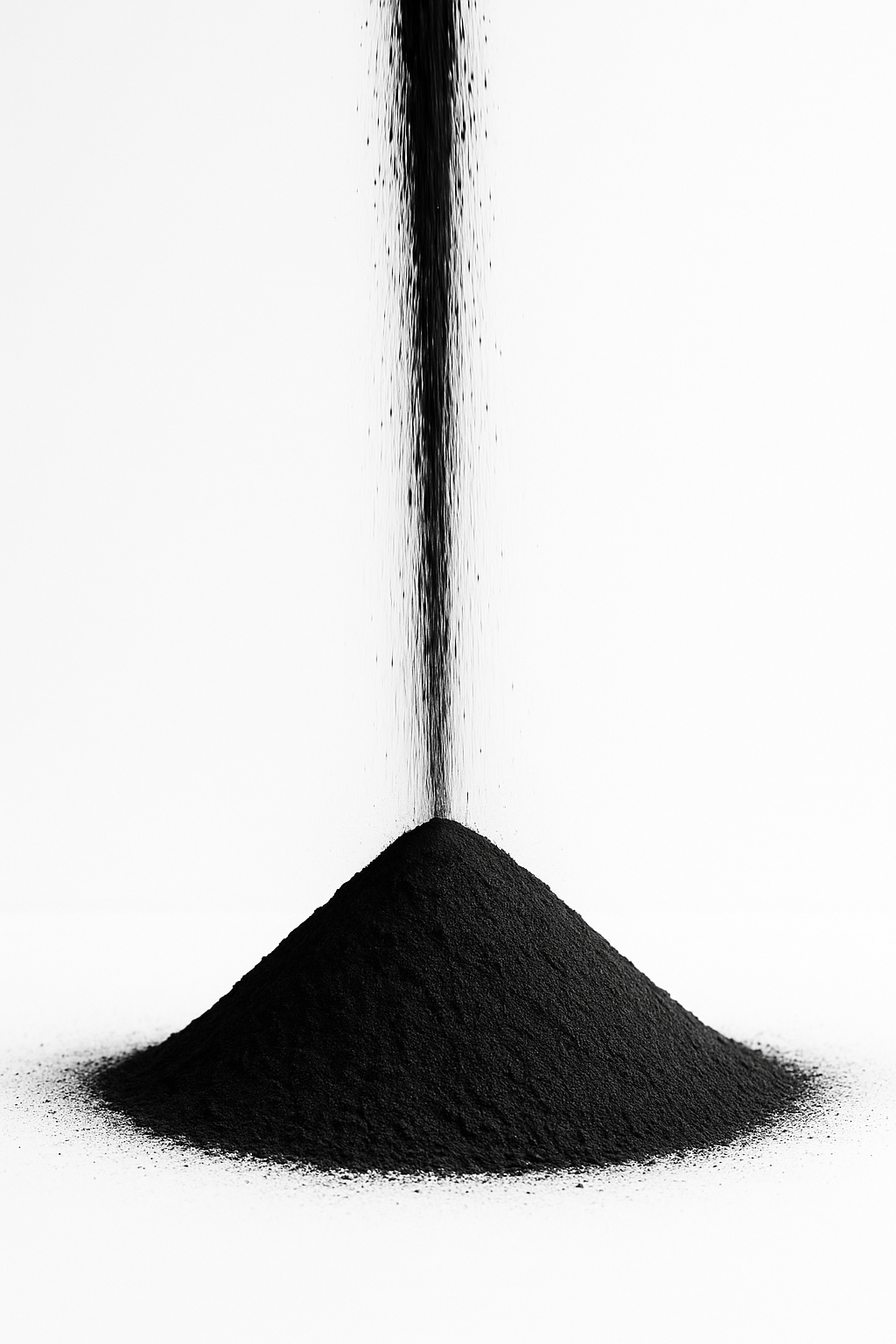
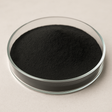
| Physical form | Fine black powder |
| Primary treatment mode | Batch dosing, slurry addition, or compatible continuous-feed treatment followed by solids separation |
| Common treatment functions | Color reduction, taste-and-odor correction, dissolved-organic adsorption, and liquid polishing |
| Supplier | Carbon Activated Corporation |
| Available packaging | 27.5 lb bags and 1,100 lb supersacks |
Documentation note: This product is a food-grade, acid-washed coconut shell powdered activated carbon supplied by Carbon Activated Corporation. Grade-specific values—including ash, moisture, pH, iodine number, particle-size distribution, and applicable regulatory or certification details—should be confirmed using the current manufacturer SDS, TDS, and lot documentation when required for qualification.
How powdered activated carbon is used
| Process stage | General approach |
|---|---|
| Characterize the untreated liquid | Measure color, odor, target contaminants, pH, solids, temperature, and other relevant quality parameters |
| Select an initial carbon dose | Establish several trial dosages rather than relying on one universal treatment rate |
| Disperse the PAC | Add under controlled agitation to promote wetting and uniform contact |
| Provide contact time | Maintain suitable mixing or residence time for adsorption to occur |
| Separate the carbon | Use an appropriate filtration, clarification, flotation, centrifugation, or membrane process |
| Evaluate the treated liquid | Measure removal performance, clarity, filtration behavior, yield, and downstream suitability |
Application and dosing guidance
The appropriate PAC dosage depends on the treated liquid, target compound, incoming concentration, required finished quality, carbon grade, temperature, pH, mixing intensity, contact time, competing organics, and downstream filtration system.
- Begin with controlled jar tests or bench trials using the actual process liquid
- Evaluate several carbon dosages to establish a dose-response curve
- Maintain consistent mixing conditions across comparative trials
- Allow sufficient contact time before solids separation
- Evaluate both contaminant removal and product loss or yield
- Confirm that the filtration system can retain the fine PAC particles
- Review treated-liquid quality against all applicable specifications before scale-up
No universal dosage is provided because the correct treatment rate is highly application specific. A dose suitable for one beverage, syrup, oil, ingredient, or wastewater stream may be ineffective or excessive in another.
PAC capture and filtration options
| Separation method | Potential use | Considerations |
|---|---|---|
| Filter press | Batch treatment of oils, syrups, ingredients, and compatible process liquids | May use filter aid or precoat depending on carbon loading and process conditions |
| Pressure-leaf filtration | Production-scale polishing and batch clarification | Precoat and body-feed practices may improve cake formation and throughput |
| Depth filtration | Lower PAC loading and polishing applications | Confirm particle-retention efficiency and filter capacity |
| Dissolved-air flotation | Wastewater and selected industrial treatment systems | Performance depends on coagulation, flocculation, solids loading, and float characteristics |
| Centrifugation | Processes with suitable density and solids-separation characteristics | Fine particles may require additional polishing filtration |
| Membranes | Selected water and process systems | PAC carryover may foul membranes if upstream capture is inadequate |
The appropriate separation method should be confirmed through trials and equipment-specific review.
Packaging & availability
| Package size | Typical use |
|---|---|
| 27.5 lb (12.47 kg) bag | Bench trials, pilot treatment, intermittent batch dosing, small production runs, and manual addition |
| 1,100 lb (approximately 499 kg) supersack | Recurring production use, high-volume batch treatment, and compatible bulk handling systems |
- Bag orders: Suitable for trials, intermittent production, and controlled manual dosing
- Supersack orders: Suitable for recurring demand and bulk material handling
- Freight: Parcel, pallet, or LTL service based on package size, quantity, and destination
- Lead time: Confirmed at quotation or order placement
- Volume purchasing: Contact Sorbents Direct for pallet quantities, recurring requirements, or delivered bulk pricing
Handling & storage
- Store unused PAC in a clean, dry, protected location
- Keep bags and supersacks sealed until use
- Prevent contamination by oils, chemicals, moisture, odors, and foreign material
- Minimize airborne dust during opening, transfer, weighing, and mixing
- Use suitable dust collection, ventilation, and personal protective equipment as directed by the current SDS
- Ground and bond applicable transfer equipment where combustible-dust controls are required
- Keep activated carbon away from strong oxidizers and incompatible chemicals
- Manage spent carbon based on the substances it has adsorbed
Important: Powdered activated carbon is a fine combustible dust. Review a current manufacturer SDS and site-specific dust-control procedure before unloading, transfer, dosing, storage, or cleanup.
Food, beverage & regulated-use considerations
This product is supplied as a food-grade acid-washed coconut shell PAC. Application-specific approval may still require supporting documentation for the exact grade, process, and market.
Before ordering, identify any required documentation or limits, including:
- Food Chemicals Codex or equivalent compliance statement
- Food-contact or processing-aid documentation
- NSF/ANSI certification for potable-water applications
- Heavy-metals or elemental-impurity limits
- Microbiological requirements
- Acid-soluble ash or water-soluble extractables limits
- Allergen, animal-origin, GMO, or religious certification statements
- Country-specific regulatory requirements
Sorbents Direct can request available documentation from Carbon Activated Corporation. Confirm all required technical, regulatory, and lot documentation before the material is approved for a regulated process.
Why buy from Sorbents Direct?
Powdered activated carbon selection involves more than choosing a mesh designation. Sorbents Direct helps industrial buyers evaluate carbon source, washing treatment, packaging, freight, documentation, dosing, and downstream solids capture.
- Transparent online pricing on qualifying package sizes and product variants
- Small and bulk formats for trials, intermittent dosing, and production use
- Live freight quotes at checkout for eligible shipments
- Manufacturer-document support including SDS, TDS, COA, and compliance documents when available
- Application guidance for dosing, contact time, mixing, and filtration considerations
- Bulk purchasing assistance for recurring industrial requirements
- Real support from people who understand industrial materials
Documentation & quality support
Available documentation may include:
- Safety Data Sheet (SDS)
- Technical Data Sheet (TDS)
- Certificate of Analysis for the supplied lot, when available
- Particle-size information
- Food-contact, processing-aid, or regulatory statements where applicable
- Packaging and freight information
This product is supplied by Carbon Activated Corporation as a food-grade, acid-washed coconut shell PAC. Sorbents Direct does not currently display the grade-specific SDS or TDS online. Request current manufacturer documentation before purchase when technical limits, regulatory review, supplier qualification, or lot approval are required.
Visit our Documentation Center or contact Sorbents Direct to discuss your application, dosage trial, filtration setup, packaging preference, and documentation requirements.
Need help planning a PAC trial?
PAC performance depends on the target contaminant, process-liquid chemistry, carbon dosage, contact time, agitation, temperature, pH, downstream filtration, product-loss limits, and required finished quality. Sorbents Direct can help identify the information needed for a controlled bench or plant trial.
Questions & answers
What is powdered activated carbon?
Powdered activated carbon is a fine adsorption media added directly to a liquid for batch or continuous treatment. After sufficient contact time, the carbon and adsorbed contaminants must be removed through filtration, clarification, flotation, centrifugation, or another suitable separation method.
What does 80×325 mesh mean?
It is the commercial particle-size designation for this PAC grade. An 80-mesh opening is approximately 180 microns and a 325-mesh opening is approximately 45 microns. The exact particle-size distribution should be confirmed through current manufacturer documentation or lot data.
Is 80×325 PAC the same as carbon finer than 200 mesh?
Not necessarily. They are related descriptions of fine powdered carbon, but they are not automatically identical specifications. Use the manufacturer’s exact particle-size designation and current sieve analysis when particle distribution is important.
Why is the carbon acid washed?
Acid washing helps reduce residual mineral matter, ash, and soluble inorganic impurities in the carbon. The resulting specification depends on the exact production process and should be confirmed through current manufacturer documentation.
Is this carbon suitable for food and beverage processing?
Yes. This is a food-grade, acid-washed coconut shell powdered activated carbon supplied by Carbon Activated Corporation for compatible food, beverage, ingredient, and process applications. Confirm any application-specific purity, regulatory, certification, or documentation requirements before ordering.
Can it be used for beverage decolorization?
Fine coconut shell PAC may be evaluated for beverage, syrup, and ingredient decolorization. Performance and sensory impact should be confirmed through trials using the actual process liquid.
Can it be used in edible-oil refining?
Powdered activated carbon may be used as a supplemental adsorbent in compatible edible-oil processes. The correct carbon grade, dosage, contact conditions, and filtration method should be established through testing and process review.
How much PAC should I use?
There is no universal dosage. Establish the treatment rate through jar tests or bench trials using the actual liquid, contaminant profile, treatment target, contact time, and downstream filtration system.
How should PAC be mixed into the liquid?
Add it under controlled agitation that provides complete wetting and uniform dispersion without excessive dusting or air entrainment. The appropriate mixing sequence depends on the process and equipment.
How is PAC removed after treatment?
Common methods include filter presses, pressure-leaf filters, depth filters, dissolved-air flotation, centrifugation, and compatible membrane systems. Filter aids or precoats may improve capture in some applications.
Does acid-washed PAC have low ash?
Acid washing generally helps reduce ash and soluble minerals, but no specific ash limit should be assumed without the current manufacturer TDS or lot documentation.
Is this product NSF certified?
NSF certification is not confirmed on this page. Request applicable certification documentation before ordering when the carbon will be used in a potable-water application requiring NSF/ANSI compliance.
What package sizes are available?
The currently listed formats are 27.5 lb bags and 1,100 lb supersacks. Availability should be confirmed for the exact required grade and quantity.
Is freight included in the product price?
Freight is generally separate. Shipping may be calculated by parcel or LTL depending on package size, quantity, destination, and delivery requirements.
What documentation is available?
Sorbents Direct can request available SDS, TDS, COA, particle-size, food-contact, and regulatory documentation from Carbon Activated Corporation. Confirm availability before purchase when documentation is required.
Related products & resources
- View coconut shell granular activated carbon
- View coal-based granular activated carbon
- Browse all activated carbon products
- Explore food and beverage processing media
- Explore water and wastewater treatment media
- Request SDS, TDS, COA, or regulatory documentation
- Request application assistance or a volume quote
Food-Grade Coconut Shell Powdered Activated Carbon – 80×325, Acid W...